
Wheaton Workplace Injury Attorney
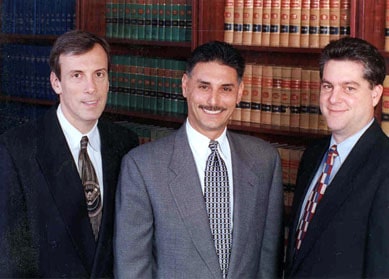
Wheaton’s workforce spans construction corridors along Georgia Avenue, retail and food service operations throughout Westfield Wheaton and the surrounding shopping centers, healthcare facilities, and the dense mix of commercial and municipal employers that define this part of Montgomery County. Workers across all of these environments get hurt. Some injuries are acute and obvious. Others accumulate quietly over months of repetitive motion, chemical exposure, or physical strain until the body gives out. When that happens, the path forward through Maryland’s workers’ compensation system is rarely straightforward, and the decisions made early in a claim often determine what benefits a worker actually receives. The attorneys at Berman | Sobin | Gross LLP have spent 35 years representing injured workers throughout Maryland, including those who live and work in Wheaton, and the firm’s depth of experience in complex claims is not something most workplace injury practices can match.
What Montgomery County Workers Are Actually Owed After a Job Injury
Maryland workers’ compensation is not a simple wage-replacement program. Depending on the nature of the injury, a worker may be entitled to temporary total disability benefits while unable to work, temporary partial disability benefits during a period of reduced capacity, permanent partial or permanent total disability awards, payment of all reasonable and necessary medical treatment, and vocational rehabilitation if returning to the previous job is no longer feasible. Each category has its own rules, timelines, and calculation methods, and employers or their insurers routinely challenge claims, dispute the extent of disability, or contest whether an injury is work-related at all.
Montgomery County has a significant public safety workforce, including firefighters, paramedics, emergency medical technicians, police officers, and corrections personnel. These workers carry additional protections under Maryland law, including occupational disease presumptions for certain heart, lung, and hypertension conditions. Berman | Sobin | Gross LLP has litigated those presumptions directly before Maryland’s appellate courts. In cases like Downer v. Baltimore County, the firm established that EMTs are public safety employees entitled to the same enhanced benefits as other first responders, and in Montgomery County v. Pirrone, the firm secured a ruling that the heart and lung presumption applies even after retirement or while off duty. For Wheaton workers in public safety roles, these victories translate into real legal protection when a claim is filed.
How Montgomery County Employers and Insurers Challenge Workplace Injury Claims
Denials in workers’ compensation cases do not always look like outright rejections. Insurers may accept a claim but dispute the degree of disability, limiting the permanent impairment rating and thus the compensation award. They may approve some medical treatment while denying referrals for surgery, specialist care, or ongoing therapy. They may argue that a pre-existing condition, not the work injury, is the cause of current symptoms. Medical experts hired by employers are a significant part of how these disputes play out, and Berman | Sobin | Gross LLP’s attorneys know how to counter insurer-retained opinions with the kind of medical and legal foundation that holds up at hearing and, when necessary, in court.
The firm’s founder literally wrote the treatise on Maryland workers’ compensation, a two-volume reference that remains the standard resource in the field. That foundation matters when an insurer hires a physician to testify that an occupational disease presumption is scientifically unsound. In City of Frederick v. Shankle, Berman | Sobin | Gross LLP established that such testimony should not be admitted. The firm does not look for easy claims to settle quickly. It builds the record necessary to pursue cases through the Maryland Workers’ Compensation Commission and, when the Commission’s decision is wrong, into circuit court or appellate review.
Occupational Diseases and Repetitive Stress: The Wheaton Worker’s Reality
Not every serious workplace injury in Wheaton involves a fall, a vehicle collision, or a single traumatic event. A substantial number of injured workers develop conditions gradually, through repetitive tasks in warehouse and retail environments, prolonged exposure to chemicals in cleaning or maintenance work, and the sustained physical demands placed on healthcare aides, custodial workers, and food service employees. These occupational disease claims are often harder to prove than acute injury claims because the connection between work conditions and the medical diagnosis requires careful documentation.
Maryland law does recognize occupational disease claims, but the window for filing and the evidentiary requirements are specific. The date of disablement, not the date of initial exposure or even the date of diagnosis, controls certain deadlines. Workers who have been told their condition is not job-related, or who have delayed seeking legal advice because they assumed their illness was simply part of aging or ordinary life wear, should have their claim evaluated before assuming it is too late. Berman | Sobin | Gross LLP handles these cases and knows that the outcome often depends on gathering occupational histories, employment records, and medical evidence that most workers do not know they need to preserve.
Questions Wheaton Injury Workers Ask Before Contacting an Attorney
Does it matter that my employer says my injury wasn’t work-related?
An employer’s characterization of an injury is not the final word. The Maryland Workers’ Compensation Commission makes that determination based on the evidence. An employer’s denial or skepticism at the time of the incident does not bar a worker from filing a claim, and legal representation helps ensure that medical and factual records are developed fully before a Commission hearing.
My employer offered me light duty. Do I lose benefits if I refuse?
Light duty offers are governed by specific rules, and the analysis is not always simple. Whether a refusal affects benefits depends on whether the offered work is genuinely within your medical restrictions, whether the offer was made in good faith, and other factors. Berman | Sobin | Gross LLP has litigated the question of wage loss for workers on light duty, including establishing in Montgomery County v. Deibler that public safety workers on light duty can still receive compensation for overtime wages they were earning before the injury.
The insurer’s doctor gave me a low disability rating. Can I challenge that?
Yes. An employer-retained physician’s opinion is not binding on the Commission. It is one piece of evidence among others. Challenging a low impairment rating typically requires obtaining an independent medical evaluation and presenting it at hearing alongside your medical history and work history. The attorneys at this firm have extensive experience building the medical record that supports accurate impairment ratings.
Can I be fired for filing a workers’ compensation claim in Maryland?
Retaliation for filing a workers’ compensation claim is prohibited under Maryland law. If you experience adverse employment action after reporting a workplace injury or filing a claim, that is a distinct legal issue worth discussing with an attorney.
What if I was injured as a contractor or temporary worker at a Wheaton job site?
Employment classification in workers’ compensation cases is fact-specific. Workers who are labeled contractors by a company but function as employees under Maryland law may still be entitled to workers’ compensation coverage. Temporary workers placed through staffing agencies are typically covered under the agency’s policy. The full picture of who is responsible for a workplace injury often requires examining multiple relationships, including potential third-party liability separate from the workers’ comp claim.
Is there a deadline for filing a claim after a workplace injury in Maryland?
Maryland imposes filing deadlines for both accidental injuries and occupational diseases, and those deadlines operate differently depending on the type of claim. Missing the deadline can permanently bar recovery. This is one reason why waiting to see whether an injury improves before consulting an attorney carries real risk.
Does Berman | Sobin | Gross LLP handle cases that other firms have turned down?
Yes. The firm is known specifically for taking cases that require significant resources to litigate, including cases other attorneys have declined to pursue past the administrative stage. The firm has handled hundreds of workers’ compensation jury trials and appeals before Maryland’s highest courts, and it continues to accept complex claims that demand full litigation.
Reaching Berman | Sobin | Gross LLP About a Wheaton Workplace Injury Claim
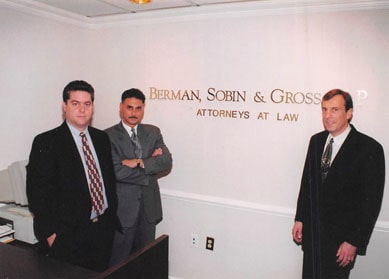
Workers in Wheaton dealing with the aftermath of a job injury face decisions that affect their income, their medical care, and their long-term physical recovery. The workers’ compensation system in Maryland is procedurally demanding, and insurers operate with professional claims staff whose job is to minimize what they pay. Berman | Sobin | Gross LLP is Maryland’s largest workers’ compensation firm representing injured workers, with more than 20 attorneys across offices throughout the state and a track record of appellate victories that have changed Maryland law in ways that directly protect working people. Whether the injury just occurred or a claim has already been denied or undervalued, a Wheaton workplace injury lawyer at this firm will evaluate the claim and explain what the available options actually look like.