

Maryland Food Service Worker Injury Attorney
Food service work is physically relentless. Shifts stretch long, floors stay wet, knives stay sharp, and fryers stay hot. Restaurant kitchens, catering operations, school cafeterias, and hospital food service departments generate some of the highest injury rates of any industry in Maryland. Workers who sustain burns, lacerations, repetitive stress injuries, or slip-and-fall injuries in these environments have rights under the Maryland Workers’ Compensation Act, but those rights are only as useful as the claim built to support them. As a Maryland food service worker injury attorney, Berman | Sobin | Gross LLP has spent 35 years representing the men and women whose work feeds Maryland’s communities, and who deserve real legal support when that work injures them.
What Makes Food Service Injuries Legally Complicated
The workers’ compensation process in Maryland looks straightforward on paper. An injury happens, you report it, a claim gets filed, benefits follow. In practice, food service claims run into specific complications that can derail even legitimate injuries.
Employers in the food service industry often rely heavily on part-time workers, seasonal employees, or workers whose hours fluctuate significantly week to week. That variability matters when the Commission calculates your average weekly wage, which is the figure that drives the value of your temporary total disability benefits. If your wage calculation is done incorrectly, every benefit tied to it will be wrong. Getting that number right requires attention to how Maryland law treats irregular hours and tip income, both of which are common in this industry.
Repetitive stress injuries present another layer of difficulty. A dishwasher who develops carpal tunnel syndrome after years of repetitive motion, or a line cook whose rotator cuff deteriorates from constant overhead reaching, faces an employer who may argue the condition is not work-related, predates the job, or developed outside of work. Maryland’s workers’ compensation system does cover occupational diseases and conditions that arise from the cumulative nature of the work, but these claims require medical documentation that directly connects the diagnosis to the job duties, and they are contested far more often than acute injury claims.
Burns are among the most common acute injuries in professional kitchens, and their treatment course can be prolonged. A partial-thickness burn may require weeks of wound care, possible skin grafting, and significant time away from work. Employers and their insurers sometimes push for early return-to-work assessments before healing is complete. Understanding when it is appropriate to push back on those assessments, and how to document ongoing disability, is a decision that should be made with legal guidance in place.
Who Actually Bears Responsibility After a Food Service Workplace Injury
In most Maryland food service injury situations, the workers’ compensation claim against the employer is the primary legal avenue. Maryland is a no-fault system, meaning you do not need to prove employer negligence to receive benefits. You need to establish that the injury arose out of and in the course of employment, and that you have complied with the notice and filing requirements under Maryland law.
That said, some food service injury situations open additional avenues worth evaluating. If a piece of equipment failed because of a design defect or a manufacturing problem, the manufacturer of that equipment may bear liability outside the workers’ compensation system entirely. A faulty commercial slicer, a defective pressure cooker, or industrial kitchen equipment with a known but undisclosed hazard could give rise to a product liability claim that runs parallel to your workers’ comp case and potentially expands your recovery beyond what the Commission can award.
Third-party liability also arises when food service workers are injured on premises they do not control. Caterers, delivery workers, and contract food service employees often work in spaces owned or operated by entities other than their direct employer. A premises liability claim against a third party can coexist with a workers’ compensation claim, and the interaction between those two tracks needs to be managed carefully to avoid reducing what you ultimately recover.
The attorneys at Berman | Sobin | Gross LLP look at the full picture of each client’s situation. The firm does not take a narrow view of what benefits or compensation might be available, and that matters most in cases where the facts point in more than one direction.
The Firm Behind These Cases
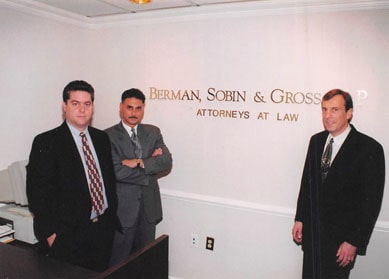
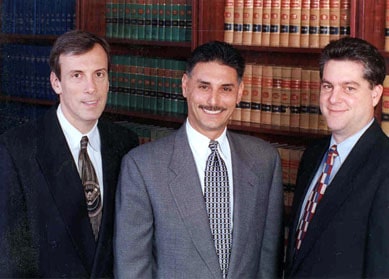
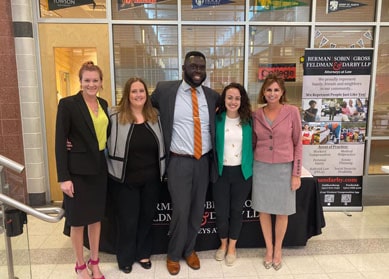
Berman | Sobin | Gross LLP is the largest workers’ compensation law firm in Maryland representing injured workers. The firm has grown to more than 20 attorneys with offices throughout the state, and for 35 years its lawyers have handled claims at every level, from initial filings before the Maryland Workers’ Compensation Commission to jury trials and appellate arguments before Maryland’s highest courts. One of the firm’s founders authored a two-volume legal treatise that remains the definitive reference on workers’ compensation law in Maryland.
That depth matters in food service injury cases specifically because these claims often require more than administrative hearing work. When insurers contest the nature of a repetitive stress injury, when wage disputes require careful actuarial analysis, or when a case involves both a workers’ comp claim and a third-party liability theory, having attorneys who are genuinely comfortable in the courtroom changes the dynamic of every settlement negotiation. Berman | Sobin | Gross LLP takes cases that other firms have declined and handles claims that require more time and resources to pursue correctly.
The firm also has attorneys and staff members who are fluent in Spanish, which is directly relevant to food service workers in Maryland, a workforce that is linguistically diverse. No client should have to manage a complex legal claim through a language barrier.
Questions Food Service Workers Often Ask Before Filing
My employer says I was not hurt at work. What can I do?
An employer’s disagreement does not end your claim. The Maryland Workers’ Compensation Commission makes the factual determination, not your employer. Medical records, incident reports, witness statements, and your own testimony all contribute to building the evidentiary record. An attorney can help you gather and present that evidence in a way that directly addresses the employer’s position.
I work part-time and receive tips. How are my benefits calculated?
Maryland law includes specific rules for calculating average weekly wages when hours vary or when income includes tips. Tip income that is reported and documented should be factored into your wage calculation. If the insurer has calculated benefits based only on your base hourly rate, that figure may be significantly lower than what the law actually requires.
I have a pre-existing back condition. Can I still file a workers’ compensation claim?
A pre-existing condition does not bar a workers’ compensation claim. Maryland law recognizes that a work-related accident or cumulative work activity can aggravate, accelerate, or combine with a pre-existing condition in a way that is itself compensable. The medical analysis of how the work affected your condition becomes the central issue, which is why the choice of treating physicians and the framing of medical opinions matters.
My employer told me to use their doctor. Do I have to?
Under Maryland workers’ compensation law, the employer and insurer initially have the right to direct medical care in many circumstances. However, you retain rights regarding your own medical evaluation and the ability to obtain independent medical opinions. There are also situations where the employer’s chosen physician is not providing adequate care, and the Commission has mechanisms to address that. Discussing the specifics of your medical care situation with an attorney early in the process helps you understand where your options lie.
I was injured months ago but never filed a claim. Is it too late?
Maryland has filing deadlines for workers’ compensation claims. For most accidental injuries, the claim must be filed within two years of the accident. For occupational diseases, the timeline runs from when the disability manifests and the claimant knew or should have known of its connection to work. Whether your specific situation falls within the applicable period depends on the facts. The sooner you consult with an attorney, the clearer that analysis will be.
Can I be fired for filing a workers’ compensation claim?
Maryland law prohibits employers from retaliating against employees for filing or pursuing a workers’ compensation claim. If an employer takes adverse action against a worker because of a compensation claim, that employer may face separate legal liability. Document the sequence of events carefully and consult with an attorney if you believe retaliation has occurred.
What if the insurer denies my claim outright?
A denial is not a final answer. You have the right to request a hearing before the Maryland Workers’ Compensation Commission, at which both sides present evidence and a Commissioner issues a ruling. If that ruling is unfavorable, further appeals are available. Berman | Sobin | Gross LLP has handled claims at every stage of this process, including jury trials and appeals before Maryland’s appellate courts, and the firm does not stop at the administrative level when a client’s claim warrants more.
Talk to a Food Service Injury Lawyer About Your Claim
Food service workers move through physically demanding conditions every shift and rarely think about what happens if the work catches up with them. When it does, the decisions made in the first weeks after an injury shape the entire course of the claim. Berman | Sobin | Gross LLP represents injured food service workers across Maryland, from Baltimore to Gaithersburg, Frederick to Lutherville, and throughout the surrounding communities. If you were hurt at work in a kitchen, cafeteria, catering facility, or any other food service environment, a Maryland food service worker injury attorney at our firm is available to evaluate your situation and help you understand what your claim is actually worth.