

Waldorf Work Injury Attorney
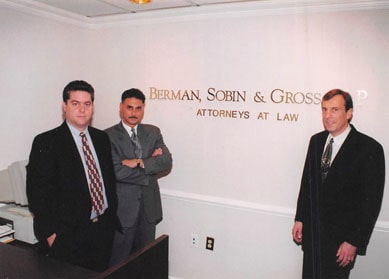
Work injuries in Charles County follow patterns. Warehouse workers in Waldorf’s distribution corridors, construction crews along Route 301, healthcare employees at hospitals and elder care facilities, government and federal contract workers who keep this region running day to day. When something goes wrong on the job, injured workers often find themselves dealing simultaneously with physical recovery, lost income, and a workers’ compensation system that does not always move in their favor without pressure. Waldorf work injury attorneys at Berman | Sobin | Gross LLP have been representing Maryland workers for 35 years, and this is exactly the kind of case we exist to handle.
What Waldorf Workers Are Actually Dealing With After a Job Injury
Charles County has grown steadily over recent decades, and Waldorf in particular has become a hub for logistics, retail, healthcare, and public sector employment. That growth brings real workplace risk. Warehouse and fulfillment operations produce repetitive strain injuries, forklift accidents, and loading dock falls. Construction along the expanding Route 5 and Route 301 corridors generates crush injuries, falls from height, and equipment-related trauma. Correctional officers at facilities in the region face a distinct category of injury risk that carries its own legal complexity under Maryland law. Healthcare workers at facilities throughout Waldorf contend with patient-handling injuries and occupational exposures that develop gradually rather than appearing as a single incident.
What makes work injury claims in Maryland complicated is rarely the underlying facts. Most workers know when they were hurt and how. What creates difficulty is proving that a compensable employment relationship exists, that the injury arose from work duties, and that treatment and wage replacement benefits should flow without unnecessary delay or denial. Maryland employers and their insurers have legal teams working to minimize what they pay out. Workers who try to navigate that system without representation frequently leave significant benefits on the table, sometimes permanently.
How Maryland’s Workers’ Compensation Framework Applies to Charles County Claims
Maryland workers’ compensation is a no-fault system in theory. In practice, claims get denied, disputed, and delayed for reasons that can seem technical or arbitrary to someone unfamiliar with how the Maryland Workers’ Compensation Commission operates. The Commission handles administrative proceedings statewide, and hearings are regularly held at locations accessible to Charles County claimants. Understanding how that process unfolds from the initial filing through evidentiary hearings matters enormously for what an injured worker ultimately recovers.
Benefits available under Maryland’s system include temporary total disability payments when a worker cannot return to work at all, temporary partial disability when a worker returns to lighter duty at reduced earnings, and permanent partial or permanent total disability awards based on long-term impairment. Medical treatment for the compensable injury is also covered, but disputes over which treatments are authorized and which providers an employer will approve create friction that injured workers feel acutely. When a treating physician’s recommendations are rejected by an employer’s insurer, or when an independent medical examination produces findings that conveniently favor the employer, those disputes have to be fought at the Commission level.
For public safety workers in Charles County, including law enforcement, EMTs, and firefighters, Maryland law provides specific presumptions for certain conditions. Heart disease, hypertension, and certain respiratory conditions are presumed to be job-related under circumstances where a public safety employee is affected. Berman | Sobin | Gross LLP has won appellate decisions at Maryland’s highest courts that expanded and clarified these protections. The firm’s appellate record on public safety presumptions is not theoretical; those cases produced binding precedent that continues to benefit workers today.
When a Work Injury Involves a Third Party, Not Just Workers’ Comp
Maryland’s workers’ compensation system exists as the exclusive remedy against an employer in most circumstances. But many Waldorf work injuries involve a third party whose negligence contributed to the incident. A delivery driver struck by a negligent motorist while working a route. A construction worker injured by defective equipment manufactured by a company separate from the employer. A warehouse employee hurt because a property owner failed to maintain safe conditions on premises the employer leases.
In these situations, a separate personal injury claim against the third party can run alongside a workers’ compensation claim. The two claims operate under different legal frameworks, have different evidentiary standards, and ultimately can produce different categories of compensation. Workers’ compensation covers lost wages and medical benefits according to statutory schedules. A third-party personal injury claim can reach pain and suffering, full lost earning capacity, and other damages that workers’ compensation does not address. Failing to recognize a potential third-party claim, or pursuing only one avenue when both are available, is a costly error. Attorneys at Berman | Sobin | Gross LLP handle both workers’ compensation and personal injury matters and can evaluate whether a Waldorf work injury gives rise to parallel claims.
Questions Waldorf Injured Workers Ask Before Contacting an Attorney
Does the employer control where I receive medical treatment?
Under Maryland law, employers have the right to designate medical providers, and workers are generally required to treat with those providers initially. However, this is not absolute. Disputes arise over whether a designated provider is appropriate, accessible, or providing adequate care. An attorney can advise you on when and how to challenge the designated provider arrangement and seek treatment from a physician whose recommendations are not filtered through the employer’s insurer.
What happens if my employer says my injury was pre-existing?
Pre-existing condition arguments are among the most common defenses employers and insurers raise. Maryland law does not require that work be the sole cause of an injury; it requires that work materially contributed to a condition or its aggravation. Even if a worker has a prior history of back problems, shoulder issues, or other conditions, a new work incident that aggravates that condition can still be compensable. The fight over causation requires medical evidence and, often, expert testimony.
My employer filed a report but the insurer denied my claim. What comes next?
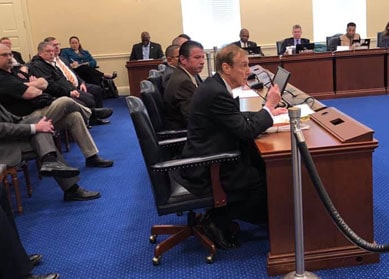
A denial is not the end of the road. Claims are denied for procedural and substantive reasons. After a denial, a worker can file an issues statement with the Maryland Workers’ Compensation Commission to request a hearing before a commissioner. At that hearing, both sides present evidence and the commissioner issues a decision. That decision can be appealed further if necessary. Berman | Sobin | Gross LLP has litigated workers’ compensation disputes through the Commission, into circuit court, and before both of Maryland’s appellate courts.
I’m a contractor, not a direct employee. Am I still covered?
Employment status questions are genuinely complex and arise frequently in industries active in the Waldorf area, including construction, transportation, and gig-economy delivery work. Maryland law looks at the actual working relationship rather than how the employer labels it. Workers who are classified as independent contractors but who function economically as employees may still be entitled to workers’ compensation coverage. This is a factual and legal analysis, not a question answered by what your paperwork says.
How long do I have to file a workers’ compensation claim in Maryland?
Maryland sets a general filing deadline of two years from the date of injury. For occupational diseases, which develop over time rather than from a single incident, the deadline runs from the date the worker knew or should have known the condition was work-related. These deadlines matter. Missing them can bar recovery entirely. If you are uncertain about timing, speaking with an attorney sooner rather than later is the more cautious path.
Can I lose my job for filing a workers’ compensation claim?
Maryland law prohibits employers from retaliating against employees for filing workers’ compensation claims. If a termination or adverse employment action follows a claim filing, there may be a separate legal avenue for addressing that retaliation. Workers should document the sequence of events carefully if they experience sudden changes in employment status after reporting an injury or filing a claim.
My doctor says I have a permanent injury. How is that compensated?
Permanent impairment in Maryland’s system is rated by body part or function according to statutory schedules. A commissioner determines the degree of permanent disability, and compensation is paid based on that rating and applicable weekly wage calculations. Disputes over the extent of permanent disability are common. Employers’ independent medical examiners frequently rate permanent impairment lower than treating physicians, and those disagreements are resolved through Commission hearings where evidence and medical credibility are central to the outcome.
Representing Injured Workers Throughout Southern Maryland
Berman | Sobin | Gross LLP represents workers throughout Maryland, including throughout the Waldorf area and the broader Charles County region. The firm has offices in Lutherville, Baltimore, Gaithersburg, and Frederick, with the legal capability to serve clients across the state. For someone in Waldorf dealing with a work injury, geographic distance from a firm’s office should not be a barrier. What matters is having attorneys with the depth and track record to handle a case fully, from initial Commission proceedings through circuit court and beyond if that is where a case needs to go.
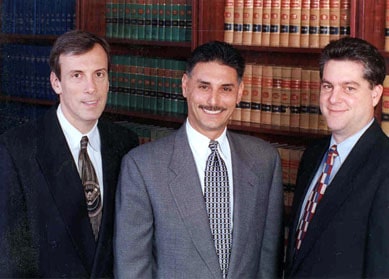
Berman | Sobin | Gross LLP is the largest workers’ compensation law firm in Maryland representing injured workers, with more than 20 attorneys and a track record that includes hundreds of jury trials and multiple appeals before Maryland’s highest courts. One of the firm’s founders authored the definitive two-volume treatise on Maryland workers’ compensation law. That depth of institutional knowledge shows in how cases are built and argued, not just settled.
Speak with a Waldorf Work Injury Lawyer About Your Claim
Work injuries create immediate financial pressure and medical uncertainty at the same time. The decisions made in the early weeks after a job injury, including which physicians you see, what statements you give, and when you file, shape what the rest of the process looks like. Berman | Sobin | Gross LLP’s attorneys represent Charles County workers and those throughout the Waldorf area who need straightforward counsel about where they stand and what their claim is actually worth. Contact the firm to speak with a Waldorf work injury lawyer about your situation and what pursuing your claim fully would involve.