
Maryland Forklift Accident Attorney
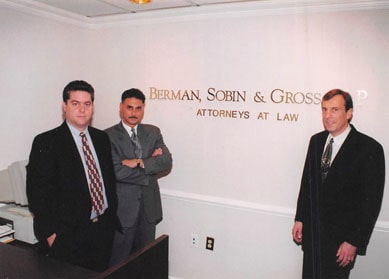
Forklifts are among the most dangerous pieces of equipment in any warehouse, distribution center, or industrial facility, and Maryland has no shortage of workplaces where they operate daily. When something goes wrong, the injuries tend to be catastrophic: crushed limbs, spinal damage, traumatic brain injuries, or fatalities. Workers hurt in these incidents often face a complicated intersection of workers’ compensation law, third-party liability claims, and employer conduct that goes beyond an ordinary on-the-job injury. A Maryland forklift accident attorney at Berman | Sobin | Gross LLP can evaluate what actually happened, identify every avenue of recovery available, and pursue the full scope of what you are owed.
Why Forklift Injuries Produce Some of the Most Complex Workers’ Comp Claims
The severity of forklift injuries is not the only thing that sets these cases apart. The legal and evidentiary issues they raise are genuinely more layered than a slip-and-fall or repetitive stress claim, and that complexity matters when it comes to recovering adequate benefits.
First, there is the question of fault and causation. Forklift accidents often involve multiple contributing factors: inadequate operator training, poor warehouse layout, defective equipment, overloaded pallets, blocked sightlines, or malfunctioning horns and warning systems. Workers’ compensation in Maryland does not require proving employer fault to collect benefits, but identifying what actually caused the accident is still essential, because it affects whether a third-party lawsuit is also viable alongside the comp claim.
Second, the injuries themselves can be medically complex in ways that create disputes with insurers. A crush injury to the lower extremities may require multiple surgeries, extended rehabilitation, and permanent work restrictions. Insurers and employers frequently challenge whether ongoing treatment is causally related to the incident, or whether a worker is truly unable to return to their pre-injury job. These disputes are not resolved automatically; they require medical documentation, expert opinions, and, when necessary, litigation before the Maryland Workers’ Compensation Commission or in circuit court.
Third, forklift accidents in certain industries, particularly construction, logistics, and manufacturing, can trigger OSHA investigations that produce documentation relevant to your claim. Understanding how to use that record, and how employers sometimes attempt to discredit it, requires familiarity with how these cases actually unfold.
When a Third Party Shares Responsibility for What Happened
Maryland workers’ compensation pays for medical treatment and a portion of lost wages, but it does not compensate for pain and suffering, and the wage replacement formulas often leave injured workers well short of what they were earning before the accident. When a party other than your employer bears some responsibility for the incident, a separate personal injury claim can fill those gaps.
In forklift accidents, third-party liability most commonly arises in a few specific situations. If the forklift itself was defective, the manufacturer or distributor may face a product liability claim. If the accident happened at a worksite controlled by a general contractor or property owner who allowed unsafe conditions, that party may be independently liable. If a co-worker who was not your employer operated the forklift recklessly, the analysis becomes more nuanced but is still worth examining. And if a vendor, maintenance company, or outside contractor performed negligent repairs or modifications to the equipment, their liability is squarely on the table.
Berman | Sobin | Gross LLP handles both the workers’ compensation component and, where applicable, the personal injury component of these cases. The two tracks require different legal strategies and different types of evidence, but they proceed together, and coordinating them correctly from the beginning prevents recoveries from being offset in ways that leave money on the table.
What Maryland Employers and Insurers Typically Dispute in These Cases
Workers who are injured in forklift accidents do not always receive the full benefits to which they are entitled without a fight. Certain disputes come up repeatedly in these claims, and anticipating them makes a meaningful difference in how a case is prepared.
Causation challenges are common, particularly when a worker has a prior back or joint condition. Insurers may argue that the injury was pre-existing and not the result of the workplace accident. The legal standard in Maryland allows for compensation when a work incident aggravates, accelerates, or combines with a pre-existing condition to cause disability, but documenting that causal relationship requires careful coordination with treating physicians.
Permanent partial disability ratings are another frequent flashpoint. After a serious forklift injury, the rating assigned to your permanent impairment determines a significant portion of your compensation. Employer-retained medical experts often give lower ratings than independent physicians. The Commission weighs this testimony, and having physicians who can clearly and credibly explain the long-term functional impact of the injury makes a real difference.
Employers may also contest the nature of a worker’s job restrictions, arguing that modified duty positions satisfy their obligations even when those positions are medically inappropriate, far below the worker’s earning capacity, or effectively unavailable. Maryland law on light duty offers is not straightforward, and workers who refuse inappropriate assignments without guidance risk jeopardizing their benefits.
What Workers at Maryland’s Warehouses, Ports, and Industrial Sites Should Know
Maryland’s economy includes significant logistics, port operations, construction, and distribution activity, and forklifts are central to all of it. The Port of Baltimore, the distribution corridors along I-70 and I-95, and the large warehouse complexes in Prince George’s, Anne Arundel, and Frederick counties employ thousands of workers who operate or work alongside powered industrial trucks every day.
OSHA standards require employers to certify forklift operators, conduct regular equipment inspections, maintain clear pedestrian lanes, and impose load capacity limits, among other requirements. When employers fail to meet these standards and a worker is hurt as a result, that noncompliance is not just a regulatory matter; it is directly relevant to the legal claims that follow. Workers who were never properly trained, who were required to operate equipment with known defects, or who were pressured to move loads beyond rated capacity have specific facts working in their favor that should be developed from the moment a claim is filed.
Berman | Sobin | Gross LLP serves workers throughout Maryland, including those in the Baltimore, Gaithersburg, Frederick, Lutherville, and surrounding areas, and the firm has the resources and reach to handle cases from every corner of the state. The firm is the largest workers’ compensation law firm in Maryland representing injured workers, and its attorneys have handled tens of thousands of hearings along with hundreds of workers’ compensation jury trials and appeals before Maryland’s highest courts.
Questions Injured Workers Ask About Forklift Accident Claims in Maryland
Can I file a workers’ comp claim and a personal injury lawsuit at the same time?
Yes, in many situations. Workers’ compensation is typically the exclusive remedy against your employer, but it does not bar claims against third parties whose negligence contributed to the accident. If a defective forklift, a negligent property owner, or an outside contractor played a role, those claims can proceed alongside your workers’ comp case. The recoveries are coordinated under Maryland law, but pursuing both is often the only way to be fully compensated.
What if my employer says the accident was my fault?
Maryland’s workers’ compensation system generally does not require you to prove your employer was negligent, and contributory negligence is not a defense in workers’ comp claims. Even if you made an error that contributed to the accident, you are typically still entitled to benefits. What matters is whether you sustained a compensable injury arising out of and in the course of your employment.
How long do I have to file a claim after a forklift accident in Maryland?
The statute of limitations for workers’ compensation claims in Maryland is generally two years from the date of the accident. However, you are required to notify your employer of the injury promptly, and delays in reporting can create problems with your claim even within the filing period. For any separate personal injury claim, different deadlines apply. Waiting diminishes the quality of evidence and creates unnecessary complications.
What happens if the forklift was defective but my employer owned it?
A defective product claim runs against the manufacturer or distributor, not necessarily the owner. If the forklift had a design defect, a manufacturing flaw, or inadequate safety warnings that contributed to the accident, the product liability claim is against those parties. Your employer’s ownership of the equipment does not eliminate that avenue of recovery.
Can I receive compensation if a co-worker was operating the forklift that hit me?
Yes. Workers’ comp covers you regardless of which employee caused the accident. Whether the third-party claim analysis applies to co-workers depends on the specific circumstances, including whether the co-worker was acting in the scope of employment and whether any exceptions to the co-worker immunity rules apply under Maryland law.
What benefits are available through workers’ compensation for a serious forklift injury?
Maryland workers’ compensation can cover all reasonable and necessary medical treatment, temporary total or temporary partial disability payments while you are unable to work or working reduced hours, permanent partial or permanent total disability awards, and vocational rehabilitation if you cannot return to your prior job. The specific calculations depend on your average weekly wage, the nature and extent of your injury, and the Commission’s findings.
My injury happened months ago and I still have not gotten everything sorted out. Is it too late to get help?
Not necessarily. Disputed claims, inadequate benefit payments, and contested disability ratings can be addressed at hearings before the Maryland Workers’ Compensation Commission even after the initial filing. If you have been receiving some benefits but believe they are insufficient, or if your claim has been denied, there are procedural options available. The sooner you get proper representation involved, the better positioned you will be.
Talk to a Maryland Forklift Injury Lawyer About Your Case
Forklift accidents change lives in ways that deserve serious, thorough legal representation. At Berman | Sobin | Gross LLP, our attorneys do not look for straightforward cases; we take on the challenging ones and have the resources, courtroom experience, and appellate track record to back that up. If you were hurt in a forklift accident at a Maryland workplace, contact Berman | Sobin | Gross LLP for a confidential case analysis with a Maryland forklift injury lawyer who will stay with you through every stage of your claim.