

Laurel Work Injury Attorney
Workers in Laurel deal with physical demands that most people never think about. Warehouse distribution centers along Route 1, construction crews working the ongoing development corridors near Maryland Route 198, healthcare workers at area medical facilities, and public safety employees throughout Prince George’s and Howard counties all face real occupational hazards every day. When a workplace injury happens, the decisions made in the first days and weeks can shape the outcome of the entire claim. A Laurel work injury attorney from Berman | Sobin | Gross LLP can help injured workers understand what they are actually entitled to under Maryland law, and work to make sure those benefits are not shortchanged.
What Maryland Workers’ Compensation Actually Covers for Laurel Employees
Maryland workers’ compensation is not simply a wage replacement program. The coverage that an injured worker can receive extends across several benefit categories, and understanding what each one does matters when you are deciding whether a claim is being handled correctly.
Temporary total disability benefits replace a portion of lost wages while a worker is completely unable to do their job during recovery. Temporary partial disability applies when a worker can return to lighter duty but earns less than before. Permanent partial disability benefits address lasting impairment that does not prevent all work but leaves a measurable deficit in a worker’s ability to function. In the most serious cases, permanent total disability benefits may apply. Each of these categories has its own calculation method, its own procedural requirements before the Maryland Workers’ Compensation Commission, and its own vulnerability to employer or insurer disputes.
Medical benefits are separate from wage benefits and cover all reasonable and necessary treatment causally related to the work injury. This includes not just emergency care but ongoing treatment, specialist visits, physical therapy, prescription medications, surgical procedures, and in appropriate circumstances, vocational rehabilitation. The employer and their insurer direct medical care in Maryland, which creates friction points that injured workers often do not anticipate. When an insurer denies treatment a physician recommends, that denial can be challenged, but doing so requires knowing the procedural path to follow.
Injury Patterns That Generate Complex Claims in and Around Laurel
Not all workplace injuries lead to contested claims. A clean fracture with an obvious mechanism, prompt treatment, and a full recovery rarely creates prolonged litigation. The cases that become genuinely difficult share certain features, and Laurel workers encounter them with regularity.
Repetitive motion injuries are among the most disputed claim types in Maryland. A warehouse associate who develops carpal tunnel syndrome from years of sorting and packing, or a delivery driver whose shoulder deteriorates from repetitive loading, will often face an insurer argument that the condition is degenerative rather than occupational. The causation fight in these cases requires medical evidence that connects the job duties directly to the diagnosis, and that connection is not always established in initial medical records.
Occupational disease claims, particularly those affecting respiratory health, present similar challenges. Workers in certain trades and facilities may not develop symptoms until years after exposure, complicating the process of establishing which employer, which policy period, and which insurer bears responsibility. Maryland law addresses this through specific occupational disease provisions, but navigating those provisions is not straightforward.
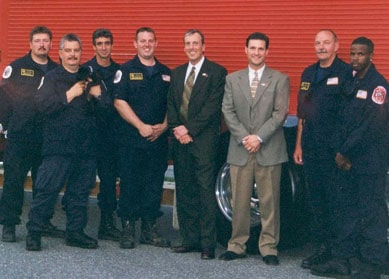
Public safety workers in Prince George’s and Howard counties face a different category of complexity. Maryland law provides enhanced presumptions for certain conditions in firefighters, law enforcement officers, EMTs, and other public safety employees, meaning that heart disease, hypertension, and certain other conditions are presumed to be job-related unless the employer disproves that connection. Berman | Sobin | Gross LLP has litigated cases defining and expanding those presumptions, including victories before Maryland’s appellate courts that shaped how the law applies to first responders throughout the state.
How the Commission Process Works and Where Disputes Land
Maryland’s workers’ compensation system routes most disputes through the Maryland Workers’ Compensation Commission before they can go to circuit court. The Commission holds hearings, takes evidence, and issues awards on contested issues ranging from compensability to the extent of permanent disability. Understanding the procedural sequence matters, because procedural mistakes, missed filing deadlines, or incomplete claim documentation can limit what a worker recovers.
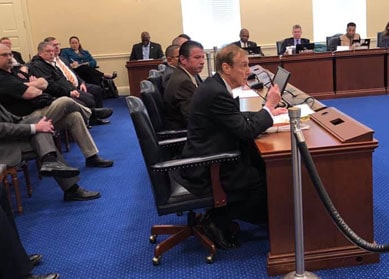
When a party disagrees with a Commission award, the case can be appealed to the circuit court, where either side has the right to a jury trial. Most workers’ compensation claims never reach a jury, but for cases involving serious injuries, contested causation, or disputed disability ratings, the possibility of trial is real. Berman | Sobin | Gross LLP has handled hundreds of workers’ compensation jury trials and has appeared before both of Maryland’s highest courts on workers’ compensation appeals. That appellate record matters for complex claims, because it means the attorneys handling a case have actually litigated these issues, not just settled them early.
For Laurel workers, the applicable circuit court jurisdiction will depend on where the injury occurred. Cases arising within Prince George’s County go before that county’s circuit court, while injuries in the Howard County portions of the Laurel area follow Howard County’s docket. The procedural timelines and local practices in each court are not identical, and that kind of local knowledge affects how a case is prepared.
Questions Laurel Injured Workers Frequently Ask
What if my employer says my injury was my own fault?
Maryland’s workers’ compensation system is a no-fault system for most injuries. An employee does not need to prove that the employer was negligent, and contributory negligence by the worker is generally not a defense against a workers’ compensation claim. There are narrow exceptions, such as injuries caused intentionally or through intoxication, but the general rule is that fault assignment does not determine whether a claim is compensable.
My employer told me not to file a claim. What should I do?
An employer cannot lawfully discourage or retaliate against an employee for filing a workers’ compensation claim in Maryland. If you were pressured not to report an injury or discouraged from pursuing a claim, that pressure does not eliminate your rights. Claims must still be reported and filed within statutory deadlines regardless of what an employer says, so getting prompt legal guidance is important when this happens.
Can I see my own doctor, or do I have to use the employer’s chosen provider?
Maryland law gives employers and their insurers the initial right to direct medical care. An injured worker generally must treat with the employer-designated provider at the outset. However, injured workers can request a change of treating physician under certain circumstances, and the Commission can authorize alternative providers when the designated care is inadequate. This is an area where legal assistance often makes a meaningful difference.
What happens if my insurer denies my claim as not work-related?
A denial of compensability is one of the most common disputes before the Maryland Workers’ Compensation Commission. The worker has the right to contest the denial, present medical evidence, and have a hearing before a Commissioner. Denials are not final outcomes. A significant number of denied claims are successfully challenged, particularly when strong medical documentation is developed and the right evidence is presented at the hearing.
I was hurt doing a task slightly outside my normal job duties. Does that matter?
Maryland law covers injuries that arise out of and in the course of employment. Courts have interpreted this language broadly in many circumstances. An injury that occurs during a task related to the job, even if it was not the worker’s standard assignment, can still be compensable. The analysis is fact-specific, but an activity being somewhat outside a job description does not automatically disqualify a claim.
My injury happened over time, not in a single accident. Can I still file?
Yes. Maryland recognizes both traumatic injuries and occupational diseases, as well as conditions caused by repetitive workplace exposure. The filing deadlines and procedural requirements differ somewhat depending on claim type, but gradual-onset injuries are covered under Maryland law. The key is filing within the applicable statute of limitations from the date you knew or reasonably should have known that the condition was work-related.
What if a previous injury or pre-existing condition is involved?
Pre-existing conditions complicate many workers’ compensation claims but do not bar them. Maryland law allows compensation where work aggravated, accelerated, or combined with a pre-existing condition to produce disability. Insurers frequently argue that a condition is purely pre-existing and therefore not compensable. Medical evidence that clearly addresses the work contribution to the current disability is critical in these cases.
Representing Laurel Workers After a Job Injury
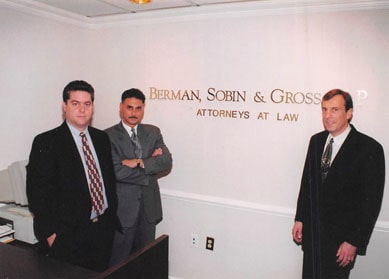
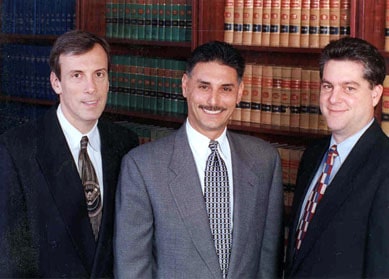
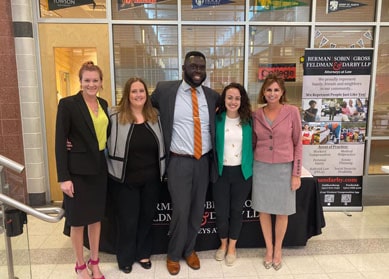
Berman | Sobin | Gross LLP has spent 35 years representing injured workers throughout Maryland, growing from three attorneys to a firm of more than twenty with offices in Lutherville, Baltimore, Gaithersburg, and Frederick. The firm represents the full range of workers who keep Maryland functioning, including firefighters, paramedics, EMTs, law enforcement and corrections officers, teachers, truck drivers, and workers in construction, food service, and communications. Spanish-speaking clients can work with attorneys and staff fluent in Spanish, without concerns about language barriers affecting their representation. When other attorneys have declined a case or stopped short of taking it through a full hearing, this firm has consistently taken on the difficult claims that require real litigation, not just administrative appearances. One of the firm’s founders wrote the authoritative two-volume treatise on Maryland workers’ compensation that practitioners throughout the state still rely on today.
For workers in Laurel who have been hurt on the job, the path forward starts with understanding what your claim is actually worth and what obstacles stand between you and those benefits. A Laurel work injury lawyer from Berman | Sobin | Gross LLP will evaluate your claim honestly, explain what the process looks like for your specific type of injury, and represent you through every stage from the initial filing through any hearings or appeals that follow.