
Upper Marlboro Work Injury Attorney
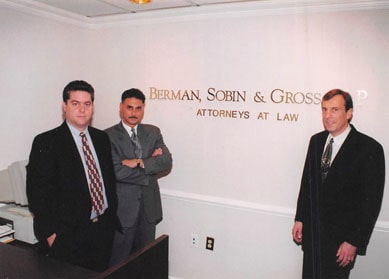
Prince George’s County keeps Maryland running. Government workers, construction crews, healthcare staff, transportation employees, and school personnel make up the backbone of the Upper Marlboro workforce, and they face real physical risks every single day. When a job injury happens, the workers’ compensation system is supposed to provide a clear path to benefits. In practice, that path is rarely as straightforward as it looks on paper. Berman | Sobin | Gross LLP has spent 35 years representing injured Maryland workers, and our attorneys understand exactly where these claims succeed and where they get derailed. If you need an Upper Marlboro work injury attorney, this firm has the depth of experience to handle your claim from the initial filing through trial if it comes to that.
What Gets Complicated About Work Injuries in Prince George’s County
Prince George’s County has a large concentration of public sector employees. That matters because government workers, including county employees, state workers, and federal contractors, often navigate a different set of rules than private-sector employees. Public safety workers, such as firefighters, paramedics, EMTs, and corrections officers, may be entitled to enhanced benefits under Maryland law, including presumptions that link certain diagnoses directly to their job. Berman | Sobin | Gross LLP has litigated landmark cases on exactly these presumptions. In Downer v. Baltimore County, our firm established that EMTs qualify as public safety employees entitled to those enhanced benefits.
Construction activity along the Route 4 and Route 301 corridors, along with development near Joint Base Andrews and surrounding commercial areas, generates significant numbers of workplace accidents. Industrial sites, warehouses, and distribution centers in the county also produce a steady volume of serious injuries, from repetitive stress conditions to acute traumatic injuries. The employer and its insurer will have claims professionals on their side from the moment an accident is reported. Workers who try to navigate this process alone frequently end up with less than they are owed.
How Maryland Workers’ Compensation Actually Pays Out After a Serious Injury
Maryland workers’ compensation provides several categories of benefits, and understanding how they interact matters a great deal for someone with a significant injury. Temporary total disability benefits replace a portion of lost wages when a worker cannot return to any work during recovery. Temporary partial disability applies when an employee returns to lighter duties at reduced pay. Permanent partial disability benefits compensate for lasting impairment to a body part or system, rated through an evaluation process that is frequently contested. Permanent total disability is reserved for workers who cannot perform any gainful employment as a result of their injuries.
Medical treatment is also covered, but the employer and insurer generally have the right to direct that treatment, at least initially. Disputes over authorized treatment are common, particularly for surgeries, specialist referrals, or long-term pain management. Vocational rehabilitation may be available when an injury prevents a worker from returning to their previous occupation. The firm secured a decision in Fikar v. Montgomery County confirming that workers receiving service-connected disability retirement are still eligible for vocational rehabilitation services under Maryland law.
The timeline matters too. Permanent disability ratings are often assigned before a worker has fully stabilized, and insurers sometimes push for settlements while the full extent of an injury is still unclear. Accepting a lump sum prematurely can close off future medical claims. An attorney reviewing your case before you sign anything is not a precaution, it is essential.
When Wage Loss Benefits Become a Fight
One of the most contested areas in Maryland workers’ compensation involves wage loss calculations, particularly for workers who regularly earned overtime before their injury. A worker earning a base salary plus substantial overtime income can suffer a significant income drop even when receiving “full” temporary disability payments, because benefits are typically calculated on a percentage of average weekly wages. Berman | Sobin | Gross LLP argued and won Montgomery County v. Deibler, which established that public safety workers on light duty who had earned overtime before their injury can still seek compensation for that lost overtime income.
For workers at Prince George’s County government agencies, the Maryland-National Capital Park and Planning Commission, school system employees, or county health department staff, this issue surfaces regularly. Overtime is not a bonus for many of these workers; it is a built-in component of how they earn their living. When an injury strips away that income stream, the financial impact on a family can be immediate and severe.
Disputes also arise when employers claim a modified-duty position is available and attempt to reduce or eliminate wage benefits. These offers need to be evaluated carefully. A job that exists on paper but cannot be performed given your actual restrictions is not a legitimate return-to-work option, and our attorneys know how to challenge those situations before the Maryland Workers’ Compensation Commission.
Questions Injured Workers in Upper Marlboro Are Asking
Do I have to report my injury to my employer right away?
Maryland law requires that you notify your employer of a work injury within 10 days of the accident, though there are some exceptions for occupational diseases and injuries that develop gradually. Missing this deadline can jeopardize your claim. If you were unable to report because of your injury, or if your employer discouraged you from doing so, speak with an attorney about your options.
My employer is saying my injury isn’t work-related. What can I do?
Employers and insurers dispute causation frequently, particularly for soft tissue injuries, repetitive stress conditions, and any injury without a clear traumatic event on record. The Workers’ Compensation Commission holds hearings where medical evidence and witness testimony can establish that your condition is work-related. This is a fight that benefits from legal representation because the burden is on you to prove the connection.
Can I choose my own doctor?
Maryland law allows injured workers to select their treating physician from a panel of authorized providers. You are not required to treat only with physicians chosen by your employer or insurer, though navigating the authorization process for certain treatments can be complicated. If you feel your care is being limited in ways that are affecting your recovery, that issue should be addressed through your claim.
What if my injury keeps me from going back to my old job permanently?
Permanent disability benefits, including permanent total disability for the most serious cases, are designed to address this. The rating process involves medical evaluations, and the assigned rating affects the value of your claim significantly. These ratings are frequently disputed by the insurer. Vocational rehabilitation services may also be part of a long-term resolution if you need to transition to a different type of work.
I’m a Prince George’s County public safety worker. Does that change my rights?
Yes, in important ways. Maryland law provides specific presumptions for public safety employees, linking certain diseases and conditions to their work without requiring the employee to prove causation in the ordinary sense. Heart disease, hypertension, and lung disease are among the conditions that carry a presumption for eligible workers. Berman | Sobin | Gross LLP has litigated these presumptions before Maryland’s highest courts and has shaped how they are applied.
How long does a workers’ compensation case take to resolve?
It depends heavily on the severity of the injury, whether the employer or insurer contests the claim, and whether maximum medical improvement has been reached. Straightforward claims with no disputes may resolve in several months. Cases involving permanent disability, surgery, or employer denials often take longer, particularly if hearings or court proceedings are necessary. Settling too early can cost you benefits you are entitled to receive.
Does Berman | Sobin | Gross LLP handle cases that go beyond an administrative hearing?
Yes. Our attorneys have handled hundreds of workers’ compensation jury trials and appeals before Maryland’s highest courts. If your case has been denied at the Commission level, or if another attorney has declined to take it further, we evaluate those claims. We do not avoid the cases that require more work.
Representing Injured Workers Across Prince George’s County and the State
Berman | Sobin | Gross LLP is the largest workers’ compensation law firm in Maryland representing injured workers. Our attorneys work with clients from Upper Marlboro, Largo, Bowie, Waldorf, and communities throughout Prince George’s County and the surrounding region. We have Spanish-speaking attorneys and staff, and we are committed to making sure every client can communicate clearly about their claim. When you work with our firm, one attorney stays with you as your primary contact from start to finish. You will know who represents you and how to reach them.
For an Upper Marlboro work injury attorney who will carry your case as far as it needs to go, contact Berman | Sobin | Gross LLP to discuss your claim.