

Maryland Construction Worker Injury Attorney
Construction sites across Maryland carry real, daily danger. Falls from scaffolding, crane collapses, trench cave-ins, electrocutions, and struck-by accidents send workers to trauma centers every week throughout the state. For workers injured on a job site, the path to full compensation is rarely straightforward, because construction injuries often involve both a workers’ compensation claim and a separate civil claim against a party who was not the employer. A Maryland construction worker injury attorney who understands both tracks, and how they interact, can make a significant difference in the total recovery a worker receives.
Why Construction Sites Produce the Most Serious Occupational Injuries in Maryland
Maryland’s construction industry spans everything from large federal projects in the Washington, D.C. corridor to residential developments in Frederick County, highway expansion work on I-270 and the Beltway, commercial high-rises in Baltimore, and utility infrastructure throughout the Eastern Shore. Workers on these sites face hazards that most occupations never come close to.
The categories that produce the most catastrophic injuries are well documented. Falls remain the leading cause of construction fatalities, and they occur from roofs, ladders, scaffold platforms, and open floor openings. Electrocutions from unguarded power lines or improperly de-energized equipment cause serious burns and cardiac events. Workers are struck by swinging cranes, falling materials, and vehicles operating in tight site conditions. Trench and excavation collapses can bury a worker before a coworker can even respond.
These are not minor soft-tissue cases. Construction injuries frequently involve traumatic brain injuries, spinal cord damage, amputations, severe burns, crush injuries to the hands and feet, and broken bones requiring surgical repair. The recovery periods are long, the medical costs are steep, and the question of whether a worker can return to the same trade is often genuinely uncertain for months or years.
Workers’ Compensation Is Only Part of What a Construction Injury May Be Worth
Maryland workers’ compensation covers lost wages and medical treatment regardless of fault, and for many workers it is the first and most immediate form of relief. But workers’ compensation has limits. It does not compensate for pain and suffering, and wage replacement is calculated on a formula that replaces only a portion of pre-injury earnings. For a worker with a severe, permanent injury, those limits matter enormously.
Construction sites complicate the picture because they routinely involve multiple employers and contractors. A laborer employed by a subcontractor may be injured because of negligence by the general contractor, another subcontractor on the same site, an equipment manufacturer, or a property owner who retained control over specific hazards. In those situations, the injured worker may have a third-party personal injury claim in addition to the workers’ comp claim.
The third-party claim can recover damages that workers’ compensation does not touch: pain and suffering, loss of enjoyment of life, full wage replacement rather than the statutory formula, and future losses that the comp system cannot fully address. These two tracks can run simultaneously, but they also interact in ways that require careful handling. The workers’ comp insurer typically has a lien against any third-party recovery, and how that lien is negotiated affects what the worker actually walks away with.
Identifying every potentially liable third party requires a thorough review of the contracts, site safety plans, OSHA reports, equipment records, and the specific circumstances of how the accident occurred. This is work that benefits from attorneys who do not treat construction cases as a subset of generic personal injury work.
OSHA Investigations and What the Record Can Show
When a serious construction injury or fatality occurs, OSHA typically opens an investigation. The resulting report, citations, and penalty determinations can be significant evidence in a third-party civil claim. An OSHA citation against a general contractor for failing to maintain fall protection, for example, is not conclusive proof of civil liability, but it is the kind of documented record that shapes how a case develops.
At the same time, employers and insurers will generate their own incident reports, and those reports are often prepared with litigation in mind. Getting to the scene quickly, preserving photographic evidence, obtaining witness statements before memories fade, and securing equipment for inspection before it is moved or repaired matters in construction cases in a way that it may not matter in every other type of case.
There are also federal contractor requirements that apply to many Maryland job sites, particularly those involving federal buildings or installations in the D.C. metropolitan area. The Defense Base Act and other federal statutory schemes may apply to workers on certain contracts, adding another layer of complexity to what initially looks like a routine workers’ comp matter.
What Construction Workers in Maryland Actually Need to Know About Their Claims
How long do I have to file a workers’ compensation claim after a construction site injury in Maryland?
Maryland generally requires that you notify your employer of the injury within 10 days and file a workers’ compensation claim within two years of the injury or the date you knew the injury was work-related. Missing the notice deadline can create serious problems, though there are exceptions. Do not assume that because time has passed you have no claim, but do not wait any longer than necessary to get advice.
What if my employer says I was an independent contractor, not an employee?
This is one of the most common issues in construction injury cases. General contractors and subcontractors sometimes classify workers as independent contractors in ways that do not hold up legally. Maryland law looks at the actual relationship and the degree of control the hiring party exercised over the work, not just what a contract says. Many workers labeled “independent contractors” are found to be employees entitled to workers’ compensation coverage.
Can I sue the general contractor if I was hired by a subcontractor?
Potentially, yes. The general contractor, property owner, equipment manufacturers, or other subcontractors are not your employer for workers’ compensation purposes, which means you are not barred from bringing a negligence claim against them the way you would be against your direct employer. These third-party claims are often where the most significant additional recovery comes from in serious construction injury cases.
What if I was partially at fault for the accident?
Maryland uses a contributory negligence standard in civil cases, which is stricter than most states. A finding that you were even partially at fault can bar your third-party claim. This makes how liability is argued and framed critically important. On the workers’ compensation side, fault generally does not affect your right to benefits, which is one reason the comp claim matters even when a third-party claim is also available.
My injury happened because of a defective piece of equipment. Does that change anything?
It can open a products liability claim against the manufacturer, distributor, or rental company that supplied the equipment. These claims operate under different legal theories than negligence claims against contractors. If a piece of scaffolding, a power tool, a crane component, or any other equipment contributed to the injury because of a defect rather than simple misuse, that avenue should be investigated as part of evaluating the full claim.
Will I have to pay back my workers’ comp benefits if I win a third-party lawsuit?
The workers’ compensation insurer holds a lien on third-party recoveries, meaning they can seek reimbursement for what they paid in benefits. However, that lien is subject to negotiation and reduction, and how aggressively it is negotiated affects how much of the third-party recovery the worker actually keeps. This is not a reason to avoid pursuing a third-party claim. It is a reason to have attorneys handling both the comp and civil sides who understand how to coordinate them.
What benefits are available through workers’ compensation for a serious construction injury?
Maryland workers’ compensation covers reasonable and necessary medical treatment for the injury, temporary total or partial disability benefits while you are unable to work, permanent partial or permanent total disability benefits based on the extent of lasting impairment, and vocational rehabilitation services if you cannot return to your previous occupation. For workers with catastrophic injuries, understanding the full scope of available benefits and how they are calculated is worth significant attention.
Representing Maryland Construction Workers From the Commission to the Courthouse
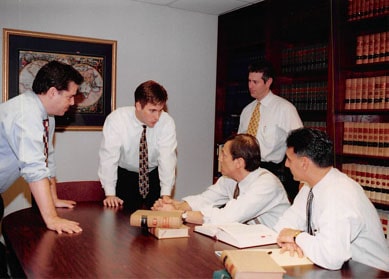
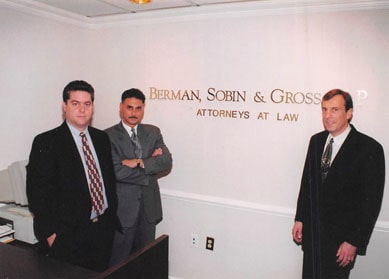
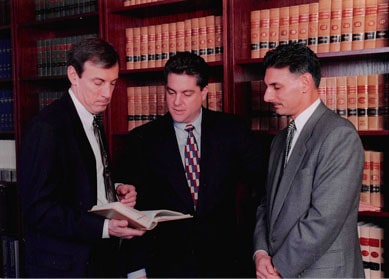
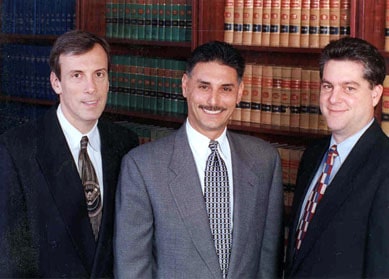
For 35 years, the attorneys at Berman Sobin Gross LLP have represented workers across Maryland in some of the most demanding workers’ compensation and workplace injury cases the state produces. The firm has handled hundreds of workers’ compensation trials and appeals, including cases argued before Maryland’s highest courts. When a case requires going beyond an administrative hearing, the attorneys here are prepared to go there.
Construction injury cases often require exactly that. They are factually complex, involve multiple parties with competing interests, and frequently require coordination across the workers’ comp system and the civil courts. The firm’s attorneys take on cases that require more time and resources, not just the straightforward ones. If you have been told by another attorney that your case is too complicated, or that it is not worth pursuing past an initial hearing, that is a conversation worth having with attorneys who have the track record and the willingness to do the deeper work.
Berman Sobin Gross LLP serves injured workers throughout Maryland, with offices in Lutherville, Baltimore, Gaithersburg, and Frederick, and the ability to represent clients anywhere in the state.
Talk to a Maryland Construction Injury Attorney About Your Options
A serious construction injury changes everything, often all at once: the ability to work, the family’s finances, the long-term physical prognosis. Getting the full picture of what compensation is available, and then building the right strategy to pursue it, is not something that benefits from delay. The attorneys at Berman Sobin Gross LLP are available for a confidential case analysis. Reach out to any of our Maryland offices to speak directly with a construction worker injury attorney about your situation and what it may be worth to pursue.