

Wheaton Roofer Injury Attorney
Roofing is consistently ranked among the most dangerous trades in the country. Falls from heights, structural collapses, heat exposure, and tool injuries send Maryland roofers to emergency rooms every year, and many of those workers never fully return to the work they depended on. If you were hurt on a roofing job in or around Wheaton, a Wheaton roofer injury attorney at Berman | Sobin | Gross LLP can help you understand what benefits you are owed and make sure you are not left carrying the financial weight of someone else’s failure to keep the worksite safe.
Why Roofing Injuries in Wheaton Tend to Be Complicated Claims
Wheaton’s construction environment is active. Residential re-roofing jobs, commercial flat roof maintenance on the retail corridors along Georgia Avenue and University Boulevard, and new builds tied to ongoing development all keep roofers busy year-round. That activity also creates a dense web of contractors, subcontractors, and property owners whose legal obligations can overlap in ways that make injury claims harder to sort out than a standard workplace accident.
When a roofer gets hurt, the first question is often who the employer actually is. Many roofing crews operate under subcontracting arrangements, and general contractors sometimes try to classify workers as independent contractors to avoid workers’ compensation liability. Maryland law has specific tests for employment status, and the outcome of that analysis directly affects which benefits you can claim and from whom.
There is also the question of whether a third party, meaning someone other than your employer, contributed to the conditions that caused your injury. A property owner who concealed a structural defect. A scaffolding supplier whose equipment failed. A general contractor whose site management created the fall hazard. These are not workers’ compensation questions. They are personal injury claims that can run alongside a workers’ comp case and produce additional recovery. Missing that parallel claim is a costly mistake.
The Injuries That Change a Roofer’s Life
Falls from rooftops, ladders, and scaffolding produce some of the most serious injuries in any workplace. Spinal cord damage, traumatic brain injury, multiple fractures, and torn ligaments do not resolve in a few weeks. They require surgeries, extended rehabilitation, and in some cases, permanent accommodations. A roofer who cannot climb ladders anymore is not just facing medical bills. He or she is facing a fundamental change in earning capacity.
Heat-related illness is another category that gets underreported. Wheaton summers are brutal on rooftops, where surface temperatures can far exceed air temperature. Heat exhaustion and heat stroke can leave lasting neurological effects that are not immediately obvious in the days after an incident.
Repetitive stress injuries accumulate over careers. Knee damage from constant kneeling, shoulder injuries from overhead nailing, and back problems from carrying heavy materials are all compensable under Maryland workers’ compensation, but they require careful documentation because employers and insurers routinely challenge whether these conditions are work-related.
The severity of a roofing injury shapes every decision in the claims process: which medical providers you see, whether you accept an early settlement offer, whether you pursue permanent disability benefits, and whether you have grounds for litigation beyond the Commission. Getting those decisions right from the beginning matters.
Maryland Workers’ Compensation and What It Actually Covers for Roofers
Maryland’s workers’ compensation system provides medical benefits, wage replacement, and, in serious cases, permanent disability awards. For a roofer who is temporarily unable to work, temporary total disability benefits replace a portion of lost wages. If you can return to work but at reduced capacity or in a different role, temporary partial disability benefits may apply.
Permanent impairment ratings become central when an injury leaves lasting physical limitations. These ratings, typically assigned by physicians, translate into specific compensation under the Maryland schedule. The difference between a low rating and a rating that accurately reflects your functional loss can be substantial in dollar terms, and insurers have every reason to push for the lower number.
Medical treatment must be authorized, and disputes over what treatment is necessary and covered are among the most common friction points in Maryland workers’ comp cases. If an insurer denies a surgery your doctor recommends, that denial can be challenged at the Maryland Workers’ Compensation Commission. That process has procedural requirements and deadlines that affect your ability to get relief.
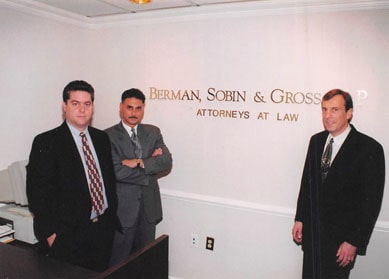
Berman | Sobin | Gross LLP has spent 35 years handling workers’ compensation cases throughout Maryland, appearing before the Commission and, when necessary, taking cases into the courts. One of the firm’s founders authored the comprehensive two-volume treatise on Maryland workers’ compensation that practitioners across the state still rely on. That depth of knowledge is available to injured roofers in Wheaton from the first call through resolution.
Questions Injured Wheaton Roofers Actually Ask
Can I file a workers’ comp claim if I was called an independent contractor on the job?
Maryland uses a multifactor test to determine actual employment status, not just whatever label a contractor puts on a working relationship. If you were told when and how to work, used the company’s tools or materials, and worked exclusively for that employer on a regular basis, you may well be an employee under Maryland law regardless of how you were classified on paper. This is worth examining before accepting that you have no claim.
What if the property owner or a different contractor caused the condition that led to my fall?
A third-party personal injury claim can exist alongside a workers’ compensation claim. These are separate legal theories with different damages available, including pain and suffering, which workers’ comp does not cover. Identifying all potentially liable parties quickly matters because evidence disappears and sites get modified after accidents.
My employer says I was not wearing proper safety gear when I got hurt. Does that end my claim?
Maryland workers’ compensation is a no-fault system. Employee negligence, including failure to use safety equipment, does not bar a claim. The focus is on whether the injury arose out of and occurred in the course of employment, not on who was at fault.
How long do I have to file a workers’ compensation claim in Maryland?
For most workplace accidents in Maryland, you have 60 days to provide notice to your employer and generally two years from the date of accidental injury to file a claim with the Commission. Missing those windows can forfeit your right to benefits entirely. If your injury developed gradually over time, different rules about notice and filing timelines apply, and those rules benefit from early legal guidance.
What happens if I cannot return to roofing at all?
If your injury prevents you from returning to your prior work, vocational rehabilitation services may be available under Maryland workers’ compensation. In certain cases involving severe permanent impairment, benefits can be substantial. A Maryland appellate case that Berman | Sobin | Gross LLP was involved in, Fikar v. Montgomery County, specifically established that injured workers receiving service-connected disability retirement can also receive vocational rehabilitation services, which illustrates the kind of precedent-level advocacy the firm brings to complex outcomes.
Can I choose my own doctor?
Maryland law gives injured workers the right to select their own treating physician from a list of authorized providers. Early decisions about medical providers have long-term consequences for your claim, particularly because your treating physician’s opinions about impairment and work restrictions carry significant weight in the compensation process.
What if my employer does not have workers’ compensation insurance?
Maryland has an Uninsured Employers’ Fund designed specifically for situations where an employer fails to carry required workers’ compensation coverage. Filing against that fund involves specific procedures. Additionally, an uninsured employer may face direct civil liability, which opens additional avenues for recovery.
Talking to a Wheaton Roofing Accident Lawyer
Berman | Sobin | Gross LLP represents injured workers across Maryland, with offices in Lutherville, Baltimore, Gaithersburg, and Frederick. Wheaton workers have straightforward access to legal counsel without traveling far. The firm is the largest workers’ compensation law firm in Maryland representing injured workers, with attorneys who have handled tens of thousands of Commission hearings, hundreds of jury trials, and appeals before both of Maryland’s highest courts. Spanish-language services are available for clients who are more comfortable communicating in Spanish.
If you were hurt on a roofing job in Wheaton or the surrounding communities, the attorneys at Berman | Sobin | Gross LLP are ready to evaluate what happened, identify all available claims, and help you make informed decisions about the path forward. Contact the firm today to speak with a Wheaton roofing accident attorney about your case.