

Wheaton Factory Worker Injury Attorney
Factory and manufacturing work in Wheaton and the surrounding Montgomery County corridor carries risks that office workers rarely think about. Heavy machinery, repetitive motion, chemical exposure, loading dock hazards, and production line pressure create conditions where serious injuries happen with troubling regularity. When a Wheaton factory worker injury attorney is what you need, the firm you choose will shape whether you receive the full benefits Maryland law provides or whether you settle for far less than your injury actually costs you.
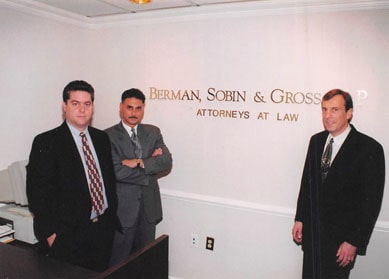
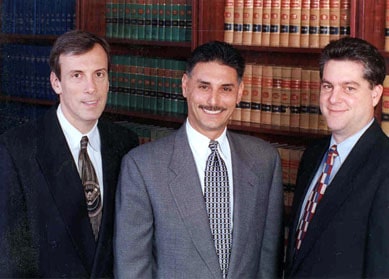
Berman | Sobin | Gross LLP has spent 35 years representing injured workers across Maryland, including workers in Montgomery County’s industrial and manufacturing sectors. The firm grew from three attorneys to more than twenty, with offices in Lutherville, Baltimore, Gaithersburg, and Frederick, because the demand for serious workers’ compensation representation never slows down. Factory workers are exactly the kind of clients this firm was built to serve.
What Factory Injuries in Wheaton Actually Look Like in a Workers’ Comp Claim
Not all workplace injuries move through Maryland’s workers’ compensation system the same way. A factory injury often involves a combination of factors that make the claim more complicated than a straightforward slip and fall: pre-existing conditions that employers use to dispute causation, disputed medical opinions about the extent of a machine-related injury, and disagreements over whether an injury was caused by a single incident or by cumulative occupational exposure over time.
Repetitive stress injuries are common in production and assembly environments. Carpal tunnel syndrome, rotator cuff damage, lumbar injuries from sustained lifting, and knee deterioration from prolonged standing on concrete floors are all documented occupational injuries in factory settings. Employers and their insurers frequently challenge these claims by arguing the condition is degenerative rather than work-related. Getting the medical record right from the start, and securing the right medical opinion, is often what decides these cases.
Acute traumatic injuries, the kind caused by a machine malfunction, a forklift accident, or a chemical spill, typically generate clearer liability but not always clearer outcomes. Insurers may accept the injury but dispute the severity, the treatment plan, or the degree of permanent disability. At that point, the gap between what you are offered and what you are actually owed can be substantial.
Third-Party Liability When Equipment or Contractors Are Involved
Maryland workers’ compensation covers injuries regardless of fault, which is the system’s basic design. But workers’ comp is also the exclusive remedy against your employer, meaning you generally cannot sue your employer separately. However, if your factory injury was caused or contributed to by a third party, that limitation does not apply to them.
In a factory setting, third-party claims arise more often than most injured workers realize. A machine manufactured with a defective guard or inadequate safety design can give rise to a product liability claim against the manufacturer. A contractor working in the facility who created the hazard that injured you may be independently liable. A company responsible for maintaining equipment that failed may carry separate exposure.
Pursuing both a workers’ compensation claim and a third-party civil claim simultaneously requires coordination and strategy. Benefits received through workers’ comp create a subrogation interest that must be managed carefully within any civil recovery. Missing the opportunity to pursue a third-party claim is one of the more costly mistakes injured factory workers make, often because their initial attorney only handles one side of the equation.
Berman | Sobin | Gross LLP handles personal injury and workers’ compensation, which means clients do not have to split their cases between two firms and hope those attorneys communicate. Learn more about the firm’s workers’ compensation representation and its approach to workplace injury claims.
Occupational Disease Claims for Factory Workers
Not every factory injury is sudden. Chemical exposure, dust inhalation, noise-induced hearing loss, and skin conditions caused by industrial materials are occupational diseases, and Maryland law treats them differently than acute traumatic injuries. The statute of limitations for occupational disease claims runs from the date the worker knew or should have known that the condition was work-related and disabling. That calculation is not always obvious, and missing the filing window ends the claim entirely.
The firm’s track record in occupational disease litigation is documented in its appellate victories. In Montgomery County v. Cochran and Bowen, the firm successfully clarified that occupational deafness claims calculate the age deduction from the last date of injurious exposure, not the date of an audiogram. For factory workers exposed to industrial noise, that distinction directly affects the value of a hearing loss claim. That ruling came from Berman | Sobin | Gross LLP going beyond administrative hearings and into Maryland’s courts because the correct outcome required it.
For workers in Wheaton’s manufacturing and warehouse sectors who are dealing with conditions that developed gradually over years of exposure, the path through the workers’ compensation system requires careful handling of both the medical and legal timelines.
Questions Factory Workers Ask About Their Claims
Do I have to use the doctor my employer’s insurance company sends me to?
Maryland law gives injured workers certain rights to select treating physicians, though the workers’ compensation process involves specific procedures around authorized treatment. You are not required to simply accept the insurer’s preferred physician as the final word on your condition. An independent medical examination and a second opinion can be critical when the insurer’s doctor minimizes your injury or contradicts your treating physician’s findings.
My employer is saying my back injury was pre-existing. Does that mean I have no claim?
No. Maryland workers’ compensation covers aggravation of pre-existing conditions when work activities contributed to the worsening. The fact that you had a prior back issue does not automatically disqualify your claim. What matters is whether your work activities, whether a single incident or cumulative exposure, played a role in causing or worsening the current condition.
What happens if I was injured by a piece of equipment and the manufacturer might be at fault?
You may have both a workers’ compensation claim and a separate product liability claim against the manufacturer or distributor of the defective equipment. These claims operate on different legal tracks. Workers’ comp is no-fault and governed by the Maryland Workers’ Compensation Commission. A product liability claim goes through civil court and can potentially recover damages that workers’ comp does not cover, including pain and suffering. Both claims have separate deadlines and procedural requirements.
I have been told my injuries are permanent. How does that affect my workers’ comp case?
Permanent impairment in Maryland workers’ compensation is rated as a percentage of loss to a specific body part or to total disability. The rating determines the number of weeks of compensation owed. Permanent partial disability claims are frequently disputed, with insurers presenting lower ratings than injured workers’ own physicians document. Having medical evidence and experienced representation at the permanent disability stage is where the financial outcome of many factory injury cases is ultimately decided.
The insurance company has offered me a settlement. Should I accept it?
A settlement offer, especially an early one, should be evaluated carefully before acceptance. Once a full and final settlement is approved by the Workers’ Compensation Commission, you generally cannot return to seek additional benefits even if your condition worsens. Whether a settlement offer is appropriate depends on your medical status, your wage history, your impairment rating, your future treatment needs, and the strength of any third-party claims. Accepting without that full analysis can permanently close off benefits you were entitled to receive.
Can I be fired for filing a workers’ compensation claim?
Maryland law prohibits retaliation against employees for filing workers’ compensation claims. If you face termination, demotion, or other adverse employment action after reporting an injury or filing a claim, that conduct may give rise to a separate legal remedy. Document any changes in how you are treated after your injury and report them to your attorney.
What if I work for a staffing agency but was injured at a factory that is not technically my employer?
Staffing agency workers injured at a client company’s facility can face complicated questions about which entity is responsible for workers’ compensation coverage and whether the facility itself bears any separate liability. These situations require analysis of the employment relationship and the applicable coverage before you can know the full scope of your rights. Do not assume that the staffing agency’s insurance company is presenting you with the complete picture.
Representing Wheaton’s Industrial Workers at Berman | Sobin | Gross LLP
Montgomery County’s industrial sector runs from smaller manufacturing operations to large-scale logistics and production facilities, and the workers in those environments deserve representation that has actually litigated factory injury cases before the Workers’ Compensation Commission, through circuit courts, and before Maryland’s highest courts. Berman | Sobin | Gross LLP has handled tens of thousands of hearings and hundreds of jury trials. One of the firm’s founders authored the definitive two-volume treatise on Maryland workers’ compensation law. That is not a marketing claim. It is the reason other attorneys refer difficult cases to this firm.
The firm also offers Spanish-language capability for clients who communicate better in Spanish, which matters in a community as diverse as Wheaton. Every client works with a single attorney who stays with the case from start to finish.
If your workers’ compensation claim has been denied, if the insurer has disputed the severity of your injury, or if another attorney has told you your case is too difficult to pursue, contact Berman | Sobin | Gross LLP to have your claim evaluated. A Wheaton factory worker injury lawyer at the firm will assess what benefits you may be entitled to and what path forward your situation requires.