

Wheaton Communication Workers Injury Attorney
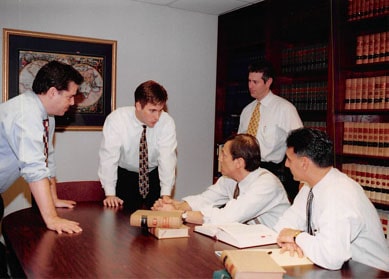
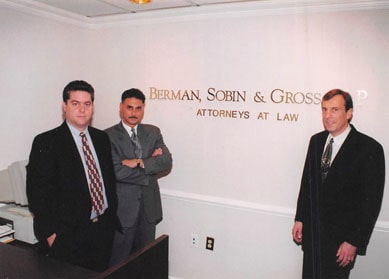
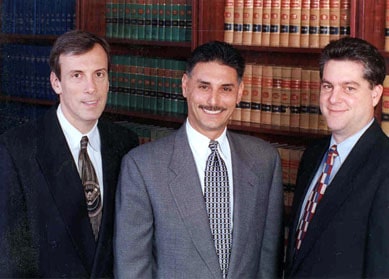
Communication workers in Wheaton and across Montgomery County carry equipment up utility poles, work in cramped equipment vaults, and maintain infrastructure that keeps households and businesses connected. The physical toll is real, and when something goes wrong, the workers’ compensation system can feel like another obstacle rather than a source of support. Wheaton communication workers injury attorneys at Berman | Sobin | Gross LLP have spent 35 years representing Maryland workers through claims at every level, from initial filings before the Workers’ Compensation Commission to jury trials and appeals before Maryland’s highest courts.
What Makes Communication Worker Injuries Different From Other Workplace Claims
Telecommunications and cable workers deal with a specific combination of physical hazards that does not always map neatly onto standard workers’ compensation categories. Overhead line work means falls from heights, electric shock, and repetitive shoulder and arm injuries from pulling cable through conduit. Underground work carries risks of oxygen-deficient environments, confined space hazards, and back injuries from awkward lifting postures in manholes and splice cases.
These workers also log serious miles, driving between job sites across Montgomery County, which introduces motor vehicle accident risks that can interact with a workers’ comp claim in complicated ways. When a communication worker is injured in a vehicle accident while traveling for work, the claim may involve both the workers’ comp system and a third-party liability action against another driver. Getting both pieces right matters, because settling one incorrectly can affect recovery under the other.
Repetitive stress injuries are common in this trade and tend to generate disputes. Carpal tunnel syndrome, rotator cuff tears, and cervical spine conditions develop over time, which means insurers frequently argue that the condition is not work-related or predates employment. Documenting the occupational connection requires medical evidence and an understanding of how the Commission weighs that evidence. This is territory where having counsel with deep workers’ comp experience in Maryland makes a concrete difference.
How the Maryland Workers’ Compensation Commission Handles These Claims
Maryland’s Workers’ Compensation Commission is the administrative body that receives, processes, and adjudicates claims for injured workers across the state. For a communication worker based in Wheaton, the relevant filings and hearings will typically involve the Commission’s processes, which can move slowly and require consistent follow-through.
Filing a claim is the starting point, not the finish line. Employers and their insurers have the right to contest claims, request independent medical examinations, and dispute the nature or extent of a worker’s disability. When disputes arise, they are resolved through evidentiary hearings. The outcome of those hearings depends on how well the worker’s side of the record is built, which includes medical documentation, vocational evidence if there is a wage loss component, and in some cases expert testimony.
Benefits available through the Maryland system include temporary total disability payments while a worker cannot work, temporary partial disability payments during a limited-duty period, permanent partial or total disability awards for lasting impairment, and medical treatment coverage. Vocational rehabilitation services may also be available. One of the firm’s appellate victories, Fikar v. Montgomery County, Maryland, established that injured workers receiving service-connected disability retirement can also receive vocational rehabilitation services, a ruling that continues to benefit workers across the state.
Communication workers employed by municipal or county governments may be classified as public safety employees depending on the specific role, which can affect the benefits and presumptions available to them. These distinctions are worth exploring early in the process, before positions harden.
Disputes That Frequently Arise in Telecom and Cable Worker Claims
Insurers for large telecommunications employers are experienced at contesting claims. Several patterns show up repeatedly in communication worker cases in Maryland.
The first is a dispute over causation. When a worker develops a spinal condition or shoulder injury, the employer’s medical expert may attribute it to aging or a prior injury rather than the physical demands of the job. Rebutting that opinion requires a strong treating physician record and, often, an independent medical expert willing to explain the occupational connection clearly.
The second is a dispute over the extent of disability. Even when the injury itself is accepted, insurers routinely contest how limiting it actually is, particularly once a worker has reached maximum medical improvement. Permanent impairment ratings are contested, and the dollar amount attached to a permanent disability award can vary significantly depending on how the Commission resolves those disputes.
The third is a dispute over light-duty compliance. Workers offered modified assignments that exceed their physical restrictions can find themselves in a complicated position. Montgomery County v. Deibler, a case the firm handled before the courts, clarified that public safety workers receiving full salary while on light duty can still receive compensation for lost overtime wages. That principle, applied in other contexts, shows how specific facts about a worker’s pre-injury earnings can affect what they recover.
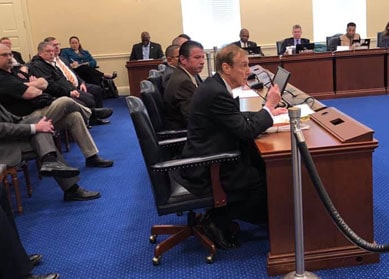
Berman | Sobin | Gross LLP does not shy away from contested cases. The firm has handled hundreds of workers’ compensation jury trials and appeals, and it takes on claims that other attorneys have declined when the facts warrant it.
Questions Communication Workers in Wheaton Ask About Their Claims
I reported my injury but my employer’s insurance company is saying it is not covered. What do I do next?
A denial is not the final word. You have the right to file a claim with the Maryland Workers’ Compensation Commission and request a hearing. The insurer’s position will be tested against the actual medical evidence and the facts of how the injury occurred. An attorney can help you gather what is needed and represent you at that hearing.
My injury built up over time from years of climbing poles and pulling cable. Does that count?
Yes. Maryland workers’ compensation covers occupational diseases and cumulative trauma conditions, not just single-incident accidents. The challenge is establishing the connection between your work activities and the specific condition, which often requires documentation from a treating physician who understands the physical demands of your job.
Can I choose my own doctor, or does my employer control my medical care?
Maryland law gives injured workers certain rights regarding medical treatment, but the specifics depend on how the claim is handled and whether there are disputes. Talking to an attorney early can help you understand how to protect your treatment choices while the claim is pending.
My employer offered me a settlement. Should I take it?
A settlement resolves your claim, often including future medical benefits. Before accepting any offer, it is worth having an attorney review what the claim is actually worth based on your injury, your earning capacity, and the long-term medical outlook. Once a settlement is approved, going back is rarely an option.
I was hurt in a work vehicle accident on the way to a job site in Montgomery County. Is that covered?
Injuries that occur while traveling in the course of employment are generally covered under Maryland workers’ compensation. Depending on who caused the accident, there may also be a third-party personal injury claim worth pursuing separately. These situations benefit from careful coordination from the start.
How long do I have to file a workers’ compensation claim in Maryland?
Maryland requires that workers report injuries to their employer promptly and file a claim within certain time limits that vary based on the type of injury and when it was discovered. For occupational diseases or cumulative injuries, the clock can work differently than for traumatic accidents. Acting sooner reduces the risk of any procedural bar.
Berman | Sobin | Gross LLP is the largest workers’ compensation firm in Maryland representing injured workers. Does that mean they handle communication worker cases specifically?
Yes. The firm represents workers across a broad range of industries and job types, including trade and infrastructure workers whose claims involve occupational disease, cumulative trauma, and complex disability disputes. The firm’s experience before the Commission, in Maryland courts, and at the appellate level covers the full range of issues that arise in these claims.
Representing Wheaton Communication Workers at Every Stage of a Claim
Wheaton sits in one of the busiest corridors in Montgomery County, with significant telecom and cable infrastructure serving dense residential and commercial areas. Workers maintaining that infrastructure face real physical risk every day, and the workers’ compensation system should be there when something goes wrong.
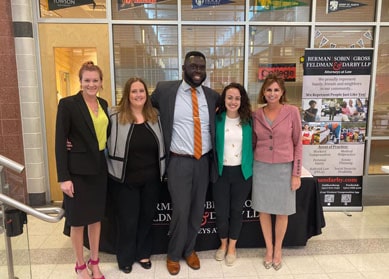
Berman | Sobin | Gross LLP serves clients throughout Montgomery County and across Maryland, with offices in Gaithersburg, Lutherville, Baltimore, and Frederick. The firm’s attorneys and staff include Spanish-speaking members, and the firm works to ensure that language is never a barrier for any client.
For any communication worker in Wheaton dealing with an injury claim, a disputed denial, or a settlement offer that does not feel right, the attorneys at Berman | Sobin | Gross LLP are available to evaluate the situation and explain the options. The firm does not limit itself to straightforward cases, and it has the resources and courtroom experience to pursue a claim as far as the facts support. Connecting with a Wheaton communication workers injury attorney at the firm costs nothing upfront, and it may be the decision that determines what your claim ultimately recovers.