

Westminster Factory Worker Injury Attorney
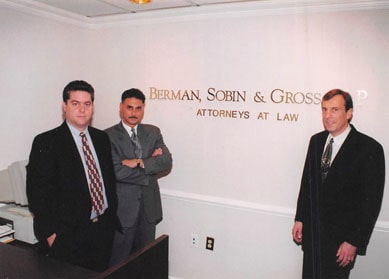
Carroll County’s manufacturing sector puts thousands of workers inside facilities where heavy equipment, repetitive motion demands, chemical exposure, and production-line pressure create real injury risks every shift. When something goes wrong inside a Westminster plant or factory, the workers’ compensation system is supposed to provide a path to medical care and wage replacement. In practice, getting those benefits often requires more than filing a form. Berman | Sobin | Gross LLP has spent 35 years representing Maryland’s working people through exactly this kind of situation, and a Westminster factory worker injury attorney from our firm understands both the specific hazards of manufacturing work and the strategies employers and insurers use to limit what injured workers actually receive.
What Makes Factory and Manufacturing Injuries Different from Other Workplace Injuries
Factory injuries rarely fit neatly into simple categories, and that complexity shapes everything that follows in a workers’ compensation claim. A warehouse or production floor worker in Westminster might suffer a traumatic acute injury, like a crush injury from a press or a fall from an elevated work platform, but many manufacturing workers also develop injuries that build over time. Repetitive stress injuries to the hands, wrists, shoulders, and spine are common in assembly, packaging, and machine operation roles. These gradual-onset conditions can be harder to connect to work in a formal legal proceeding because there is often no single date of injury to point to.
The nature of the machinery itself also matters. Workers operating industrial equipment have exposure to risks that general-industry employees do not face: pinch points, rotating parts, hydraulic failures, conveyor-line hazards, and chemical fumes or dusts. Some of these exposures produce occupational diseases rather than traumatic injuries, and occupational disease claims carry their own procedural requirements under Maryland workers’ compensation law.
Westminster’s manufacturing employers range from food processing operations to metal fabrication shops to distribution centers. Each presents a distinct injury profile. The legal strategy for a back injury sustained in a cold-storage distribution facility differs from the approach for a hearing loss claim filed by a metal press operator, even though both go before the Maryland Workers’ Compensation Commission. Working with attorneys who understand those distinctions from the outset matters more than people often realize.
Third-Party Claims When a Defective Machine or Outside Contractor Is Involved
Workers’ compensation is not always the only legal avenue open to an injured factory worker. When the injury involves a piece of equipment that failed because of a design defect or manufacturing flaw, or when it was caused by a contractor or delivery driver who is not employed by the same company as the injured worker, a separate personal injury claim against that third party may be available alongside the workers’ compensation case.
These third-party claims are significant because workers’ compensation, by design, does not pay for pain and suffering. A successful personal injury claim against a negligent third party can include those damages. However, these cases require different evidence, different legal theories, and careful coordination with the workers’ comp claim to avoid issues with liens and subrogation rights.
Not every attorney who handles workers’ compensation regularly pursues third-party manufacturing cases, because they require knowledge of product liability, premises liability, or general tort law alongside workers’ comp procedure. Berman | Sobin | Gross LLP represents clients in both tracks. Our firm covers workers’ compensation, personal injury, and workplace accident claims, which means we can evaluate whether both avenues apply to your situation from the beginning rather than referring you elsewhere mid-case.
How the Maryland Workers’ Compensation Commission Handles Manufacturing Claims
Every workers’ compensation claim in Maryland ultimately runs through the Maryland Workers’ Compensation Commission, which conducts hearings and resolves disputes between injured workers and employers or their insurers. For factory workers in Westminster, this means that if an employer disputes a claim, contests the extent of a disability, or challenges the medical treatment being recommended, the matter goes to a formal evidentiary hearing.
These hearings are not informal conversations. Medical evidence is central. The employer’s insurer will typically retain its own medical expert to evaluate the injured worker and offer an opinion about causation and degree of disability. The credibility and thoroughness of the medical evidence your attorney assembles will often determine the outcome. Berman | Sobin | Gross LLP’s attorneys have handled tens of thousands of Commission hearings and hundreds of workers’ compensation jury trials. When a case requires going beyond the Commission level into the Circuit Courts or appellate courts, our firm does not step back from that.
One of our firm’s founders authored the authoritative two-volume treatise on Maryland workers’ compensation law. That depth of institutional knowledge is directly relevant when a manufacturing injury claim presents legal questions that an insurer is counting on an injured worker not being able to answer effectively.
Questions Westminster Manufacturing Workers Ask Us
My employer says the injury was my fault for not following a safety procedure. Does that end my claim?
No. Maryland’s workers’ compensation system is a no-fault system, which means that contributory negligence by the injured worker does not bar a claim. Even if you made a mistake that contributed to your injury, you are generally still entitled to workers’ compensation benefits. There are narrow exceptions involving intentional self-harm or intoxication, but ordinary workplace mistakes do not disqualify you.
I have a repetitive motion injury that developed over several years. Can I still file?
Yes, though the procedural path is different. Maryland law provides for occupational disease claims that cover conditions caused by the nature of the work over time rather than a single incident. The filing timeline and the way causation must be established differ from traumatic injury claims. Contacting an attorney promptly is important because delays in filing can create real complications even for gradual-onset conditions.
The plant uses a staffing agency. Am I still covered?
Coverage through workers’ compensation in staffing agency situations can be more complicated than it appears. Depending on the arrangement, either the staffing agency, the host employer, or both may carry workers’ compensation coverage that applies to you. It is not always obvious which policy controls, and some employers dispute coverage in these arrangements. An attorney can review the employment arrangement and identify who is responsible for your benefits.
The insurer sent me to their doctor and now the report says I can return to work. My own doctor disagrees.
This is one of the most common disputes in workers’ compensation cases. The Commission weighs competing medical opinions and is not required to accept the employer’s medical examiner over your treating physician. The quality of the medical evidence and how it is presented matters significantly. An attorney can help you obtain the right documentation from your treating providers and, where appropriate, an independent medical evaluation that supports your position.
I was injured while making a delivery between two company facilities. Is that covered?
Travel between job sites during the course of employment is generally within the scope of workers’ compensation coverage, unlike ordinary commuting. The specific facts of where you were going, why, and what you were doing at the time of the injury will determine coverage. These off-premises cases require careful factual analysis.
Can my employer fire me for filing a workers’ compensation claim?
Maryland law prohibits retaliation against an employee for filing a workers’ compensation claim. If you have experienced termination, demotion, or other adverse employment action following your claim, there may be a separate legal remedy available to you beyond the compensation claim itself.
How long does a Westminster workers’ compensation case typically take?
It depends heavily on whether the employer and insurer dispute any part of the claim. Undisputed claims can resolve relatively quickly once medical treatment concludes. Disputed claims that go to hearing and potentially beyond take considerably longer. Cases involving permanent disability, complex medical issues, or appeals can span years. Knowing what phase you are in and what to expect at each stage is part of what an attorney provides throughout the process.
Speak with a Westminster Industrial Injury Lawyer
Berman | Sobin | Gross LLP is the largest workers’ compensation law firm in Maryland representing injured workers, with offices in Lutherville, Baltimore, Gaithersburg, and Frederick and a practice that reaches Carroll County and communities throughout the state. Our attorneys and staff include Spanish-speaking members who can work with clients without language barriers, and we are committed to keeping every client connected to one attorney who stays with their case from start to finish. If you were hurt in a Westminster factory, plant, or manufacturing facility, we will evaluate your situation and give you a candid assessment of what your claim involves and what it is worth pursuing. Reach out to Berman | Sobin | Gross LLP to speak with a Westminster industrial injury lawyer about your workers’ compensation rights.