

Washington DC Worker Injury Attorney
The District of Columbia sits at the center of one of the most active labor markets on the East Coast. Construction workers building the next development along the Anacostia waterfront, hotel and hospitality employees serving the constant flow of visitors, government contractors moving through federal buildings, delivery drivers threading through dense city traffic. When any of these workers get hurt on the job, the path to benefits is rarely straightforward. A Washington DC worker injury attorney who genuinely understands how these claims work, and who is willing to go the distance when an employer or insurer pushes back, makes a significant difference in what an injured worker ultimately recovers.
DC Workers’ Compensation Is Its Own System, Separate from Maryland’s
Workers injured in the District of Columbia are covered under the DC Workers’ Compensation Act, which is administered by the DC Department of Employment Services (DOES) Office of Workers’ Compensation. This is an entirely separate legal framework from Maryland’s workers’ compensation system, and the two do not overlap in any meaningful way. If you were injured while working a job based in DC, your claim goes through the DC system, regardless of whether you live in Maryland, Virginia, or elsewhere.
For workers covered under a federal contract, there is yet another layer to consider. The Longshore and Harbor Workers’ Compensation Act and the Defense Base Act cover certain federal government contractors, and those claims are administered through the US Department of Labor rather than through DC’s own workers’ compensation office. Knowing which statutory framework applies to your specific situation is the first substantive question your attorney needs to answer, because filing under the wrong system can cost you time and benefits.
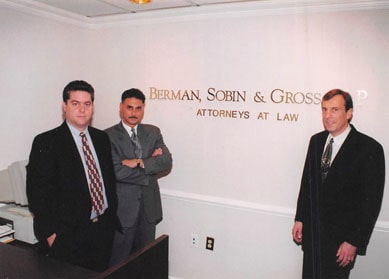
Berman | Sobin | Gross LLP has spent 35 years representing injured workers throughout Maryland and the greater DC region, and the firm’s reach extends into the District for workers navigating these claims. With offices in Lutherville, Baltimore, Gaithersburg, and Frederick, the firm serves clients across the full geographic corridor from the Maryland suburbs into Washington itself.
What DC Workers Are Actually Claiming, and Why Claims Get Disputed
The categories of benefits available under the DC Workers’ Compensation Act parallel what Maryland workers can access: coverage for medical treatment, temporary total disability payments when an injury prevents you from working, temporary partial disability when you can work in a reduced capacity, and permanent disability awards when an injury results in lasting impairment. Death benefits are available for surviving dependents when a workplace injury proves fatal.
The disputes arise in predictable patterns. Employers and their insurance carriers frequently challenge whether an injury actually occurred at work, whether a pre-existing condition is responsible for the worker’s current limitations rather than the workplace event, and whether the extent of permanent disability assigned by the treating physician is accurate. In occupational disease cases, where exposure to chemicals, repetitive stress, or hazardous conditions develops into a diagnosable condition over months or years, the fight over causation can be particularly intense.
DC’s construction sector generates a significant volume of serious injury claims. Falls from scaffolding, equipment accidents, electrical incidents, and crushing injuries are all well-documented across major job sites in the District. Healthcare workers at the city’s hospital systems face back injuries, needle sticks, and exposure-related illnesses. Restaurant and hospitality workers deal with slip-and-fall injuries in commercial kitchens, burn injuries, and repetitive strain from long hours of physical service work. The specific facts of how an injury occurred matter enormously when an insurer starts building a case for denying or reducing a claim.
The Practical Stakes When Benefits Are Delayed or Denied
An injured worker in the District who cannot return to their job immediately faces compressing financial pressure. Medical bills accumulate. Mortgage payments, rent, and household expenses do not pause because someone is recovering from a torn rotator cuff or a fractured vertebra. When an employer’s insurer disputes a claim or issues a controversion, the worker has to pursue a formal hearing before the DC Office of Hearings and Adjudication, which means navigating administrative procedure while simultaneously dealing with the physical and emotional consequences of a serious injury.
Permanent disability determinations carry especially high financial stakes. The difference between a scheduled award for a specific body part and an unscheduled award for conditions affecting general earning capacity can be substantial in terms of total compensation. Getting the medical evidence right, securing the correct impairment rating from qualified physicians, and presenting that evidence persuasively at a formal hearing requires preparation and familiarity with how these hearings actually run.
There are also strict deadlines. Under the DC Workers’ Compensation Act, an injured worker generally must notify their employer of a work-related injury within 30 days and file a formal claim within one year. Missing those deadlines can result in losing the right to benefits entirely. In occupational disease cases, the calculation of when the clock starts running can itself become a contested issue, particularly when the disease progresses gradually and the worker did not immediately connect their condition to workplace exposure.
Questions Workers in DC Often Have Before Contacting an Attorney
My employer is telling me the injury was my fault. Does that bar my DC workers’ compensation claim?
Workers’ compensation in DC, like in Maryland, operates on a no-fault basis. In most circumstances, employee negligence does not disqualify a worker from receiving benefits. The relevant question is whether the injury arose out of and in the course of employment, not who was responsible for causing it. There are narrow exceptions involving intentional self-inflicted injury or injury occurring while committing a serious crime, but ordinary workplace accidents, even ones involving some employee error, are generally covered.
Can I choose my own doctor under DC workers’ compensation?
DC law gives injured workers the right to choose their own treating physician, which is a meaningful distinction from some other states where employers control medical provider selection. However, the employer may require an independent medical examination at their own expense. The opinions generated in those examinations often conflict with the treating physician’s findings, and resolving those conflicts is frequently where the legal contest is fought.
What if my employer does not carry workers’ compensation insurance?
DC employers are required by law to carry workers’ compensation coverage. When an employer fails to maintain the required insurance, the DC Government’s Special Fund may provide benefits to injured workers. The uninsured employer remains liable for those payments, and the DC government has enforcement mechanisms against employers who violate the insurance requirement. An injured worker is not left without recourse simply because their employer broke the law.
I was injured while working for a federal government contractor in DC. Which system applies to me?
Federal contractors working on government facilities may be covered under the Defense Base Act, an extension of the Longshore and Harbor Workers’ Compensation Act, rather than DC’s own workers’ compensation system. This is a federal law with its own claims process through the US Department of Labor. If your work involves a government contract, your attorney needs to determine which statute controls before any claim is filed.
What happens if a third party, not my employer, caused my injury?
A workers’ compensation claim and a third-party personal injury claim can both be pursued in the right circumstances. If a subcontractor’s negligence caused a construction accident, or a defective piece of equipment manufactured by a third party contributed to an injury, you may have the right to pursue the responsible party outside the workers’ compensation system. These parallel claims require careful coordination, and settlements in the third-party case can affect workers’ compensation benefits in ways that need to be managed properly.
My condition got worse after I returned to work. Can I reopen my claim?
DC law allows for modification of prior compensation orders if there is a change in the claimant’s condition. If a workplace injury that was considered resolved results in additional disability or requires further medical treatment, there are procedural avenues for seeking additional benefits. The timeline for seeking modification varies depending on the circumstances, so this is something to address with your attorney sooner rather than later once you recognize the change in your condition.
Does it matter that I live in Maryland but was injured working in DC?
The state where you live does not determine which workers’ compensation system applies. The relevant factors are where the injury occurred, where the employment contract was entered into, and where the employment is principally located. If the work was performed in the District, DC law is most likely to govern. An attorney familiar with both DC and Maryland workers’ compensation systems can confirm which framework controls your specific situation.
Talk to a Worker Injury Lawyer Serving Washington DC
Berman | Sobin | Gross LLP has built its practice representing workers who do the demanding, often hazardous work that keeps this region functioning. For 35 years, the firm has handled not just routine administrative hearings but also the contested litigation, jury trials, and appellate work that serious injury cases sometimes require. The firm is the largest workers’ compensation law firm in Maryland representing injured workers, with attorneys and staff members who are fluent in Spanish and who are prepared to communicate clearly with clients across language backgrounds. Workers based in or around Washington DC who need representation from a DC worker injury lawyer with real litigation depth can reach Berman | Sobin | Gross LLP through any of the firm’s offices to discuss their situation.