Waldorf Mechanic Injury Attorney
Mechanics and auto service workers in Charles County put their bodies on the line every shift. Working under raised vehicles, handling hydraulic lifts, using pneumatic tools, and breathing chemical fumes are daily realities for workers at dealerships, independent shops, fleet maintenance facilities, and truck repair yards throughout Waldorf and the surrounding area. When something goes wrong on that shop floor, the injuries tend to be serious. A Waldorf mechanic injury attorney at Berman | Sobin | Gross LLP understands the physical demands of this work, the workers’ compensation system in Maryland, and what it actually takes to get injured mechanics the benefits they are owed.
The Injuries That Mechanics in Waldorf Actually Face
Automotive and diesel service work generates a specific and often severe category of workplace injuries. Lift failures and vehicle collapses can cause crush injuries, traumatic fractures, and spinal damage. Repetitive motions from wrenching, torqueing, and overhead work cause cumulative shoulder, elbow, and wrist conditions that develop over months or years rather than in a single incident. Mechanics who spend years crawling across concrete or crouching in tight engine bays frequently develop knee damage and chronic back conditions that eventually require surgical intervention.
Chemical exposure is another category that often goes unrecognized. Brake dust, solvents, engine degreasers, and exhaust fumes affect workers who may not connect a respiratory condition or neurological symptom to their occupational environment until the damage is already significant. Maryland workers’ compensation law covers these occupational diseases, not just acute traumatic injuries, and a mechanic who develops a condition traceable to workplace exposures has rights under the system just as any worker injured in a sudden accident does.
Burns from hot engine components or electrical systems, eye injuries from flying debris, and hearing loss from prolonged exposure to pneumatic tools and shop noise round out a picture of hazards that most outsiders never consider when they drop off a car for service. The workers absorbing these risks are often among the least heard when they file claims, particularly when the injury builds gradually or when the employer disputes the connection between work conditions and the condition diagnosed.
Who Bears Responsibility When a Shop Worker Gets Hurt
Maryland’s workers’ compensation system is the primary avenue for most mechanic injuries, covering medical treatment and wage replacement benefits when a worker is injured on the job regardless of who was at fault. But the liability picture is not always confined to a workers’ comp claim. When a defective piece of shop equipment, a faulty lift, or a malfunctioning power tool causes an injury, the manufacturer or distributor of that equipment may bear independent liability through a third-party personal injury claim. These claims exist alongside the workers’ comp case and are subject to different legal standards, different damages, and different deadlines.
For mechanics employed through staffing agencies or contractors who work on job sites controlled by another company, questions about who qualifies as the responsible employer and who owes what coverage can become genuinely complicated. The answer affects benefit amounts, the scope of medical coverage, and the options available if a claim is disputed. Getting those distinctions right at the beginning of a claim matters significantly more than most workers realize when they are focused on getting immediate treatment after an injury.
Charles County has a significant concentration of automotive dealerships, commercial vehicle maintenance operations, and fleet service centers along the Route 301 and Route 5 corridors. Mechanics at larger operations may find themselves dealing with self-insured employers or employer-designated managed care systems that exert control over which physicians they can see and what treatments get authorized. Understanding how to work within those systems, or how to challenge them when they produce outcomes that do not reflect the actual medical needs of an injured worker, is part of what the attorneys at Berman | Sobin | Gross LLP do every day.
What Waldorf Mechanics Need to Know About Filing a Claim
Maryland requires injured workers to notify their employer of a work-related injury within a specific timeframe, and the claim itself must be filed with the Maryland Workers’ Compensation Commission. Missing these deadlines can result in a forfeiture of benefits that would otherwise be available. For injuries that develop over time, such as repetitive stress conditions or occupational lung disease, the clock for filing typically runs from the point when the worker knew or should have known that the condition was related to work. That determination is not always obvious, and it is often contested by employers and insurers who prefer to characterize a condition as pre-existing or unrelated to the job.
Once a claim is filed, the commission process involves hearings where evidence is presented, medical opinions are weighed, and benefit determinations are made. Berman | Sobin | Gross LLP has represented workers not only through that administrative process but through jury trials and appeals before both of Maryland’s highest courts. For a mechanic whose claim has been denied, whose authorized treating physician has been replaced by an employer-designated examiner with a different opinion, or whose employer is disputing whether an injury is work-related at all, having attorneys with that level of appellate experience matters.
Questions Injured Mechanics in Waldorf Often Ask
My employer says my back condition is from a pre-existing issue, not from my work. Can my claim still succeed?
Yes. Maryland workers’ compensation does not require that work be the sole cause of an injury or condition. If your work activity aggravated, accelerated, or combined with a pre-existing condition to produce a compensable injury, the claim can still be valid. These cases require careful medical documentation and often competing expert opinions, which is precisely where experienced representation makes a concrete difference in the outcome.
I was injured when the hydraulic lift in the shop failed. Is this only a workers’ comp claim?
Not necessarily. If the lift failed because of a design or manufacturing defect, the equipment’s manufacturer may be independently liable in a third-party personal injury action. Workers’ comp and a third-party claim can run at the same time, though there are subrogation rules that govern how any third-party recovery interacts with workers’ comp benefits you have already received. This is one of the situations where having legal counsel involved early matters most.
My employer is pressuring me to return to work before my doctor says I am ready. What can I do?
Your entitlement to temporary total disability benefits depends on whether you have been medically released to return to work, and at what capacity. An employer cannot unilaterally terminate benefits by asserting you are ready to return if your authorized treating physician disagrees. If there is a dispute about your work capacity, it can be resolved through the Commission’s hearing process.
I have been having symptoms for years from breathing chemicals in the shop. Can I still make a claim?
Occupational disease claims have their own filing rules, and the deadline typically runs from when you knew or should have known the condition was work-related. Getting an evaluation from an occupational medicine physician who can document the connection between your exposures and your diagnosis is an important first step. These claims are often more contested than acute injury claims, and the evidentiary record you build early on shapes how the case proceeds.
The employer’s insurance company wants to take a recorded statement from me. Should I give one?
You are generally not required to give a recorded statement to the employer’s insurer, and doing so before you have legal representation creates risks. Statements made without the guidance of counsel can be used to undermine your claim even when your injury is genuine and your account is truthful. Speaking with an attorney before any recorded interaction with the insurer is a reasonable step.
What benefits can I actually receive under Maryland workers’ compensation?
Benefits include payment of medical treatment for the work-related injury, temporary total or partial disability benefits while you are unable to work or working in a reduced capacity, and permanent disability awards if your injury results in lasting impairment. In the most serious cases, vocational rehabilitation services may also be available. The specific benefit amounts depend on your average weekly wage, the nature and extent of your disability, and other factors specific to your claim.
Will my case require going to a hearing, or can it be resolved without one?
Many claims are resolved through negotiation or agreement without a formal hearing. However, when a claim is disputed, whether over causation, the extent of disability, or the adequacy of medical treatment, a hearing before the Maryland Workers’ Compensation Commission becomes necessary. The attorneys at Berman | Sobin | Gross LLP handle contested hearings regularly and are prepared to take cases into the courts when the Commission’s decision requires further challenge.
Representing Injured Shop Workers Throughout Southern Maryland
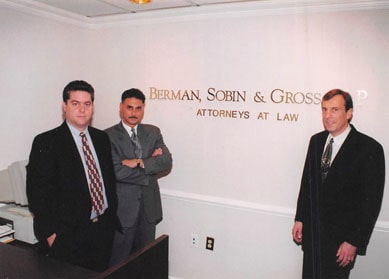
Berman | Sobin | Gross LLP is the largest workers’ compensation law firm in Maryland representing injured workers, with offices throughout the state and attorneys who handle cases across Charles, Prince George’s, and St. Mary’s counties. For mechanics and automotive service workers in the Waldorf area who have been hurt on the job, the firm provides the kind of representation that addresses not just the initial claim but the full picture of what a serious workplace injury costs a worker and their family. Attorneys stay with their clients throughout a case rather than passing files between representatives, and the firm has the resources to take on claims that other attorneys have declined because they are difficult or likely to require extensive litigation.
If you are an injured mechanic in the Waldorf area and need to understand your options under Maryland workers’ compensation law, contact Berman | Sobin | Gross LLP to speak with a Waldorf mechanic injury lawyer about your situation.