

Waldorf Landscaping Worker Injury Attorney
Landscaping work in Waldorf and throughout Charles County involves serious physical demands and real hazards that other workers rarely encounter. Heavy equipment, chemical exposure, heat exhaustion, falling tree limbs, and unstable terrain are daily realities. When one of those hazards causes a serious injury, workers need to understand what the Maryland workers’ compensation system actually provides, and what it does not. A Waldorf landscaping worker injury attorney can make the difference between a claim that delivers the full scope of available benefits and one that gets underpaid or denied outright.
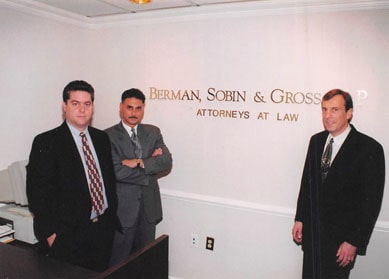
At Berman | Sobin | Gross LLP, we have spent 35 years representing the hard-working people of Maryland, including the outdoor laborers and grounds maintenance crews whose work keeps commercial properties, public parks, residential neighborhoods, and roadways looking the way they should. Our firm is the largest workers’ compensation firm in Maryland representing injured workers, and we bring that depth of experience to every landscaping injury claim we handle.
What Actually Injures Landscaping Workers in the Waldorf Area
Charles County’s growing commercial corridors along Route 301 and the surrounding residential communities mean substantial demand for landscaping crews year-round. That volume of work creates real exposure to injury, and the injuries themselves tend to be serious.
Chainsaw and cutting equipment injuries are among the most devastating in this field. A moment of distraction or a kickback can cause lacerations that damage muscle, nerve tissue, or bone. Injuries of this type frequently require multiple surgeries and extensive rehabilitation before a worker knows the long-term functional outcome.
Riding mower rollovers and tip-overs happen more often than most people outside the industry realize. Maryland terrain, including the slopes and drainage gradients common in Southern Maryland landscaping, creates conditions where a mower can roll without warning. The results can include crush injuries, head trauma, or spinal damage.
Repetitive stress conditions are also common and often dismissed by employers. Workers who spend entire seasons shoveling, raking, digging, or operating vibrating equipment develop conditions like carpal tunnel syndrome, rotator cuff tears, and lumbar disc damage. These injuries develop over time, which sometimes makes it harder to connect them directly to the job. That connection matters enormously in a workers’ comp claim.
Pesticide and herbicide exposure presents a different category of harm. Landscaping workers in Maryland who apply chemical treatments without adequate protective equipment can suffer respiratory damage, skin conditions, and neurological symptoms. When exposure is prolonged, the health consequences can be lasting and difficult to reverse.
Workers’ Compensation Versus Third-Party Claims: Understanding Both Paths
Maryland workers’ compensation generally provides benefits without requiring proof that your employer was negligent. If the injury happened on the job, benefits are typically available regardless of fault. What the system provides includes medical treatment, temporary total disability payments when you cannot work, and permanent disability awards when the injury leaves lasting effects on your ability to function.
But the workers’ comp system has limits. It does not compensate for pain and suffering, and the wage replacement it provides is a percentage of your pre-injury average weekly wage, not a full replacement. In landscaping work, where crews are often paid by the hour and may have irregular schedules, calculating the correct average weekly wage is something employers and insurers sometimes get wrong, to the worker’s disadvantage.
In some landscaping injury situations, a third party beyond the employer is also responsible. If a defective piece of equipment caused the injury, the equipment manufacturer may be liable. If the crew was working on a site owned by a third party whose unsafe conditions contributed to the accident, that property owner may also carry responsibility. These third-party personal injury claims exist separately from workers’ comp and can recover the full range of damages that workers’ comp does not cover.
Evaluating whether a third-party claim exists alongside a workers’ comp claim requires a close look at the facts. Our attorneys handle both in appropriate cases, and we assess whether both paths are available from the beginning of every representation.
When the Workers’ Comp System Creates Problems for Landscaping Workers
The Maryland Workers’ Compensation Commission administers claims in Maryland, but the path from injury to approved benefits is not always direct. Landscaping workers face specific obstacles that appear regularly in these claims.
Classification disputes come up frequently. Some landscaping workers are treated as independent contractors rather than employees, which would normally put them outside workers’ comp coverage. But Maryland law looks at the actual working relationship, not just how the employer labels it. If your employer controls how and when you work, supplies your equipment, and directs your tasks, you may be an employee under Maryland law regardless of what your paperwork says. These misclassification situations are worth a careful legal review.
Delayed reporting and denied claims are another pattern. Workers who are injured may hesitate to report because of concerns about their job security, particularly if they are newer employees or working for smaller landscaping operations. Maryland law requires that an injury be reported to an employer within a certain period, and delays can create complications. An attorney can often address these situations even when reporting was not immediate, but the earlier the claim is evaluated, the better positioned the worker is.
Finally, insurers for landscaping employers sometimes contest permanent disability ratings aggressively. The medical opinions used to evaluate permanent impairment can vary significantly, and insurance companies have incentive to minimize the rating. Having a legal team that understands how to counter those tactics before the Commission matters.
Questions Waldorf Landscaping Workers Actually Ask After an Injury
Can I file a workers’ comp claim if I was hurt on a client’s property rather than my employer’s property?
Yes. Maryland workers’ compensation covers work-related injuries regardless of where the injury occurred. If you were performing your job duties at a client’s property and got hurt, that injury is covered. The location of the work site does not determine coverage; your employment status and the work-related nature of the injury do.
My employer says I am an independent contractor and not covered. Is that the end of the claim?
Not necessarily. Maryland law has specific criteria for determining whether a worker is truly an independent contractor or is actually an employee. Employer labels are not controlling. If your employer set your work schedule, provided your tools, directed how the work was done, and integrated you into their regular operations, you may have employee status for workers’ comp purposes even if your paperwork says otherwise.
I was hurt using a piece of equipment that malfunctioned. Do I have any claims beyond workers’ comp?
Potentially. If a defective product, such as a chainsaw with a faulty guard or a mower with a mechanical failure, caused your injury, you may have a product liability claim against the manufacturer or distributor. That claim is separate from and in addition to your workers’ comp claim. The two can proceed alongside each other.
What if my injury developed gradually over time rather than in a single incident?
Maryland workers’ compensation covers occupational diseases and cumulative injury conditions, not just sudden traumatic accidents. Repetitive motion injuries, hearing loss from equipment noise, and conditions caused by chemical exposure can all qualify. The key is establishing the connection between your job duties and the medical condition, which is where legal and medical documentation become critical.
The insurance company scheduled me with their own doctor. Do I have to accept that evaluation?
Workers in Maryland have rights regarding medical evaluation. The opinion of an employer’s or insurer’s physician is not automatically controlling. You have the right to be examined by your own treating physicians, and their opinions carry weight before the Commission. If the insurer’s evaluation significantly conflicts with your treating physician’s findings, that dispute can be addressed at a Commission hearing.
My employer’s insurance company denied my claim. What happens now?
A denial is not the final word. You have the right to file a claim directly with the Maryland Workers’ Compensation Commission and to have a hearing before a Commissioner who will evaluate the evidence. Many initially denied claims are resolved in the worker’s favor after a proper hearing. The denial should be reviewed by an attorney before any deadlines pass.
How long do I have to file a workers’ compensation claim in Maryland?
Maryland law generally requires that a workers’ compensation claim be filed within two years of the date of the accidental injury or the date of disablement from an occupational disease. Missing this deadline can bar recovery entirely. If you are unsure whether the deadline applies to your situation, a prompt legal evaluation is the safest course.
Injured While Working in the Waldorf Area? Berman | Sobin | Gross LLP Is Ready to Help
Berman | Sobin | Gross LLP has offices throughout Maryland and serves clients across Charles County and Southern Maryland, including those who work the commercial and residential landscaping jobs that keep this growing region looking its best. Our attorneys do not avoid difficult claims. We have handled tens of thousands of workers’ compensation hearings and hundreds of jury trials, and we take the cases that other firms turn away. One of our firm’s founders literally wrote the definitive Maryland workers’ compensation treatise, and that depth of substantive knowledge runs through every case we work. If you are a landscaping worker who was hurt on the job in Waldorf or the surrounding area, contact Berman | Sobin | Gross LLP to have your claim evaluated by a Waldorf landscaping injury attorney who will tell you exactly where you stand and what your options are.