

Waldorf Factory Worker Injury Attorney
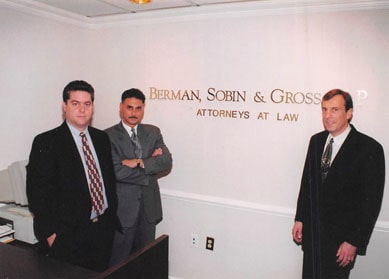
Factory and manufacturing work in Charles County puts real strain on the body every single day. Assembly lines, heavy machinery, repetitive motion tasks, chemical exposure, and loading operations all create conditions where a serious injury is never far away. When something goes wrong, workers at Waldorf-area plants and distribution facilities often find themselves navigating a workers’ compensation system that can feel designed to limit what they receive rather than fairly compensate them. Berman | Sobin | Gross LLP has spent 35 years representing the working people of Maryland, and the Waldorf factory worker injury attorneys at our firm know what it takes to get injured manufacturing employees the full benefits they are owed under Maryland law.
What Factory Injuries in Waldorf Actually Look Like
Charles County’s industrial corridor along Route 301 and the surrounding areas host everything from distribution warehouses and food processing facilities to light manufacturing operations. The injuries that come out of these workplaces tend to fall into recognizable patterns, and understanding those patterns matters when it comes time to build a claim.
Crush injuries and amputations are among the most catastrophic results of unguarded or improperly maintained equipment. A conveyor system, a press, a forklift operating near a staging area, any of these can cause permanent disability in a fraction of a second. Injuries to the hands, fingers, and arms are disproportionately common in factory settings precisely because workers use those parts of their bodies in direct contact with machines all day long.
Repetitive stress injuries are a different category entirely. Carpal tunnel syndrome, tendinitis, rotator cuff damage, and chronic lower back injuries can develop over months or years of doing the same task thousands of times per shift. Maryland workers’ compensation covers these occupational conditions, but insurers frequently dispute them on the grounds that the injury cannot be traced to a single incident. That argument is worth challenging, and our attorneys do exactly that.
Chemical exposure is a real concern in facilities that handle solvents, cleaning agents, industrial coatings, or any kind of raw material processing. Respiratory conditions, skin disorders, and longer-term systemic illness can result from ongoing or acute chemical exposure. These claims require careful documentation of workplace conditions and often benefit from independent medical and industrial hygiene analysis.
How Maryland’s Workers’ Compensation System Applies to Manufacturing Employees
Maryland law requires most employers to carry workers’ compensation insurance, and that coverage extends to factory workers regardless of how the injury happened, as long as it arose from employment. There is no requirement to prove your employer did anything wrong. The trade-off is that workers’ compensation benefits are defined by statute and are not the same as full civil damages.
What you can recover through the Maryland Workers’ Compensation Commission includes medical treatment, temporary disability payments while you are recovering and cannot work at full capacity, permanent partial or permanent total disability awards if the injury leaves lasting impairment, and vocational rehabilitation if your injury means you cannot return to your previous position. Each of those categories involves its own procedural requirements and its own potential for disputes.
Temporary disability benefits replace a portion of your average weekly wage. Permanent disability awards are calculated based on the nature and extent of your impairment, evaluated by physicians and rated under Maryland’s guidelines. These ratings are not always accurate. Insurance-side doctors often conduct evaluations that underestimate impairment, and accepting those ratings without challenge can cost injured workers thousands of dollars in long-term benefits.
One point that comes up frequently in factory injury cases: if a third party, such as an equipment manufacturer, a subcontractor, or a maintenance company, bears some responsibility for the conditions that led to your injury, a separate personal injury claim against that party may also be available. Workers’ compensation and a third-party claim can exist side by side, and pursuing both can significantly increase a worker’s total recovery.
Why Factory Injury Claims Get Disputed and What to Do About It
Insurers scrutinize manufacturing injury claims closely. A few patterns come up again and again. First, when no one witnessed the injury or when the worker delayed reporting it, the insurer may argue the injury did not happen at work. Second, when a worker has any prior injury to the same body part, the insurer will often argue the current condition is pre-existing rather than work-related. Third, claims involving gradual onset injuries like hearing loss, repetitive stress conditions, or occupational disease frequently generate disputes about causation.
Prompt reporting to your employer matters more than most workers realize. Maryland law sets deadlines for reporting injuries and filing claims, and failing to meet those deadlines can affect your right to benefits. Even so, missing an early window does not automatically end a claim, and the specific circumstances matter considerably. Do not assume your claim is over before speaking with an attorney.
Medical documentation is the backbone of any factory injury claim. Getting consistent, thorough treatment from a provider who understands occupational injuries is one of the most important things a worker can do after getting hurt. Gaps in treatment or inconsistencies between what you report to doctors and what you report to the Commission can be used against you. An attorney can help you understand how to document your condition accurately and completely from the beginning.
Berman | Sobin | Gross LLP does not shy away from contested claims. Our lawyers have handled hundreds of workers’ compensation trials and appeals before Maryland’s highest courts. When an insurer or employer pushes back, we have the litigation experience and resources to push back harder.
Questions Charles County Factory Workers Ask Us
Can I be fired for filing a workers’ compensation claim?
Maryland law prohibits employers from retaliating against employees for filing or pursuing a workers’ compensation claim. If you are terminated, demoted, or otherwise penalized after reporting an injury or filing a claim, that is a separate legal issue worth discussing with an attorney.
What if my employer says the injury was my fault?
Workers’ compensation in Maryland is a no-fault system. With limited exceptions for deliberate self-harm or intoxication, the fact that you may have contributed to the accident does not bar your claim. Benefits are generally available regardless of how the injury occurred.
My injury developed gradually from years of repetitive work. Does that qualify?
Yes. Maryland workers’ compensation covers occupational diseases and repetitive stress injuries, not just sudden traumatic accidents. These claims often require stronger medical documentation and expert support, and they are more frequently disputed by insurers, but they are absolutely compensable under the law.
The insurance company scheduled me for an independent medical exam. Should I be concerned?
An IME arranged by the insurer is performed by a doctor of the insurer’s choosing, and those evaluations often reach conclusions favorable to the insurer. You have the right to seek your own independent evaluation, and having legal representation before that IME takes place can help you prepare and respond effectively to an unfavorable report.
My employer does not seem to have filed anything with the Commission. What do I do?
You do not have to wait for your employer to act. Injured workers can file a claim directly with the Maryland Workers’ Compensation Commission. An attorney can help you initiate the claim and ensure the paperwork is complete and filed correctly.
Can I still file a claim if I was a temporary or contract worker at a Waldorf facility?
Temporary and contract workers are generally covered by workers’ compensation in Maryland, though the question of which employer’s insurance applies can be complicated. If you were placed by a staffing agency, both the agency and the host employer may have workers’ compensation obligations. An attorney can help sort out who is responsible for your claim.
What happens if the Commission rules against me?
A Commission decision is not final. Workers have the right to appeal to the circuit court, and further appeals to Maryland’s appellate courts are possible in appropriate cases. Berman | Sobin | Gross LLP has a long track record of pursuing appeals that change outcomes for workers, including landmark appellate decisions that have shaped Maryland workers’ compensation law.
Injured Factory and Manufacturing Workers in Southern Maryland Deserve Real Representation
Berman | Sobin | Gross LLP serves workers throughout Charles County and the broader southern Maryland region, including Waldorf, La Plata, and surrounding communities. We are the largest workers’ compensation firm in Maryland representing injured workers, and we have built that standing by taking the cases that require real effort and real advocacy, not just the straightforward ones. If you have been injured on the job at a Waldorf manufacturing facility, warehouse, or industrial site, our firm is prepared to evaluate your claim and work toward the benefits you are owed. Reach out to Berman | Sobin | Gross LLP to speak directly with a factory worker injury attorney who will be with you from start to finish.