

Upper Marlboro Worker Injury Attorney
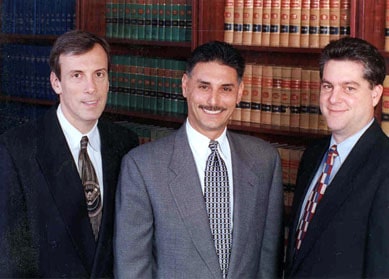
Prince George’s County runs on its workers. Government employees, construction crews, healthcare staff, corrections officers, tradespeople, delivery drivers, and school personnel move through Upper Marlboro and the surrounding communities every day doing jobs that carry real physical risk. When something goes wrong on the job, the Maryland workers’ compensation system is supposed to be there. But actually getting what you are owed is rarely straightforward. Berman | Sobin | Gross LLP has spent 35 years representing injured workers across Maryland, and the attorneys here understand exactly what it takes to move a claim from filing to resolution, including when that means pushing the case past the Commission and into the courts. If you need an Upper Marlboro worker injury attorney, this firm has the depth and the track record to handle your case seriously.
What Injured Workers in Prince George’s County Actually Deal With
Upper Marlboro is the county seat of Prince George’s County, and the local workforce reflects that. You have county government employees, public safety personnel, workers at the county courthouse complex, school system staff, and a large population of tradespeople and contractors tied to ongoing development throughout the county. Each of these worker categories carries its own injury profile.
Public safety workers, including firefighters, paramedics, EMTs, and law enforcement officers, face occupational disease claims alongside acute injury claims. Under Maryland law, certain conditions like heart disease, hypertension, and lung disease are presumed to be job-related for public safety employees. That presumption matters enormously, but employers and their insurers frequently challenge it. Berman | Sobin | Gross LLP has litigated these presumption cases at the highest levels. In Montgomery County v. Pirrone, the firm established that the heart, lung, and hypertension presumption applies to public safety workers even after retirement or while off duty. In Downer v. Baltimore County, the firm secured recognition that EMTs qualify as public safety employees entitled to enhanced compensation benefits.
Construction and trades workers face musculoskeletal injuries, fall injuries, crush injuries, and repetitive stress conditions. Workers in school and county government settings deal with back injuries, slip and fall incidents, and stress-related physical conditions. The legal issues that arise across all of these categories, disputed causation, inadequate temporary disability payments, premature return-to-work pressure, and denial of necessary medical treatment, are consistent. What changes is the specific evidence needed to push back.
Why Workers’ Compensation Claims in This Area Get Complicated
Filing a workers’ compensation claim in Maryland is not the hard part. Getting fair treatment after you file is where things break down. Employers and their insurance carriers have teams of adjusters and attorneys working to limit what they pay out. A worker navigating a claim alone is at a structural disadvantage from the start.
Several patterns come up regularly for workers in Upper Marlboro and greater Prince George’s County. First, employers sometimes dispute whether an injury actually happened at work, particularly for injuries that developed over time rather than from a single incident. Second, carriers routinely push for workers to return to full duty before they have genuinely recovered, which can worsen injuries and undermine a future claim. Third, when an authorized treating physician recommends a procedure or specialist, the insurer may deny authorization, leaving the worker without treatment while the case drags on.
There is also a specific issue for Prince George’s County government workers. Public employees operate under a workers’ compensation framework that intersects with pension and disability benefit structures. An injured county worker may find that maximizing one category of benefit affects another. Getting the full picture requires an attorney who has handled these overlapping systems before. Berman | Sobin | Gross LLP has litigated cases involving service-connected disability retirement and vocational rehabilitation, including securing a favorable ruling in Fikar v. Montgomery County establishing that workers receiving service-connected disability retirement can still receive vocational rehabilitation services.
The Firm’s Approach to Hard Cases
Berman | Sobin | Gross LLP describes itself as the largest workers’ compensation firm in Maryland representing injured workers, and the firm’s reputation is built on taking the cases other attorneys turn away. One of the founding partners literally authored the leading treatise on Maryland workers’ compensation, a two-volume reference that practitioners across the state still rely on. That depth of knowledge shapes how every case in the firm is handled.
When a carrier retains a medical expert who will testify that an occupational disease is not job-related, the firm knows exactly how to respond. In City of Frederick v. Shankle, Berman | Sobin | Gross LLP successfully established that employer medical experts who give opinions that the presumption for public safety occupational diseases is not scientifically sound cannot testify. That is the kind of appellate win that changes the law for every worker who comes after.
The firm has handled hundreds of workers’ compensation jury trials and has argued appeals before Maryland’s two highest courts. For workers in Upper Marlboro whose claims have stalled at the administrative level, or whose attorneys have said a case cannot go further, Berman | Sobin | Gross LLP will evaluate the claim and give an honest assessment of what the options actually are.
Questions Injured Workers in Upper Marlboro Ask
Do I have to use the doctor my employer’s insurance company picks?
In Maryland, the employer or insurer generally has the right to direct medical care through authorized treating physicians. You are not required to simply accept whatever treatment decisions those physicians make, however. Your attorney can challenge denials, push for additional specialists, and contest decisions that are not medically supported. Workers also have the right to seek an independent medical evaluation to counter opinions from employer-selected doctors.
My employer says my injury was a pre-existing condition. Is my claim over?
Not necessarily. Maryland workers’ compensation covers injuries that aggravate, accelerate, or combine with pre-existing conditions to produce a work-related disability. If your job made an existing condition worse, that can still be a compensable claim. These cases require careful medical documentation, but they are far from automatic losses.
I work for Prince George’s County. Does that change how my claim works?
Government employment adds layers to a workers’ compensation case. Depending on your classification and the nature of your injury, you may be entitled to benefits under the standard Maryland workers’ compensation system, under a special public safety employee framework, or under county-specific disability programs. These systems interact with each other, and choices made early in a claim can affect what you are able to recover later. An attorney who handles public sector workers’ compensation regularly can help you think through these decisions before they are locked in.
What if my employer fires me after I file a claim?
Maryland law prohibits employers from retaliating against employees for filing a workers’ compensation claim. If your termination follows closely on the heels of your filing and the reasons given do not hold up, you may have a retaliation claim in addition to your workers’ compensation matter. Document everything and speak with an attorney about both issues together.
How long does a workers’ compensation case typically take?
There is no single answer. An uncontested claim for a clear injury can move relatively quickly. Disputed claims involving permanent disability, occupational disease, or causation arguments can take significantly longer, sometimes years if appeals are involved. What you want is an attorney who will push the case forward without unnecessarily prolonging things, while also not settling prematurely for less than the case is worth.
Can I get compensation if I was partly at fault for my injury?
Workers’ compensation in Maryland is a no-fault system. With very limited exceptions, you do not have to prove that your employer or a coworker caused your injury. What matters is that the injury arose out of and in the course of your employment. Your own contribution to the accident generally does not bar your claim.
What does Berman | Sobin | Gross LLP charge for workers’ compensation cases?
The firm handles workers’ compensation claims on a contingency fee basis, consistent with Maryland law, which limits attorney fees in workers’ compensation matters to a percentage approved by the Workers’ Compensation Commission. You are not expected to pay upfront. Fees come out of what is recovered for you.
Reaching a Worker Injury Lawyer Serving Upper Marlboro
Berman | Sobin | Gross LLP has offices in Lutherville, Baltimore, Gaithersburg, and Frederick, and the firm serves clients throughout Prince George’s County, including Upper Marlboro, Largo, Bowie, and surrounding areas. The attorneys here are fluent in Spanish and can work with clients across language backgrounds. The firm’s commitment is consistent regardless of where a client lives or what language they speak: honest advice, real advocacy, and representation that does not stop when a case becomes inconvenient. Workers in Upper Marlboro who have been hurt on the job deserve to understand what their claim is actually worth and what it will take to get there. A worker injury attorney from Berman | Sobin | Gross LLP can help with that assessment.