

Upper Marlboro Warehouse Worker Injury Attorney
Warehouse work in Prince George’s County is physically demanding in ways that are easy to underestimate from the outside. Workers at the distribution centers, logistics hubs, and storage facilities around Upper Marlboro lift heavy loads repeatedly throughout a shift, operate forklifts and pallet jacks in tight spaces, and work under productivity pressures that leave little room for caution. When something goes wrong, the injuries tend to be serious. Broken bones, torn ligaments, crushed hands, traumatic back injuries, and traumatic brain injuries from falls are all well-documented consequences of warehouse accidents. At Berman | Sobin | Gross LLP, our attorneys have spent 35 years representing Maryland workers through exactly these situations, and we understand what it takes to build a claim that holds up when an employer or insurer pushes back.
What Makes Warehouse Injuries in Prince George’s County Distinctly Complicated
Prince George’s County is home to a substantial concentration of warehousing and distribution operations, particularly along the major freight corridors near Upper Marlboro and the routes connecting to the Beltway. The volume of goods moving through these facilities has increased steadily, and so have the injury rates. But the legal complexity of a warehouse injury claim does not come from the injury itself. It comes from the relationships between companies that typically exist at these job sites.
A worker injured at a large distribution warehouse may actually be employed not by the company whose name is on the building, but by a staffing agency or a third-party logistics contractor. That distinction matters enormously in a workers’ compensation claim. The employer of record determines which insurer is responsible, and staffing agency arrangements often involve carriers who are experienced at minimizing claims. Beyond that, if a third party contributed to the injury, such as a negligent contractor, a defective piece of equipment, or another company sharing the facility, there may be a separate civil liability claim running alongside the workers’ compensation matter. Identifying all of these threads at the outset is one of the most important things an attorney can do for an injured warehouse worker.
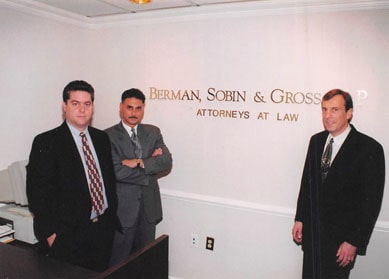
Berman | Sobin | Gross LLP is the largest workers’ compensation firm in Maryland representing injured workers. Our attorneys have the resources and experience to investigate how a warehouse is structured, who employed the injured worker under Maryland law, and whether any additional avenue for recovery exists beyond the Commission.
The Injuries That Define Warehouse Work, and Why They Require Serious Legal Attention
Repetitive strain injuries are among the most contested claims in warehouse workers’ compensation cases. Conditions like carpal tunnel syndrome, rotator cuff deterioration, and lumbar disc damage develop gradually over months or years of physically intensive work. Insurers frequently argue that these injuries are pre-existing conditions or that they cannot be causally connected to the job. That argument is not always wrong, which is part of what makes it effective. An attorney who can retain the right medical experts and build a record that shows the progression of injury in relation to specific job duties is essential to overcoming it.
Acute traumatic injuries, forklift accidents, falls from loading docks or elevated shelving, being struck by moving equipment or falling inventory, tend to generate immediate and obvious medical consequences. Even so, the disputes in these cases are significant. Employers and insurers will challenge whether the accident occurred the way the worker says it did, whether a pre-existing condition is responsible for the current impairment, and whether the treating physician’s restrictions are legitimate. At Berman | Sobin | Gross LLP, our attorneys do not shy away from these fights. Our founders have handled hundreds of workers’ compensation jury trials and have argued before both of Maryland’s highest courts. We take the challenging cases, not just the ones that resolve quickly.
What Warehouse Workers in Upper Marlboro Should Know About Filing a Claim
Maryland law requires injured workers to report a workplace injury to their employer and file a claim with the Maryland Workers’ Compensation Commission. For most injuries, the notice requirement is relatively short, and missing it can give an employer a basis to contest the claim. The practical reality for warehouse workers is that reporting an injury can feel like a risk when production quotas are high and supervisors make it clear that downtime is unwelcome. Some workers delay reporting because they hope the pain will resolve on its own. Others are told by supervisors, explicitly or implicitly, that filing a claim will create problems.
None of that changes the fact that you have a legal right to report and pursue a workers’ compensation claim in Maryland. Retaliation against a worker for filing is prohibited. If you have already delayed reporting or if your employer is creating obstacles, an attorney can help you assess where your claim stands and what steps are available. The sooner you speak with someone who handles these cases, the more options you are likely to have.
Through workers’ compensation, an injured warehouse employee may be entitled to medical benefits covering treatment for the work-related condition, temporary total or partial disability benefits during a period of inability to work, and permanent partial or permanent total disability benefits if the injury results in lasting impairment. Vocational rehabilitation may also be available. The full scope of what is recoverable depends on the facts, and the Commission hearing process is where those facts get tested.
Questions Warehouse Workers Ask Before Calling an Attorney
My employer says my injury was my own fault. Does that prevent me from filing?
Maryland workers’ compensation is a no-fault system, which means an injured employee can receive benefits regardless of whether the worker contributed to the accident. Employer arguments about fault are generally not a defense to a workers’ compensation claim, though there are narrow exceptions. A conversation with an attorney will clarify whether any of those exceptions apply to your situation.
I work for a staffing agency placed at a warehouse. Who do I file against?
The answer depends on how the staffing and host employer relationship is structured under Maryland law. In some cases, both entities may share employer status. This is one of the more complicated threshold questions in warehouse injury claims, and it has a real impact on which insurer responds and what benefits are available. An attorney familiar with these arrangements can identify the correct respondent from the start.
The warehouse forklift that hit me was operated by a subcontractor’s employee. Can I pursue anything beyond workers’ comp?
Potentially, yes. Maryland law allows an injured worker to pursue a third-party personal injury claim against someone other than the employer who caused the injury. If a contractor, equipment manufacturer, or other party outside your employment relationship contributed to the accident, that avenue may exist alongside your workers’ compensation claim. These two tracks need to be coordinated carefully.
My employer is pressuring me not to file. What should I do?
Document what you are experiencing, including dates, what was said, and who said it. Then speak with an attorney before taking any further action. Maryland law prohibits retaliation for filing a workers’ compensation claim, and an attorney can advise you on how to proceed in a way that protects your position.
The insurance company’s doctor says I can return to full-duty work, but my own doctor disagrees. Which opinion controls?
Neither opinion is automatically controlling. The Maryland Workers’ Compensation Commission evaluates medical evidence, and disputes between treating physicians and employer-selected examiners are common. Berman | Sobin | Gross LLP has litigated these disputes extensively. Our firm’s founders have even succeeded in establishing legal precedent limiting how employer medical experts can testify when their opinions lack a sound scientific basis.
I am afraid my claim will be denied because I have had back problems before. Is a prior condition disqualifying?
No. A pre-existing condition does not bar a workers’ compensation claim. What matters is whether the work either caused a new injury or aggravated, accelerated, or combined with the pre-existing condition to produce the current disability. These are provable legal theories, and they are routinely at issue in warehouse injury claims involving backs, shoulders, and knees.
How long will my case take?
That varies considerably depending on the nature of the injury, whether medical treatment is ongoing, whether there are factual disputes, and whether the case goes beyond an initial Commission hearing to a trial or appeal. Some claims resolve relatively quickly through the Commission process. Others that involve contested liability, serious permanent impairment, or third-party litigation take considerably longer. Our attorneys will give you an honest assessment of what your specific case involves and how it is likely to proceed.
Representation for Upper Marlboro Warehouse Workers Who Need Counsel That Goes the Distance
Berman | Sobin | Gross LLP represents workers throughout Maryland, including those employed at warehouses and distribution facilities in and around Upper Marlboro. Our firm’s attorneys handle Commission hearings, jury trials, and appellate matters when claims require it. One of our firm’s founders authored the definitive legal treatise on workers’ compensation in Maryland, a two-volume work that practitioners across the state rely on. We represent workers who have been turned away elsewhere, and we take the cases that require real commitment to pursue. If you were injured while working at a warehouse and want to talk with a warehouse worker injury attorney about what your claim is worth and how to pursue it, contact Berman | Sobin | Gross LLP for a confidential case analysis.