

Upper Marlboro Utility Worker Injury Attorney
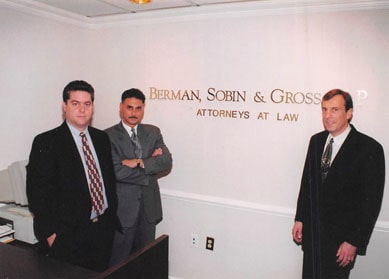
Utility work is among the most physically demanding and hazardous work in Maryland. Linemen, gas technicians, water and sewer crews, and telecommunications workers face real dangers every shift: high-voltage exposure, trench collapses, heavy equipment accidents, and chemical exposures that do not always show up immediately. When one of those hazards causes an injury, the workers’ compensation system in Maryland does not always respond the way it should. The attorneys at Berman | Sobin | Gross LLP have spent 35 years representing the workers who keep Maryland’s infrastructure running, including those in Prince George’s County who deserve full and fair benefits after a workplace injury. If you are a Upper Marlboro utility worker injury attorney search away from getting real answers, this page is for you.
What Makes Utility Worker Injuries Different From Other Workers’ Comp Claims
Utility worker injuries do not fit neatly into the same box as a warehouse slip-and-fall or an office repetitive strain claim. The hazards are distinct, the severity tends to be higher, and the medical picture is often more complicated. That matters because Maryland’s Workers’ Compensation Commission evaluates each claim based on its specific facts, and carriers know how to exploit gaps when a claim is not documented and pursued correctly.
Electrical burns and arc flash injuries involve tissue damage that goes deeper than surface wounds. They frequently require multiple surgeries, skin grafts, and long rehabilitation periods. The permanent disability calculations for these injuries can be substantial, and carriers often fight back hard by disputing the extent of permanent impairment.
Trenching and excavation injuries present a different set of problems. A collapse can cause crush injuries, spinal trauma, or traumatic brain injury. The initial injury may be obvious, but the full extent of spinal damage often does not surface until weeks later on advanced imaging. Delays between the incident and a confirmed diagnosis can give insurance companies grounds to contest whether the injury was actually caused on the job.
Occupational exposures, particularly from asbestos insulation in older utility infrastructure, benzene, or other chemicals encountered during pipeline work, create claims where the disease develops years after exposure. These latent injury claims require a different legal approach than an acute trauma claim, and most standard workers’ comp attorneys are not equipped to handle them well.
Prince George’s County Utility Work and the Specific Risks in This Region
Upper Marlboro sits in the center of Prince George’s County, one of the most infrastructure-dense counties in the state. Major transmission lines, natural gas distribution networks, and aging municipal water and sewer systems run throughout the county, and the workforce maintaining them is large. Construction and utility work along corridors like Route 4, Route 301, and the various county maintenance depots generates a steady volume of serious workplace injuries.
The volume of ongoing infrastructure projects in the county, including utility line work tied to residential and commercial development, means that workers are frequently performing tasks alongside subcontractors and contractors from other companies. This matters legally. When a worker is injured on a multi-employer site, liability can extend beyond the direct employer. A third-party personal injury claim against an equipment manufacturer, a property owner, or a general contractor may run parallel to a workers’ compensation claim, and the two must be coordinated carefully to maximize what the injured worker actually recovers.
Cases handled before the Workers’ Compensation Commission in Maryland are governed by state law regardless of which county the injury occurred in, but the local employment context shapes what benefits are at stake. Public utility workers employed by Prince George’s County or municipalities within it may have access to enhanced public safety benefits depending on their classification. Whether those enhanced benefits apply is a legal question worth pursuing.
Why Utility Claims Get Disputed and How That Affects You
Workers’ compensation carriers dispute utility worker claims at a higher rate than many other injury types. There are a few reasons for that.
First, the potential benefit values are high. Permanent partial disability awards, long-term medical treatment, and vocational rehabilitation costs add up quickly when the injured worker cannot return to physically demanding utility work. Carriers have a financial incentive to minimize what they pay out, and they do so through independent medical examinations, surveillance, and disputes over causal connection.
Second, utility injuries sometimes occur in circumstances that raise fault questions. A worker who was not following a lockout/tagout procedure, for example, may face an argument that benefits should be reduced. Maryland law does not generally allow an employer to deny benefits based on contributory negligence in workers’ comp, but the reality is that disputed claims drag on longer and cost claimants real money in delayed payments and medical approvals.
Third, the medical evidence is often contested. An employer’s carrier will retain its own medical expert. Those experts are selected to produce favorable opinions, and in Maryland, the admissibility of expert testimony in workers’ comp proceedings has been the subject of significant litigation. Berman | Sobin | Gross LLP has argued before Maryland’s highest courts on exactly these questions, including the principle that employer medical experts cannot offer opinions that ignore sound science.
Questions Upper Marlboro Utility Workers Ask About Their Claims
Does it matter if I was partially at fault for my injury?
Maryland workers’ compensation is a no-fault system. A worker who contributes to their own injury is still generally entitled to benefits. The relevant question is whether the injury arose out of and in the course of employment, not whether the worker made a mistake. There are narrow exceptions, but fault by the worker does not automatically bar a claim.
What if my employer says my injury was pre-existing?
A pre-existing condition does not eliminate your workers’ comp claim. Maryland law recognizes aggravation claims, meaning that if work activity worsened a pre-existing condition, the employer is responsible for the aggravation. This comes up frequently with back, knee, and shoulder injuries in physically demanding jobs. The key is medical evidence that clearly ties the deterioration to work activity.
Can I pursue a claim against someone other than my employer?
Yes, in some cases. If a third party, such as a contractor, equipment manufacturer, or property owner contributed to the conditions that caused your injury, you may have a separate personal injury claim alongside your workers’ comp claim. These claims do not cancel each other out, but they need to be coordinated correctly because Maryland law requires reimbursement of workers’ comp benefits out of a third-party recovery in certain circumstances.
What benefits can a utility worker in Maryland receive through workers’ comp?
Benefits typically include payment of medical bills related to the work injury, temporary total or partial disability payments while you cannot work or can only work in a reduced capacity, and permanent partial or permanent total disability awards if the injury causes lasting impairment. Vocational rehabilitation services are also available in appropriate cases.
How long do I have to file a workers’ compensation claim in Maryland?
Generally, Maryland requires a claim to be filed with the Workers’ Compensation Commission within 60 days of the injury for purposes of notice to the employer, and within two years of the injury for an occupational disease or accidental personal injury. Latent conditions, like those caused by chemical exposure, have different trigger dates. Missing these deadlines can be fatal to a claim, so early attention to filing is important.
What if my employer’s insurance company is pressuring me to return to work before I am ready?
A carrier can dispute your continued disability status and request a hearing before the Commission to terminate or modify your benefits. However, they cannot simply cut off payments unilaterally without going through that process. A medical opinion supporting your continued disability is the core protection, and having an attorney who can respond quickly to carrier motions matters in these situations.
What if another attorney turned down my case?
Berman | Sobin | Gross LLP handles the cases other firms decline. Some attorneys avoid claims that will require significant litigation or are complicated by disputed medical evidence, third-party liability, or occupational disease theories. Those are exactly the kinds of utility worker cases our firm takes on. If you have been turned away elsewhere, that is not a reflection of your claim’s merit.
Utility Workers in Upper Marlboro Deserve Full Representation
Berman | Sobin | Gross LLP is the largest workers’ compensation law firm in Maryland representing injured workers, with offices across the state and decades of experience handling the hard cases. One of the firm’s founders authored a two-volume treatise that remains the definitive reference on workers’ compensation in Maryland. The firm’s attorneys have handled tens of thousands of Commission hearings, hundreds of jury trials, and appeals before both of Maryland’s highest courts. That depth of experience matters when a carrier decides to fight your utility worker injury claim rather than pay it fairly. The firm also has attorneys and staff fluent in Spanish, so language is never a barrier to full representation. If you have been injured doing utility work in Prince George’s County, contact Berman | Sobin | Gross LLP to speak with an Upper Marlboro utility worker injury lawyer about what your claim is actually worth and what it takes to pursue it.