

Upper Marlboro Job Injury Attorney
Prince George’s County has one of the most active workforces in the Washington metropolitan area, with employees spread across government agencies, construction sites, healthcare facilities, schools, and the commercial corridors running through Upper Marlboro and surrounding communities. When a job injury occurs here, the question that follows is rarely simple: what benefits am I actually entitled to, how does the Maryland Workers’ Compensation Commission process my claim, and is what the employer or insurer is offering actually fair? An Upper Marlboro job injury attorney from Berman | Sobin | Gross LLP can answer those questions with 35 years of specific experience in Maryland workers’ compensation law behind the answers.
What Prince George’s County Workers Are Actually Dealing With After a Job Injury
The nature of work in and around Upper Marlboro shapes the kinds of injuries that reach our office. County government employees, correctional officers at the Prince George’s County Detention Center, construction workers building along Route 4 and the Penn Mar corridor, healthcare workers at area hospitals and clinics, and public school employees across one of Maryland’s largest school districts all face different physical risks on the job. What they share is the same basic framework: when an injury is work-related, Maryland law requires the employer’s insurer to cover medical treatment and, depending on the severity, to pay wage replacement benefits.
The reality, though, is that employers and their insurers frequently dispute whether an injury is compensable, whether a specific medical treatment is necessary, or whether a worker has recovered sufficiently to return to full duty. Those disputes land before the Maryland Workers’ Compensation Commission, and the outcome often turns on how well the claim was built and presented. Workers who go through that process without representation routinely receive less than workers who have an attorney who knows how to document a claim, obtain appropriate expert opinions, and push back when an insurer’s position doesn’t hold up.
Injuries That Complicate Compensation Claims in Maryland
Some job injuries in Prince George’s County are straightforward: a fall from a ladder, a back strain from lifting, a hand injury from equipment. The insurer accepts the claim, treatment proceeds, and benefits are paid. But a significant number of claims involve circumstances that create real legal complexity, and those are the cases where having the right attorney makes the most difference.
Occupational diseases present a distinct challenge because they develop over time rather than from a single incident. A construction worker exposed to hazardous materials along a long career, a corrections officer who develops hearing loss from years of noise exposure, or a public safety employee with a cardiac condition tied to the demands of their job may face an insurer arguing that the condition is unrelated to work. Maryland law includes specific presumptions that can apply to certain public safety employees in these situations, and Berman | Sobin | Gross LLP has litigated these presumptions at the appellate level, including cases that changed how the law applies across the state.
Repetitive use injuries are another category that insurers frequently contest. Carpal tunnel syndrome, rotator cuff deterioration, and knee damage that builds up over years of work on the same physical tasks can be just as debilitating as acute injuries, but establishing the work connection requires medical evidence that specifically ties the condition to the job duties involved. Pre-existing conditions add another layer of complexity, since insurers often attempt to attribute current symptoms entirely to prior conditions regardless of how a job may have aggravated or accelerated them.
For workers who are unlikely to return to the same occupation, vocational rehabilitation and permanent disability benefits become central to the claim’s value. Maryland law provides pathways to these benefits, but the amounts and duration are subject to dispute, and the difference between a well-documented claim and a poorly presented one can be substantial over the course of years.
Public Safety Workers in Prince George’s County Have Additional Protections
Prince George’s County employs thousands of first responders, including firefighters, paramedics, EMTs, and law enforcement officers. Maryland law provides enhanced workers’ compensation protections for public safety employees, including statutory presumptions that connect certain heart, lung, and hypertension conditions to the occupational demands of public safety work. These presumptions can shift the burden of proof in a way that significantly affects the outcome of a claim.
Berman | Sobin | Gross LLP has been at the center of the legal development of these protections. The firm’s appellate record includes Montgomery County v. Pirrone, which established that the presumption for heart, lung, and hypertension conditions applies to public safety workers even after retirement or while off duty. The firm also litigated Downer v. Baltimore County, which confirmed that EMTs qualify as public safety employees entitled to the same enhanced compensation benefits available to other first responders. These are not distant legal abstractions for Prince George’s County workers. They are controlling precedents that can directly affect whether a claim succeeds.
If a public safety employee in Upper Marlboro or elsewhere in Prince George’s County has been told by their employer, their union, or an insurer that their condition is not covered, it is worth having an attorney who has actually shaped those legal standards review the claim before accepting that answer.
Questions Workers in Upper Marlboro Ask About Job Injury Claims
How long do I have to file a workers’ compensation claim in Maryland?
Maryland law generally requires that a workers’ compensation claim be filed within two years of the date of the accidental injury, or within two years of the date of disablement or death in occupational disease cases. Missing this deadline can bar the claim entirely, so it should not be treated as something to handle later.
What if my employer says my injury didn’t happen at work?
An employer’s denial does not end the process. You have the right to file a claim with the Maryland Workers’ Compensation Commission and present your case at a hearing. An attorney can help you gather the medical records, witness accounts, incident reports, and expert opinions needed to establish that the injury occurred in the course of employment.
Can I choose my own doctor for treatment?
Maryland workers’ compensation law does give employers and insurers some ability to direct initial medical care, but you have rights around second opinions and your own medical evaluation. Understanding exactly what the rules permit in your situation is something an attorney can clarify early so that your medical record supports rather than undermines your claim.
What happens if my employer retaliates against me for filing a claim?
Maryland law prohibits employers from retaliating against workers for filing workers’ compensation claims. Retaliation can take the form of termination, demotion, schedule changes, or other adverse employment actions. If you believe your employer is punishing you for pursuing a claim, that conduct may give rise to a separate legal claim.
I was injured and I also have a prior condition in the same area of my body. Does that disqualify my claim?
Not necessarily. Maryland workers’ compensation covers aggravation of pre-existing conditions when work activities contribute to the current level of impairment or disability. The analysis requires medical evidence that directly addresses the relationship between your prior condition and the work-related injury, which is exactly the kind of argument that requires careful preparation.
What does a workers’ compensation attorney in Maryland actually cost?
Workers’ compensation attorneys in Maryland work on a contingency fee basis regulated by the Workers’ Compensation Commission. You do not pay attorney fees unless benefits are recovered on your behalf. The Commission approves attorney fees, so the arrangement is not something that should deter someone from seeking representation.
What if my claim was denied or I received a settlement offer I think is too low?
A denial at the Commission level is not the end of the road. Cases can proceed on appeal, including to Maryland’s circuit courts and appellate courts. Berman | Sobin | Gross LLP has handled hundreds of workers’ compensation jury trials and appeals before both of Maryland’s highest courts. If another attorney has turned down your case or stopped short of full litigation, the firm will evaluate whether more can be done.
Talking to a Job Injury Lawyer Serving Upper Marlboro and Prince George’s County
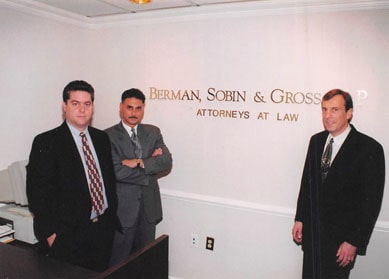
Berman | Sobin | Gross LLP is the largest workers’ compensation law firm in Maryland representing injured workers, with offices in Lutherville, Baltimore, Gaithersburg, and Frederick and a record of service throughout Prince George’s County and the broader Washington metropolitan region. The firm has grown over 35 years because workers in Maryland who need real litigation capability, not just someone to fill out forms, have found what they need here. One of the firm’s founders wrote the definitive two-volume treatise on workers’ compensation in Maryland, a resource that practitioners across the state still consult. When you work with this firm, the attorney assigned to your case stays with you throughout, so you always know who is handling your claim and where it stands. If you have been injured at work in Upper Marlboro or anywhere in Prince George’s County and want to understand what your claim is actually worth, contact Berman | Sobin | Gross LLP to speak with a job injury attorney who can give you a direct assessment.