

Upper Marlboro Electrician Injury Attorney
Electrical work carries risks that most jobs simply do not. Voltage, live circuits, defective equipment, and unsafe job site conditions combine to produce some of the most devastating injuries Maryland workers experience. When an electrician in Prince George’s County is hurt on the job, the workers’ compensation system should step in and provide real support. But claims involving serious electrical injuries are rarely straightforward, and the process from initial report to full benefit recovery is where many workers lose ground they should not lose. Upper Marlboro electrician injury attorneys at Berman | Sobin | Gross LLP have spent 35 years representing the workers Maryland depends on, including the skilled tradespeople who keep the lights on and the infrastructure running.
What Electrical Injuries Actually Do to a Worker’s Body and Career
Electrocution and electrical shock injuries sit in their own category because the visible wound rarely reflects the full damage. A worker can walk away from an electrical event appearing functional while internal tissue damage, cardiac arrhythmia, or neurological disruption are already developing. The full picture often does not emerge until days or weeks after the incident.
Arc flash burns are among the most severe thermal injuries any worker can sustain. Depending on the arc’s energy and proximity, a worker can suffer third-degree burns across large surface areas, damage to airways from superheated air, and permanent scarring requiring multiple surgeries. Recovery timelines are measured in months, sometimes years.
Electrical current passing through the body can disrupt the heart’s rhythm, damage kidneys, and cause nerve damage that results in chronic pain, numbness, or loss of motor function. These are not injuries a worker simply recovers from in a few weeks. They change careers. They change family dynamics. They sometimes end a worker’s ability to earn anything close to what they earned before.
Falls caused by electrical shock are also common and add a second layer of injury. An electrician startled or thrown by a shock on a ladder or elevated platform may sustain spinal injuries, traumatic brain injury, or broken bones entirely separate from the electrical damage itself. Both causes need to be documented, both need to be part of the claim.
Who Bears Responsibility When an Electrician Is Hurt in Prince George’s County
Workers’ compensation through an employer is one avenue, but it is not always the only one. Maryland law allows injured workers to pursue third-party claims when a party other than the direct employer contributed to the injury. For electricians, this happens more often than in other trades.
General contractors control site safety conditions. Equipment manufacturers supply tools and protective gear. Property owners dictate access and conditions on job sites where utility work occurs. If a defective breaker panel, a substandard piece of personal protective equipment, or a general contractor’s failure to de-energize a circuit before your crew began work caused the injury, those parties may carry liability that falls outside the workers’ comp framework entirely.
Prince George’s County is a major construction and infrastructure market. The Route 4 corridor, the Largo area, and substantial commercial development throughout Upper Marlboro generate ongoing electrical work across residential, commercial, and public sector projects. Electricians working across these sites interact with multiple parties on any given day. Identifying which party’s failure caused an injury, and building the documentation to support that conclusion, is work that takes legal experience specific to this type of claim.
Berman | Sobin | Gross LLP represents injured workers in both workers’ compensation proceedings before the Maryland Workers’ Compensation Commission and in third-party civil litigation when the facts support it. The firm has handled cases before both of Maryland’s highest courts. For an electrician facing a serious injury, understanding both tracks from the beginning shapes how evidence is preserved and how a case is built.
What Electricians Need to Know About the Maryland Workers’ Comp System
Maryland requires most employers to carry workers’ compensation insurance, and the system is designed to provide medical treatment and wage replacement without requiring an injured worker to prove fault. That design sounds simple. In practice, disputes arise constantly, and they tend to arise more aggressively when the injury is serious and the costs are high.
Insurance carriers routinely question whether an injury arose out of and in the course of employment, whether a specific medical condition is causally connected to the work incident, and whether a worker has reached maximum medical improvement. Each of these disputes can delay or reduce benefits. For an electrician with nerve damage or cardiac complications from electrical exposure, the medical causation question can be genuinely complicated, and it often requires expert testimony to resolve properly.
The claim process begins with reporting the injury to an employer and filing with the Commission. From there, the case can move through hearings, appeals, and in some instances, jury trials in circuit court. Berman | Sobin | Gross LLP has handled hundreds of workers’ compensation jury trials in Maryland. The firm’s approach is not to steer clients away from contested proceedings. It is to be fully prepared for wherever the case needs to go.
One of the firm’s founders authored a two-volume treatise on Maryland workers’ compensation that remains a primary reference in the field. That depth of substantive knowledge matters when a claim involves complex medical causation questions or a challenge to whether an injury qualifies for particular benefits.
Questions Electricians Commonly Ask After a Job Site Injury
Can I still file a workers’ comp claim if I was using equipment I knew was faulty?
Generally yes. Maryland workers’ compensation operates on a no-fault basis, meaning an injured worker’s own actions, short of intentional self-injury, typically do not bar a claim. Comparative fault concepts from personal injury law do not apply within the workers’ comp framework. If you were using equipment that was known to be defective because your employer provided nothing better, that context matters and should be part of your documented account of what happened.
What if my employer says the injury happened because I ignored safety protocols?
Employer arguments about protocol violations come up in disputed claims, but they rarely succeed in eliminating compensation entirely under Maryland law. What they can do is complicate proceedings and delay resolution. Having legal representation when this argument surfaces means having someone who understands exactly where those arguments hold up and where they do not.
My electrical injury is affecting my heart. Will workers’ comp cover the ongoing cardiac treatment?
Medical benefits under workers’ compensation cover treatment that is causally related to the compensable injury, including conditions that develop as a result of the initial event. Cardiac complications from electrical exposure can qualify, but they typically require clear medical documentation linking the condition to the work incident. This is the kind of medical causation dispute that benefits from having an attorney managing the evidentiary record from early in the claim.
Can I pursue a lawsuit against the equipment manufacturer while also receiving workers’ comp benefits?
Yes. A third-party products liability claim against a manufacturer is separate from your workers’ compensation claim. Maryland law addresses how recoveries in both proceedings interact, including potential subrogation rights by the workers’ comp insurer against a third-party judgment. Managing both claims simultaneously requires coordination, but it can significantly increase the total recovery available to a seriously injured worker.
What happens if my electrical injury prevents me from ever working as an electrician again?
Permanent total disability benefits under Maryland workers’ compensation are available when an injury renders a worker unable to perform gainful employment. Vocational rehabilitation services may also be available to help a worker transition into work they can physically perform. The firm’s appellate victory in Fikar v. Montgomery County established that workers receiving service-connected disability retirement can also access vocational rehabilitation, reflecting the firm’s direct role in shaping how these benefits operate.
How long do I have to file a workers’ compensation claim in Maryland?
Maryland generally requires that a workers’ compensation claim be filed within two years of the date of injury or the date the worker knew or reasonably should have known that the injury was work-related. For conditions that develop gradually from repeated electrical exposure, the clock may run differently than for a single acute incident. The sooner a claim is filed, the stronger the evidentiary record tends to be.
The insurance company is offering a settlement. Should I accept it?
Settlement decisions in workers’ compensation cases depend on the full picture of your medical prognosis, your future earning capacity, and what benefits you may be giving up by closing the claim. For an electrician with unresolved medical conditions or functional limitations, a settlement that looks significant now can fall short over time. An attorney who has handled this type of case extensively can evaluate whether what is being offered reflects the actual value of your claim.
Electricians in Upper Marlboro Deserve Representation That Understands the Trade
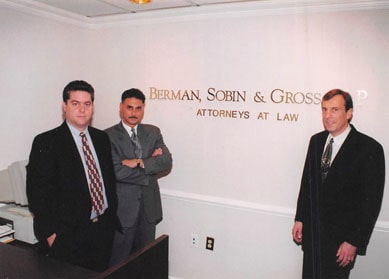
Berman | Sobin | Gross LLP is the largest workers’ compensation law firm in Maryland representing injured workers. The firm’s attorneys have handled cases for workers in construction, utilities, public safety, and trades throughout Prince George’s County and across the state, with offices in Lutherville, Baltimore, Gaithersburg, and Frederick to serve clients where they are. When you work with an attorney at this firm, that attorney stays with your case. You are not passed around. You know who is handling your claim and you can reach them. For an Upper Marlboro electrician injury attorney who understands what is actually at stake in a serious electrical injury claim, contact Berman | Sobin | Gross LLP for a confidential case analysis.