Towson Mechanic Injury Attorney
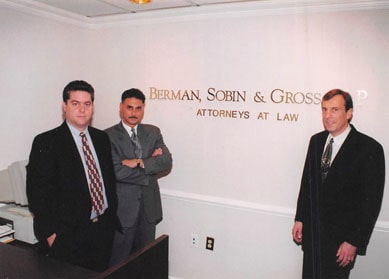
Mechanics work in environments where the margin for error is narrow. Hydraulic lifts, heavy vehicles, compressed air systems, caustic fluids, and shop tools create a constant backdrop of physical risk. When something goes wrong, the injuries tend to be serious: crush injuries from lifts or falling vehicles, chemical burns from brake fluid or battery acid, hearing damage from years of impact tools, back and shoulder injuries from working in confined positions under heavy machinery. If you were hurt working as a mechanic in or around Towson, a Towson mechanic injury attorney at Berman Sobin Gross LLP can help you understand what benefits are available and how to recover them.
What Makes Mechanic Injuries Complicated Under Maryland Workers’ Compensation
Maryland’s workers’ compensation system covers employees injured in the course of their employment, and most mechanics employed by dealerships, fleet operations, government garages, or repair shops are covered workers. But mechanic injury claims often develop complications that straightforward claims do not.
One recurring problem is the nature of the injuries themselves. Many of the conditions that afflict mechanics, including hearing loss from noise exposure, repetitive stress injuries to the wrists, elbows, and shoulders, and respiratory conditions from chemical exposure, are cumulative. They do not appear on a single incident report. They develop over months or years, which creates disputes about when the injury “occurred,” which employer is responsible, and whether the condition is occupational in the legal sense. Maryland’s workers’ compensation statute addresses occupational disease claims specifically, but navigating those provisions requires a working knowledge of how the law treats gradual harm.
Another source of difficulty is the employer’s response. Workers’ compensation insurers frequently dispute causation for mechanical work injuries, arguing that a shoulder injury could have happened anywhere, or that a worker’s hearing loss is age-related rather than occupational. Medical opinions become contested. The insurer may send the injured mechanic to its own physician, whose findings often differ from those of the treating doctor. Understanding how to present evidence and counter these narratives at a Workers’ Compensation Commission hearing is central to recovering full benefits.
The Specific Injury Patterns Mechanics in Towson Face
Towson’s auto repair industry includes independent shops, franchise service centers, and dealership service departments along the York Road corridor and Joppa Road, as well as fleet and municipal vehicle maintenance operations connected to Baltimore County government. Each setting presents its own hazards, though certain injury patterns appear across all of them.
Lift and fall injuries are among the most serious. When a hydraulic lift fails, or when a vehicle is improperly secured before a worker goes underneath, the consequences can include catastrophic crush injuries. These cases often involve not just a workers’ compensation claim but a potential third-party product liability claim against the lift manufacturer or a maintenance contractor who serviced the lift incorrectly.
Tool-related hand and wrist injuries are common and often dismissed as minor, but a mechanic who cannot grip with full strength or who experiences chronic pain from a tendon injury may be unable to return to the same work. The calculation of lost earning capacity matters enormously in these cases. So does vocational rehabilitation, a benefit available under Maryland law that injured workers often do not know to request.
Chemical exposure is a category unto itself. Brake dust in older vehicles historically contained asbestos. Battery acid and solvents cause burns and, with chronic exposure, respiratory conditions. A mechanic who develops an occupational lung condition may face a long fight to establish the workplace connection, but Maryland courts have addressed these types of occupational disease claims, and the law does provide a path to recovery.
When a Third Party Shares Responsibility for the Injury
Workers’ compensation is not always the only avenue available. When someone other than the employer contributed to the injury, Maryland law allows an injured mechanic to pursue both a workers’ compensation claim and a civil lawsuit against the responsible third party.
In a shop context, this can arise when a defective vehicle component injures the mechanic working on it, when a delivery driver causes an accident on shop property, or when a faulty piece of shop equipment manufactured or maintained by an outside vendor is the direct cause of the harm. These third-party claims can recover damages that workers’ compensation does not cover, including full lost wages rather than the two-thirds wage replacement under the comp system, and compensation for pain and suffering.
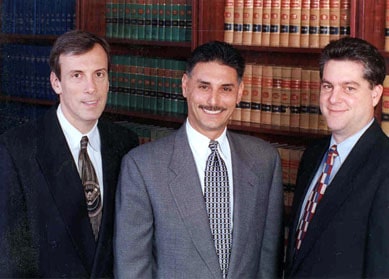
Identifying whether a third-party claim exists requires examining the circumstances of the accident with care. Berman Sobin Gross LLP has handled both workers’ compensation and personal injury claims for injured workers across Maryland for 35 years, and the attorneys here understand how to evaluate these situations from both angles and pursue all available sources of recovery concurrently.
Questions Mechanics and Their Families Often Ask
My employer says my shoulder injury happened outside of work. How do I handle that?
This is one of the most common disputes in mechanic injury claims. Your employer or their insurer may argue that your injury predates employment, resulted from a non-work activity, or cannot be causally linked to your job duties. The way to counter this is through detailed medical documentation, your own account of how the injury occurred, witness statements if available, and often an independent medical evaluation by a physician who understands the demands of automotive repair work. An attorney can help you build that record and present it effectively at a Commission hearing.
I have been working as a mechanic for 20 years and my hearing has gotten progressively worse. Is that covered?
Yes. Occupational hearing loss caused by exposure to excessive noise is a recognized occupational disease under Maryland law. The claim is governed by the occupational deafness statute, which includes specific rules about how benefits are calculated, including when the age deduction is measured from. Berman Sobin Gross LLP’s attorneys have litigated this issue at the appellate level, including in a reported case that clarified how the statute applies to workers with noise-induced hearing loss.
What benefits am I entitled to if I cannot return to my job as a mechanic?
Maryland workers’ compensation benefits can include temporary total disability payments while you are recovering, temporary partial disability if you return to lighter work at reduced pay, permanent partial or permanent total disability based on the extent of your impairment, medical treatment, and vocational rehabilitation services if you cannot return to your prior occupation. The value of your claim depends heavily on the nature of your injury, your earning history, and how thoroughly your claim is documented and presented.
Do I need to file a claim quickly, or can I wait to see how the injury heals?
Maryland law requires that you notify your employer of a work injury promptly, generally within a short window after it occurs. The deadline to file a workers’ compensation claim with the Commission is longer but not unlimited. Delays in reporting can be used against you, and delays in seeking medical treatment can create gaps in your medical record that insurers will exploit. It is worth getting advice early rather than waiting.
My employer does not have workers’ compensation insurance. What happens now?
Maryland law requires most employers to carry workers’ compensation coverage. If your employer has failed to do so, you may have a claim through the Uninsured Employers’ Fund, and your employer may face significant legal exposure. An injured worker in this situation still has rights and still needs to pursue them actively.
Can I choose my own doctor for treatment?
Maryland workers’ compensation rules govern which providers are authorized for treatment and how disputes about medical care are resolved. The specifics depend on when your injury occurred and whether your employer has a managed care organization arrangement. This is an area where the rules have practical consequences for your recovery, and understanding them early in the process matters.
What if I was partially at fault for my own injury?
Workers’ compensation in Maryland is a no-fault system. Whether you made a mistake that contributed to your injury generally does not bar your claim or reduce your benefits. The system was designed to provide coverage to injured workers without requiring them to prove their employer was negligent, and without exposing employers to fault-based liability in most cases.
Talking to a Mechanic Injury Lawyer in Towson
Berman Sobin Gross LLP has represented injured workers throughout Baltimore County and the surrounding region for 35 years. The firm is the largest workers’ compensation firm in Maryland representing injured workers, with attorneys and staff who handle the full range of claims, from straightforward benefit disputes to complex occupational disease cases that require extended litigation. When you work with one of the attorneys here, that attorney stays with you throughout your case as your consistent point of contact. If you were injured doing mechanic work in Towson and have questions about your options, contact Berman Sobin Gross LLP for a confidential case analysis with a Towson mechanic injury attorney who can evaluate your specific situation and advise you on the realistic path forward.