

Towson Bus Driver Injury Attorney
Bus drivers in Towson and Baltimore County put in long shifts behind the wheel, managing heavy traffic on York Road, Joppa Road, and the routes that connect Towson Town Center to surrounding neighborhoods. The physical demands of that job are real: constant vibration from the road, awkward entry and exit from the driver’s seat, risk of rear-end collisions at busy stops, and the occasional violent encounter with a passenger. When a Towson bus driver injury attorney at Berman | Sobin | Gross LLP takes on one of these cases, the work starts with understanding what actually happened on that route and why the system that was supposed to protect that driver fell short.
What Drives Bus Driver Injuries in the Towson Area
The physical environment of bus driving does not look dangerous from the outside. Drivers sit down. They do not carry loads or climb scaffolding. But the cumulative toll of this job shows up in workers’ compensation claims every year, and the underlying causes are consistent.
Repetitive strain injuries to the lower back, shoulders, and neck are common among drivers who have held routes for years. The driver’s seat absorbs road shock, but it does so imperfectly, and the Baltimore County road system gives drivers plenty of rough pavement to contend with. Over time, the disc injuries and degenerative changes that develop are directly tied to occupational exposure, even if no single incident triggered them.
Sudden-impact injuries happen too. A bus stopped to pick up passengers at a Towson stop can be rear-ended by a distracted driver. A passenger boarding while intoxicated or agitated can physically assault the driver. A slip while descending from a high-clearance vehicle can send a driver to the floor of a garage.
The employer’s response in the immediate aftermath of an injury often shapes the entire claim. Delays in reporting, pressure to return to duty before a driver has been medically cleared, or a quick referral to a company-selected physician who minimizes the injury are patterns that appear in these cases. Knowing what to do in those first days is important.
Workers’ Compensation and the Third-Party Claim: Two Different Paths
Bus drivers employed by a county transit authority or a private carrier generally have access to workers’ compensation benefits when injured on the job. Those benefits cover medical treatment and a portion of lost wages while the driver is out. They do not compensate for pain and suffering, and they do not account for the full extent of what a serious injury costs a family over time.
When a bus driver is injured because of someone else’s negligence, a separate personal injury claim may also be available. If a driver is hurt in a crash caused by another motorist, that driver’s insurance becomes a potential source of additional recovery. If a garage defect or improperly maintained road condition contributed to the injury, there may be additional parties who bear responsibility.
These two tracks, workers’ compensation and a third-party liability claim, run parallel. Pursuing both is possible, and in serious injury cases, pursuing both is often what makes the difference between a partial recovery and one that actually reflects the full impact of the injury. The coordination between the two claims requires attention to detail, because what one insurer pays can affect the other, and the timing of settlements matters.
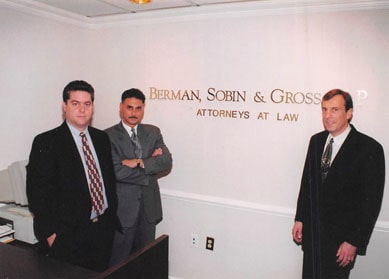
Berman | Sobin | Gross LLP has represented injured workers in both types of claims for 35 years. The firm is the largest workers’ compensation law firm in Maryland representing injured workers, and it has handled hundreds of workers’ compensation jury trials and appeals before Maryland’s highest courts.
When the Employer Disputes the Claim
Disputes arise in bus driver injury cases for a few predictable reasons. The employer may argue that a degenerative condition was pre-existing and unrelated to the job. They may claim a driver did not report the injury promptly enough, or that the injury happened off duty. A company-hired medical expert may produce an opinion that contradicts the treating physician’s findings.
These challenges are not unusual, and they are not automatically successful. Maryland workers’ compensation law provides mechanisms for presenting medical evidence, cross-examining employer experts, and taking disputed cases before the Workers’ Compensation Commission. When Commission decisions do not produce a fair result, appeals are available in circuit court, and jury trials on disputed issues are a real option in Maryland, not a theoretical one.
One of the founders of Berman | Sobin | Gross LLP literally wrote the two-volume treatise that serves as the go-to resource on workers’ compensation in Maryland. When employer experts attempt to minimize a driver’s injuries or claim that occupational exposure did not cause the condition at issue, the attorneys at this firm know exactly how to respond. The firm does not back away from contested cases or cases that require trial preparation. If other attorneys have passed on a case because it looked difficult, that is precisely the kind of case Berman | Sobin | Gross LLP evaluates.
Questions Towson Bus Drivers Ask About Injury Claims
I’ve been driving the same route for years. Can I file a workers’ comp claim if I can’t point to a single accident that caused my back injury?
Yes. Maryland workers’ compensation covers occupational diseases and repetitive-use injuries, not just sudden accidents. If the nature of your work, specifically the vibration, the seating position, the physical demands of the job, contributed to a condition that now prevents you from driving, that can be a compensable claim. The medical evidence connecting your condition to your occupation is central, and that is where legal and medical strategy intersect.
My employer sent me to their doctor right after my injury. Do I have to accept that doctor’s opinion?
No. Under Maryland workers’ compensation law, you have the right to seek an independent medical evaluation. An employer’s selected physician has an inherent interest in producing findings that limit the employer’s liability. Your attorney can help you obtain an independent opinion and, where those opinions conflict, present your evidence before the Commission.
I was injured when a passenger physically attacked me on the bus. What kind of claim does that support?
An assault by a passenger during the course of your employment is a workplace injury and supports a workers’ compensation claim. Depending on the circumstances, there may also be a third-party claim against the assailant. If the employer had notice of safety risks on that route and failed to address them, that context may be relevant to the broader picture of what recovery looks like.
The employer is saying I have to return to light duty, but my doctor says I should not be driving. What happens now?
This is one of the more common disputes in transit worker cases. If your treating physician has restricted you from driving or from the physical demands of your full duties, the employer cannot simply override that opinion. How light-duty assignments affect your wage loss benefits, and whether the offered duties fall within your medical restrictions, are questions that need to be addressed carefully with your attorney before you respond to the employer.
What benefits are available while I am out of work recovering from my injury?
Workers’ compensation provides temporary total disability benefits, which cover a percentage of your average weekly wage while you are unable to work. Medical treatment related to your injury is also covered. If your injury results in permanent impairment, permanent partial or total disability benefits may be available depending on the extent and nature of that impairment.
I drive for a private transit company, not the county. Does that change anything?
Private transit employees are covered under Maryland’s workers’ compensation system just as public employees are. Some differences arise in connection with the type of employer, how insurance is structured, and whether any public safety worker enhancements apply. Those distinctions matter to the claim and are something to review with an attorney who handles these cases regularly.
How long do I have to file a workers’ compensation claim after a bus driving injury?
Maryland law sets filing deadlines for workers’ compensation claims, and those deadlines are strict. For occupational diseases, the timeline runs from when you knew or should have known the condition was work-related. For traumatic injuries, the clock generally starts at the date of the accident. Waiting to file carries real risk, and the sooner a claim is evaluated, the better positioned a driver is.
Representation for Injured Bus Drivers Throughout the Baltimore Area
Berman | Sobin | Gross LLP serves injured workers across Baltimore County, Baltimore City, and the surrounding region from offices in Lutherville, Baltimore, Gaithersburg, and Frederick. Towson sits in the middle of a transit network that connects tens of thousands of commuters daily, and the drivers who operate those routes deserve representation that understands the specific pressures and risks of that work. The firm has Spanish-speaking attorneys and staff, and works hard to make sure every client, regardless of language or background, can communicate fully about their claim and understand where things stand. If you are a bus driver in the Towson area who has been injured on the job, contact Berman | Sobin | Gross LLP for a confidential case analysis with a Maryland bus driver injury attorney.