

Silver Spring Transit Worker Injury Attorney
Transit work in Silver Spring puts people in harm’s way in ways that most office workers never think about. Bus operators absorb thousands of hours of vibration and sudden jolts. Metro workers maintain rails and tunnels in conditions that would alarm most members of the public. Light rail crews, station agents, and operations staff face risks ranging from platform accidents to assaults by passengers. When these workers get hurt, they face a claims process that is more layered and more contested than a standard workplace injury. A Silver Spring transit worker injury attorney at Berman | Sobin | Gross LLP understands those layers, because this firm has spent 35 years representing the working people of Maryland, including the men and women who keep the region’s transit systems moving.
Why Transit Injuries in Silver Spring Present Unusual Legal Challenges
Silver Spring sits at one of the busiest transit hubs in the entire Washington metropolitan region. The WMATA Metro Red Line, Montgomery County Ride On buses, and Metrobus routes all converge here, making Silver Spring one of the state’s most transit-dense communities outside of downtown Baltimore. That density means a large workforce, and a large workforce means serious injuries happen at a rate that the public rarely sees.
What makes transit worker injuries legally complicated is not just the severity of the physical harm. It is the question of who is responsible and under which framework the claim belongs. A Montgomery County employee driving a Ride On bus is covered under Maryland’s workers’ compensation system, but the rules governing public safety employees may apply depending on the nature of the work. A WMATA employee operates under a separate legal structure because WMATA is an interstate compact agency, not a standard Maryland employer. Federal Railway Safety Act protections, the Federal Transit Act, and FELA-adjacent frameworks come into play for certain rail and maintenance workers. Getting these categories wrong at the start of a claim can cost an injured worker significant benefits.
Berman | Sobin | Gross LLP has handled workers’ compensation claims for Maryland public employees and labor force members across all of these categories. When the legal framework itself is in dispute, that experience is not a minor advantage. It is the difference between a properly filed claim and one that gets misdirected, underpaid, or denied on procedural grounds.
The Physical Toll That Buses, Platforms, and Maintenance Yards Produce
Transit work is not uniformly dangerous in the way that, say, roofing or crane operation is. The hazards are often cumulative and environmental, which creates a different kind of legal challenge. Bus operators develop repetitive motion injuries to the lower back, shoulders, and wrists after years at the wheel. Vibration-induced nerve damage and hearing loss are occupational realities for operators and mechanics. These injuries do not usually come from a single traumatic event. They develop over time, get dismissed by early-stage medical exams, and then become severe enough to keep a worker off the job entirely.
Maryland workers’ compensation law recognizes occupational diseases and cumulative injuries, but those claims face more scrutiny than a clear-cut traumatic accident. Employers and their insurers frequently argue that the injury predates employment, is degenerative rather than work-caused, or could have been mitigated. Berman | Sobin | Gross LLP has handled exactly these arguments in hearings and at trial. One of the firm’s founders wrote the definitive two-volume treatise on Maryland workers’ compensation that practicing attorneys across the state still rely on. That depth of understanding matters when the medical causation dispute is where the employer is focusing its defense.
Traumatic injuries also happen. Platform falls, vehicle accidents during route operation, passenger assaults, and tool-related injuries in maintenance facilities are all documented categories of transit worker harm. These cases are more straightforward in some respects, but transit employers and their insurers are experienced at managing claims, and they have legal teams working on their side from the moment an incident report is filed.
Public Safety Presumptions and What They Mean for Montgomery County Transit Workers
Maryland law provides meaningful legal presumptions for public safety workers, and those presumptions have been shaped in significant part by cases that Berman | Sobin | Gross LLP has taken to the appellate courts. The firm’s track record on this is worth knowing in detail.
In Montgomery County v. Pirrone, the firm established that the occupational disease presumption for heart, lung, and hypertension conditions applies to public safety workers even after retirement or while off duty. In Downer v. Baltimore County, the firm secured a ruling that EMTs qualify as public safety employees with access to enhanced compensation benefits. In Montgomery County v. Deibler, the court confirmed that public safety workers receiving full salary on light duty can still receive compensation for lost overtime wages they had been earning before the injury. These are not abstract legal victories. They represent concrete money that injured public workers would not have received without appellate advocacy.
Whether a Silver Spring transit employee qualifies as a public safety worker for purposes of these presumptions depends on their specific job classification and employer. It is a question that deserves careful analysis, not a quick assumption in either direction.
What Injured Silver Spring Transit Workers Ask Most Often
I was hurt on the job but my employer says my injury isn’t covered because it happened gradually. What are my options?
Maryland workers’ compensation covers occupational diseases and repetitive stress injuries, not just single traumatic events. The key is establishing that the condition arose out of and in the course of your employment. This often requires strong medical evidence and, sometimes, expert testimony. A gradual injury claim is harder to prove, but it is not foreclosed simply because the employer disputes causation.
WMATA employs me. Does Maryland workers’ compensation law apply to me?
WMATA is an interstate compact agency created by an agreement between Maryland, Virginia, and the District of Columbia. Its employees are generally covered under a workers’ compensation framework, but WMATA operates under its own Board and compact rules that differ from standard Maryland employer situations. This is an area where the legal structure of the claim matters at the outset, and getting guidance early is important.
Can I receive workers’ comp and still sue the party who caused my injury?
Maryland’s workers’ compensation system generally provides the exclusive remedy against your employer. But if a third party caused or contributed to your injury, such as a negligent driver who struck your bus or a defective piece of maintenance equipment, a separate personal injury claim against that third party may be available alongside your workers’ comp claim. Berman | Sobin | Gross LLP handles both.
My employer’s doctor says I can return to work, but my own doctor disagrees. What happens now?
Disputes between medical opinions are common in transit worker injury claims. Maryland law allows for independent medical examinations, and the Workers’ Compensation Commission weighs conflicting medical evidence at hearing. The quality and completeness of the medical record, including how well your treating physician has documented the functional impact of your injury, often determines how these disputes resolve.
I was assaulted by a passenger while operating my bus. Is that a workers’ comp injury?
Yes. Injuries that occur during the course of employment, including assaults by members of the public, are covered under workers’ compensation. Depending on the circumstances, there may also be separate legal theories available, particularly if the assault occurred in conditions that a third party contributed to or failed to prevent.
What if I can never return to transit work? Is there compensation for that loss?
Maryland workers’ compensation provides permanent disability benefits when an injury results in lasting impairment. Vocational rehabilitation may also be available. In certain public employee situations, the interaction between workers’ comp and service-connected disability retirement benefits requires careful coordination, which the firm has handled in appellate cases including Fikar v. Montgomery County, Maryland.
How long do I have to file a claim after a transit work injury in Maryland?
Maryland law generally requires that a workers’ compensation claim be filed within two years of the date of injury, but for occupational diseases the clock may run differently. Reporting deadlines to your employer are separate and typically must occur much sooner. Missing these timelines can jeopardize an otherwise valid claim, so getting legal analysis early is worth it.
Counsel for Injured Transit Workers Across the Silver Spring Area
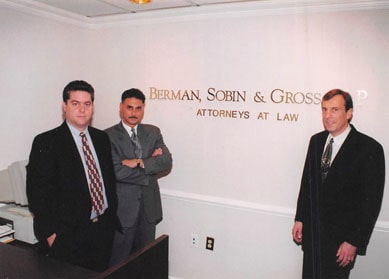
Berman | Sobin | Gross LLP has grown from three attorneys in a single office to more than twenty attorneys with offices across Maryland, including a location in Gaithersburg that serves the Montgomery County area. The firm is the largest workers’ compensation firm in Maryland representing injured workers, and it has built that standing through tens of thousands of hearings, hundreds of jury trials, and a record of appellate victories that have changed the law for working people across the state. For Silver Spring transit workers navigating a disputed or complex injury claim, that depth of institutional knowledge is available from the first conversation. Contact Berman | Sobin | Gross LLP for a confidential case analysis with a transit worker injury attorney serving the Silver Spring community.