

Silver Spring Healthcare Worker Injury Attorney
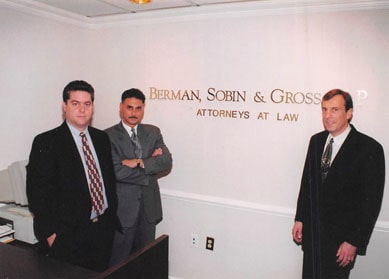
Healthcare workers in Silver Spring face occupational hazards that most people never consider: needlestick injuries, patient handling accidents, exposure to infectious disease, workplace violence, and the cumulative physical toll of years spent lifting, transferring, and responding to patients in crisis. When these injuries happen, the workers’ compensation system is supposed to step in, but that system does not always work the way it should. Silver Spring healthcare worker injury attorneys at Berman | Sobin | Gross LLP have spent 35 years representing the men and women Maryland depends on, and we understand what is actually at stake when a hospital employee, home health aide, or long-term care worker files a claim.
What Makes Healthcare Worker Claims Different From Other Workers’ Comp Cases
A construction worker and a registered nurse both have the right to file a workers’ compensation claim after a job-related injury. But the nature of the injuries, the challenges of proving causation, and the way employers and insurers respond to those claims can look very different depending on the industry.
Healthcare workers in Montgomery County, many of whom work at facilities along the 495 corridor and throughout the Silver Spring medical corridor, face a particular combination of physical and occupational disease claims. Musculoskeletal injuries from patient handling are among the most common, but healthcare workers also file claims for latent conditions, including respiratory illness from chemical or biological exposure, hearing loss, and conditions that develop gradually rather than from a single discrete accident.
This matters legally because Maryland workers’ compensation law draws a distinction between accidental injuries and occupational diseases. The standards for proving entitlement to benefits, the deadlines for filing, and the evidence required to support a claim can differ significantly depending on how the injury is classified. Healthcare workers who develop conditions over time, rather than in a single incident, often encounter more resistance from employers and their insurers because causation is easier to dispute. Having attorneys who understand how Maryland law handles occupational disease claims, and who have litigated those distinctions before the Workers’ Compensation Commission and beyond, is not a minor advantage.
The Physical Demands Healthcare Employers Routinely Underestimate
Patient lifting and repositioning remains one of the leading causes of serious back and shoulder injuries among nurses, aides, and technicians. Facilities often have safe patient handling policies on paper, but the reality on overnight shifts, in understaffed units, and in high-acuity environments is frequently different from what the policy manual describes. When a worker is injured because adequate lift equipment was unavailable, because staffing levels required one person to do a two-person job, or because training was inadequate, those facts become relevant to the workers’ compensation claim and, in some circumstances, to other legal theories as well.
Workplace violence is another reality for Silver Spring healthcare workers, particularly those in emergency departments, psychiatric units, and crisis response settings. Maryland workers’ compensation covers injuries resulting from acts of violence at work, but these claims can be contested when employers argue that the risk was not sufficiently work-related or that the worker deviated from protocol. The attorneys at Berman | Sobin | Gross LLP have handled claims across a wide range of injury types and understand how to build the evidentiary record these cases require.
Needlestick injuries and exposure to blood-borne pathogens create a different kind of claim, one that may not produce immediate physical harm but carries significant medical monitoring requirements, anxiety, and in some cases longer-term health consequences. Whether and how those exposures translate into compensable claims under Maryland law is a question that deserves a careful legal analysis rather than a quick assumption in either direction.
Why Claims Get Denied and What Can Be Done
A claim denial is not the end of the road. In Maryland, workers’ compensation disputes move through the Workers’ Compensation Commission, and from there can proceed into the circuit courts and, in appropriate cases, to Maryland’s appellate courts. Berman | Sobin | Gross LLP has handled hundreds of workers’ compensation trials and has argued before both of Maryland’s highest courts. That depth of experience matters when a claim requires more than an administrative hearing.
Employer medical experts are a common source of friction in disputed claims. These are physicians retained by the insurance carrier who review records and often conclude that an injury is not work-related, that the worker has reached maximum medical improvement prematurely, or that treatment requested by the treating physician is not medically necessary. Maryland courts have addressed the limits of this kind of testimony, and our firm has played a role in shaping that law. The case of City of Frederick v. Shankle, one of several significant appellate victories in our firm’s record, established that employer medical experts who offer opinions lacking scientific support can be excluded from testifying. Knowing how to challenge expert testimony, and when to do it, requires exactly the kind of deep workers’ compensation experience that Berman | Sobin | Gross LLP brings to every client’s case.
Disputes also arise over the nature and extent of disability, access to vocational rehabilitation, and the calculation of wage replacement benefits. Healthcare workers who earn shift differentials, overtime, or pay for on-call availability sometimes find that the insurance carrier calculates their average weekly wage in a way that understates what they actually earned. Our firm has litigated these calculations before, including in Montgomery County v. Deibler, where we established that injured workers receiving full salary while on light duty can still recover compensation for lost overtime wages. The principle matters in any industry, including healthcare, where overtime and differential pay are routine parts of compensation.
Questions Healthcare Workers in Silver Spring Often Have
Does workers’ compensation cover injuries from patient violence?
Yes. Maryland workers’ compensation covers injuries that arise out of and in the course of employment, which includes physical assaults by patients. The key is establishing that the circumstances of the violence were reasonably connected to the employment. This can be contested, particularly when an employer argues that the worker did something to provoke or escalate the situation, so having clear documentation of what happened and how it happened is important from the start.
What if my injury developed over time rather than in a single accident?
Maryland law recognizes occupational diseases as a separate category from accidental injuries. For an occupational disease claim to succeed, the condition must be caused by the nature of the employment, not merely an incident that happened at work. The filing deadlines and the evidence required are different, and these claims face more scrutiny. An attorney familiar with occupational disease claims in Maryland can assess how your situation fits within the relevant legal standards.
My employer told me I do not need a lawyer for a straightforward claim. Should I rely on that?
Your employer and its insurer have legal representation from the moment a claim is filed. Whether your claim is “straightforward” is a determination the insurer makes in its own interest, not yours. Consulting with a workers’ compensation attorney before accepting any benefits determination, especially one that involves a finding about permanent disability, ensures that someone is reviewing the claim from your perspective.
Can I see my own doctor, or do I have to use a doctor selected by my employer?
Maryland workers’ compensation law gives workers some ability to seek treatment from their preferred provider, but the rules around employer-directed care, second opinions, and the weight given to different medical opinions can be complicated. The practical answer depends on the stage of your claim and the specific circumstances, which is a good reason to have an attorney review your situation before you make decisions about medical care that could affect your case.
What benefits am I entitled to if I cannot return to my job because of a work injury?
Maryland workers’ compensation provides for temporary total disability benefits while you are unable to work, permanent partial or permanent total disability benefits depending on your long-term condition, medical treatment coverage, and in some cases vocational rehabilitation services. What you actually receive depends on how your claim is classified, how your disability is rated, and how aggressively the insurer contests those findings. Our firm has litigated all of these categories of benefits and understands how to present the evidence that supports the strongest claim.
I work for a hospital that contracts with a staffing agency. Who is responsible for my claim?
Healthcare workers employed through staffing agencies can face genuine confusion about which employer’s workers’ compensation insurance applies and whether either entity will accept responsibility. Maryland law addresses this in a way that can work in your favor, but it requires knowing how to identify the right parties and make the right arguments. This is not a situation where assuming the default answer will protect your interests.
Does Berman | Sobin | Gross LLP represent healthcare workers who are not public employees?
Yes. While our firm has deep experience representing public safety workers and other public employees, we represent private-sector healthcare workers as well. The size and resources of your employer and its insurer do not change our approach to pursuing the benefits to which you are entitled.
Representation for Silver Spring Healthcare Professionals Navigating Workers’ Compensation
Berman | Sobin | Gross LLP is the largest workers’ compensation law firm in Maryland representing injured workers, with offices throughout the state and attorneys ready to work with clients in Silver Spring and across Montgomery County. One of our firm’s founders wrote a two-volume treatise on Maryland workers’ compensation law that remains the definitive reference for practitioners and courts in this state. That depth of knowledge translates directly into how we evaluate, develop, and litigate each case. If you are a healthcare worker in Silver Spring who has been injured on the job, whether that injury happened last week or has been building for years, we are prepared to evaluate your claim honestly and represent you through every stage the case requires. Contact Berman | Sobin | Gross LLP to speak with a Silver Spring healthcare worker injury attorney about where your claim stands and what your options are.