

Silver Spring Government Employee Injury Attorney
Government workers in Silver Spring and throughout Montgomery County put in demanding shifts, often under conditions that the public never sees. When a county employee, state worker, or federal contractor gets hurt on the job, the path to benefits is rarely straightforward. Workers’ compensation for public sector employees involves a distinct set of rules, presumptions, and procedural requirements that differ meaningfully from what applies to private-sector claims. A Silver Spring government employee injury attorney who understands those differences is not optional; it is the difference between a claim that gets resolved and one that stalls for months or gets denied entirely.
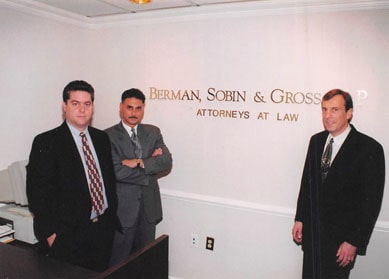
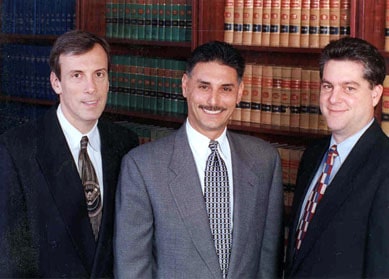
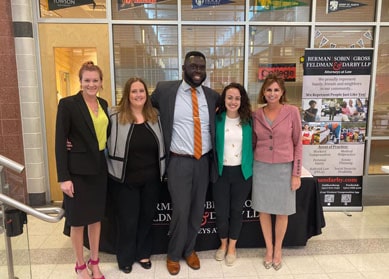
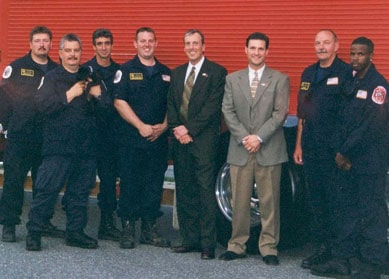
Berman Sobin Gross LLP has represented Maryland’s public employees for 35 years, growing from a three-attorney firm to more than 20 attorneys working throughout the state. Government workers, including firefighters, paramedics, EMTs, law enforcement officers, corrections officers, and teachers, are among the workers this firm has advocated for in hearings, trials, and before both of Maryland’s highest courts.
What Makes Public Sector Injury Claims Different in Montgomery County
Montgomery County is home to one of the largest concentrations of government employment in the state. County agencies, state offices, public schools, and federal contractors all operate within a few miles of one another in and around Silver Spring. That density of government work means a higher-than-average share of injured workers who carry the added complication of figuring out which set of rules governs their claim.
Maryland provides enhanced protections for public safety employees, including statutory presumptions that link certain diseases to job-related causes. For instance, heart disease, hypertension, and lung conditions are legally presumed to be work-related for qualifying public safety workers, which shifts the burden to the employer to disprove the connection rather than requiring the worker to prove it. That distinction is significant, and employers do not always honor it without a fight.
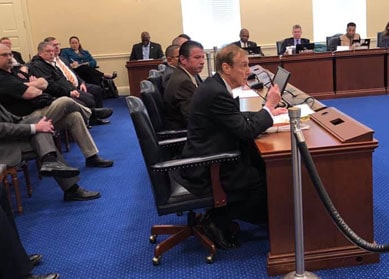
Berman Sobin Gross LLP has litigated these presumptions at the appellate level on behalf of Maryland’s public sector workers. In Montgomery County v. Pirrone, the firm established that the heart, lung, and hypertension presumption applies to public safety workers even after retirement or while off duty. In City of Frederick v. Shankle, the firm successfully argued that employer medical experts who claim the public safety occupational disease presumption lacks scientific support should be barred from testifying. These are not hypothetical positions; they are rulings that changed Maryland law for public employees across the state.
Injuries That Frequently Affect Silver Spring’s Government Workforce
The types of injuries that send government workers to the workers’ compensation system in this part of Montgomery County reflect the nature of the work itself. Emergency responders face traumatic physical injuries, hearing loss from years of equipment noise, and mounting research on occupational cancer exposure. Teachers and school support staff deal with repetitive strain injuries, physical assaults, and stress-related conditions that sometimes go unreported because workers assume they cannot be compensated.
Corrections officers and law enforcement personnel sustain injuries during detainee interactions, vehicle pursuits, and training exercises, and many do not realize that injuries suffered during mandatory job training are generally compensable. Public works employees and transportation workers face slip-and-fall hazards, vehicle accidents, and heavy equipment injuries. Communications and administrative workers are not immune either. Repetitive motion injuries and injuries from workplace violence are well within the scope of a valid workers’ compensation claim.
Occupational hearing loss deserves particular mention because it develops gradually and is frequently contested. In Montgomery County v. Cochran and Bowen, Berman Sobin Gross LLP clarified how Maryland calculates the age deduction in occupational deafness claims for firefighters and other workers, ensuring the calculation runs from the last date of injurious noise exposure rather than from the date of an audiogram. For workers who have spent years near sirens, heavy equipment, or industrial machinery, that distinction directly affects the compensation they receive.
Light Duty, Lost Overtime, and Other Disputes That Come Up in These Claims
Not every government employee injury claim involves a worker who is completely unable to work. Many public employees are placed on light duty after an injury, continuing to receive their base salary while the employer maintains that no lost wage compensation is owed. Montgomery County v. Deibler, a case handled by this firm, established that public safety workers on paid light duty can still recover compensation for overtime wages they had been earning before the injury. For Montgomery County employees who regularly work overtime, that holding matters a great deal.
Employers also contest claims by disputing the causal connection between the job and the injury, by challenging the extent of disability, or by pushing for a return to full duty before the worker is medically ready. These disputes are not administrative formalities. They involve dueling medical opinions, vocational assessments, and sometimes testimony about the physical demands of a specific government position. The attorneys at Berman Sobin Gross LLP have handled hundreds of workers’ compensation jury trials and thousands of hearings before the Maryland Workers’ Compensation Commission, and they do not avoid cases that require that level of effort.
Vocational rehabilitation is another area that comes up in longer-running claims. In Fikar v. Montgomery County, the firm established that injured workers receiving service-connected disability retirement are still entitled to vocational rehabilitation services. That ruling expanded access to retraining for public employees who might otherwise have been left without options after a career-ending injury.
Questions Government Workers in Silver Spring Often Ask
Does Maryland workers’ compensation cover injuries that happened during mandatory training or a work-sponsored event?
Generally, yes. Injuries that occur during activities required by your employer, including physical fitness tests, training exercises, and job-required travel, are typically compensable under Maryland law. The specific circumstances matter, and an attorney can evaluate whether your situation qualifies.
I’ve been placed on light duty and my employer says I’m not entitled to any additional compensation. Is that accurate?
Not necessarily. The Maryland appellate ruling in Montgomery County v. Deibler makes clear that public safety employees on light duty can still recover compensation for overtime wages lost as a result of their injury. If your pre-injury earnings included regular overtime that you can no longer work, that loss may be compensable even while you remain on the payroll.
My employer’s doctor says my heart condition is not job-related. Does that end my claim?
No. Maryland law provides a statutory presumption for qualifying public safety workers that links certain conditions, including heart disease and hypertension, to job-related causes. The employer bears the burden of rebutting that presumption. A medical opinion from an employer’s physician is not automatically sufficient to defeat the claim, particularly after rulings like City of Frederick v. Shankle, which limits the use of certain expert testimony against the presumption.
What happens to my claim if I retire or leave my government job after the injury?
Maryland’s statutory presumptions for public safety employees apply even after retirement or while a worker is off duty, as established in Montgomery County v. Pirrone. Leaving or retiring from a government position does not automatically extinguish your right to pursue a workers’ compensation claim for a qualifying occupational disease or injury that occurred during your employment.
Can my family members receive benefits if I die from a work-related condition?
Yes. Maryland law allows widows and dependents of deceased injured workers to pursue death benefits through the workers’ compensation system. The firm has handled cases involving this issue at the appellate level, including Collins v. Montgomery County, to ensure families are not improperly barred from those benefits.
What if another attorney declined to take my case or stopped pursuing it after an initial hearing?
Berman Sobin Gross LLP regularly evaluates cases that other firms have declined or stopped pursuing. The firm does not limit itself to straightforward claims and has the resources to take cases into circuit court and through appellate review when the facts and law support doing so.
How long does a government employee workers’ compensation claim typically take to resolve in Maryland?
It depends on the nature of the injury, whether the employer disputes the claim, and whether litigation is required. Some claims resolve at the Commission level relatively quickly. Cases involving disputed occupational disease presumptions, vocational rehabilitation, or significant permanent disability can take considerably longer, particularly if they proceed to circuit court or beyond.
Representation for Silver Spring’s Public Employees
Berman Sobin Gross LLP has offices throughout Maryland, including a Gaithersburg location that serves Montgomery County clients. The firm’s attorneys have represented government workers across the county and throughout the state in the full range of workers’ compensation disputes, from initial hearings before the Commission to jury trials and appeals. Spanish-speaking staff are available, and the firm maintains an attorney-client relationship where the same attorney works with you from the beginning of your claim through its resolution.
One of the firm’s founders wrote the definitive two-volume treatise on workers’ compensation in Maryland, which continues to serve as the primary reference on the subject in the state. That depth of knowledge informs how the firm handles every claim, including the ones that require pushing beyond an administrative decision to get a fair result.
If you are a government worker in Silver Spring or the surrounding areas of Montgomery County who has been injured on the job, contact Berman Sobin Gross LLP to have your claim evaluated by a Silver Spring government employee injury lawyer who has litigated these exact issues at every level of Maryland’s legal system.