

Silver Spring Factory Worker Injury Attorney
Factory and manufacturing work carries a category of physical risk that most office workers never encounter. Conveyor systems, heavy presses, chemical exposures, repetitive assembly tasks, loading docks, forklifts and the unrelenting pace of production floors create injury patterns that can end careers, require surgery, and leave workers unable to support their families for months or years. When that happens at a Silver Spring facility, the workers’ compensation system in Maryland is supposed to step in. In practice, getting what you are owed takes more than filing a claim form. Berman | Sobin | Gross LLP has spent 35 years representing Maryland’s working people through exactly these situations, and we know what factory injury claims require to succeed. If you need a Silver Spring factory worker injury attorney, our firm has the depth and the track record to handle your case.
What Manufacturing Injuries in Silver Spring Actually Look Like
Silver Spring sits at the edge of Montgomery County and functions as a dense commercial and light industrial corridor. Warehouses, food processing operations, printing facilities, mechanical shops, and distribution centers employ thousands of workers whose injuries almost never make the news but are serious and life-altering. Understanding the injury patterns that appear most frequently in these environments matters because the nature of the injury affects how a workers’ compensation claim is built, what medical evidence is needed, and what benefits apply.
Crush injuries from machinery are among the most severe. Press operators, assembly workers, and anyone who works near automated equipment can suffer hand, finger, and arm injuries that result in permanent partial disability. These claims frequently generate disputes over the degree of impairment and what future earning capacity the worker retains. Repetitive stress injuries from production line tasks, such as carpal tunnel syndrome, tendinitis, and rotator cuff damage, are common but harder to prove because the injury develops over time rather than from a single identifiable event. Employers and their insurers routinely argue that these conditions are pre-existing or unrelated to work duties.
Chemical exposures at manufacturing facilities present a different kind of challenge. Workers who develop respiratory conditions, skin disorders, or long-term illness from toxic substance exposure may not connect the diagnosis to their workplace for months or years. Maryland workers’ compensation law has specific rules about the filing window for occupational diseases, and those deadlines are measured differently from the deadlines for traumatic injuries. Getting the timing right is critical, and it is not something a worker should try to figure out without legal guidance.
Back injuries from lifting, carrying, or awkward posture during assembly work are among the most contested categories. Employers and insurers will often introduce arguments about pre-existing degenerative conditions to reduce or deny benefits. Having a legal team that knows how to counter those arguments with solid medical and vocational evidence makes a measurable difference in outcomes.
What Maryland Workers’ Compensation Actually Covers for Factory Workers
Workers’ compensation in Maryland provides several categories of benefits, and factory workers in Silver Spring are entitled to the same protections as any other injured employee in the state. But knowing what the system is supposed to provide and successfully obtaining those benefits are not the same thing.
Medical benefits cover treatment that is causally related to the work injury. This includes emergency care, surgery, physical therapy, prescription medications, and assistive devices. The employer’s insurer has the right to direct care in some situations, which can create friction when the authorized treating physician’s opinions differ from those of specialists you consult on your own. How that dispute gets managed affects both your medical outcome and the strength of your compensation claim.
Temporary total disability benefits replace a portion of your average weekly wage while you are completely unable to work due to the injury. For factory workers who depend entirely on their wages and have no supplemental income, these payments are often the difference between keeping a household stable and falling behind on rent and bills. Insurers do not always accept temporary disability claims without a fight, particularly when there is any ambiguity about your ability to perform modified duty work.
Permanent partial disability awards compensate workers who recover but are left with lasting physical limitations. The Maryland Workers’ Compensation Commission uses a rating system for these impairments, and the rating assigned by a medical examiner chosen by the insurer is not necessarily the final word. A formal dispute and hearing before the Commission can result in a higher rating, which directly affects the size of the award. For factory workers who sustain hand, arm, shoulder, back, or knee injuries, permanent partial disability is often the most significant component of the overall claim.
Vocational rehabilitation services are available when an injury permanently prevents a worker from returning to their prior occupation. This is particularly relevant for workers in physically demanding manufacturing jobs. Berman | Sobin | Gross LLP has litigated and won cases before Maryland’s appellate courts that directly shaped the rules around vocational rehabilitation for injured workers, including establishing that workers receiving disability retirement can still be entitled to these services.
Why Factory Injury Claims Get Denied or Underpaid
Manufacturing employers in Silver Spring, like those throughout Maryland, carry workers’ compensation insurance, and those insurance carriers have claims adjusters and defense attorneys whose job is to limit payouts. The denial and underpayment of legitimate claims is not a rare exception; it is a routine part of how the system operates in practice.
Disputes frequently arise over causation. Insurers will argue that a back injury predated employment, that a repetitive stress condition is not workplace-related, or that a chemical exposure did not cause the diagnosed illness. Medical expert testimony drives these disputes, and the quality and preparation of that testimony matters enormously. Berman | Sobin | Gross LLP’s founder literally wrote the definitive legal treatise on Maryland workers’ compensation, a resource still used by practitioners and courts across the state. That depth of knowledge translates directly into how our attorneys prepare medical evidence and anticipate the arguments that insurance-side experts will make.
Disputes also arise over the degree of disability, the need for specific treatment, and whether a worker is capable of returning to some form of employment. Each of these disputes can go before the Workers’ Compensation Commission for a hearing. When results at the Commission level are unsatisfactory, cases can be appealed into the Circuit Courts and beyond. Our attorneys have handled hundreds of workers’ compensation jury trials and have appeared before both of Maryland’s highest appellate courts. If other attorneys have declined to take your case past the administrative hearing level, that is not a sign that your claim lacks merit; it may simply be a sign that it requires more intensive litigation than some firms are willing to undertake.
Questions Injured Factory Workers Ask Us
I was hurt at a Silver Spring factory but the injury was partly my fault. Can I still file a workers’ compensation claim?
Yes. Maryland workers’ compensation is a no-fault system. Contributory negligence on the worker’s part does not eliminate the right to benefits. With limited exceptions, the inquiry is whether the injury arose out of and in the course of employment, not whether the worker made a mistake.
My employer says my injury was pre-existing. How does that affect my claim?
A pre-existing condition does not automatically bar a claim. If the work activity aggravated, accelerated, or combined with a pre-existing condition to produce the current disability, that can still be compensable under Maryland law. This is a fact-intensive dispute where medical evidence is central, and it is exactly the kind of contested claim our attorneys handle.
How long do I have to report a factory injury and file a claim in Maryland?
For traumatic injuries, you should notify your employer as soon as possible and no later than 10 days after the accident. The filing deadline with the Workers’ Compensation Commission is generally two years from the date of injury. For occupational diseases, the timeline is measured differently, often from when the worker knew or should have known that the condition was work-related. Missing these deadlines can bar a claim entirely, so do not delay in seeking legal advice.
Can I choose my own doctor after a factory injury?
In Maryland, the employer and insurer can direct initial medical care. However, workers have rights regarding treatment choices, and disputes about the adequacy or direction of medical care can be addressed through the Commission. An attorney can help you understand when and how to seek a second opinion without jeopardizing your claim.
What if my employer fires me after I file a workers’ compensation claim?
Retaliation against an employee for filing a workers’ compensation claim is prohibited under Maryland law. If you believe you have been terminated or otherwise penalized because of your claim, that is a separate legal issue worth discussing with an attorney promptly.
My factory job is physically demanding. Will workers’ comp cover the cost of retraining for a different career?
Vocational rehabilitation services are available when a work injury prevents a return to the prior job. Maryland law and specific appellate decisions that Berman | Sobin | Gross LLP helped shape govern how those services are provided. These are real benefits worth pursuing if your injury forecloses your previous occupation.
I work for a staffing agency placed at a Silver Spring factory. Who is responsible for my workers’ compensation coverage?
Staffing agency workers are generally covered by the agency’s workers’ compensation policy, but the facts of your specific arrangement matter. In some situations there may be claims against the host employer as well. If you are in this situation, getting legal advice before assuming who is responsible is worthwhile.
Representing Injured Factory and Manufacturing Workers Throughout Montgomery County
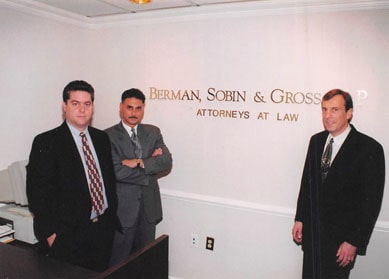
Berman | Sobin | Gross LLP serves clients across Maryland from offices in Lutherville, Baltimore, Gaithersburg, and Frederick, with a long-established presence serving workers throughout Montgomery County, including Silver Spring. We represent workers from the full range of manufacturing and industrial settings, and our attorneys work with Spanish-speaking clients without the need for outside interpreters. When you contact our firm, you work with the same attorney from your first consultation through the resolution of your case.
We have handled tens of thousands of hearings and hundreds of jury trials. We take cases that other firms turn down when the underlying claim is meritorious but demanding. Our attorneys have changed the law through appellate victories that directly benefit Maryland’s injured workers, and we are prepared to go as far as necessary to get our clients what they have earned.
A Silver Spring factory worker injury lawyer from Berman | Sobin | Gross LLP can review your situation, explain what your claim is actually worth, and tell you honestly what the path forward looks like. Contact our firm today to speak with an attorney about your case.