

Salisbury Restaurant Worker Injury Attorney
The restaurant industry runs on long shifts, hot equipment, slick floors, and workers who move fast because they have to. On the Eastern Shore, Salisbury’s food service workforce keeps dozens of kitchens, diners, hotel restaurants, and chain locations running every day. When something goes wrong in one of those environments, the injuries are often serious. A line cook with a deep burn, a server who slips on an unmopped floor, a dishwasher whose repetitive stress injury finally demands surgery. These workers are entitled to workers’ compensation benefits under Maryland law, but getting those benefits is rarely as straightforward as it should be. Salisbury restaurant worker injury attorneys at Berman Sobin Gross LLP have spent 35 years representing the kind of workers who make Maryland run, and the food service industry is no exception.
What Actually Happens to Restaurant Workers in Salisbury
Wicomico County’s restaurant workforce faces a particular combination of hazards that most employers and insurers tend to understate. Burns from open flames, fryers, and steam equipment are among the most common injuries in commercial kitchens. Lacerations from knives and slicers happen regularly in prep work and dishwashing. Slip and fall accidents on tile floors that become wet from constant washing, spilled beverages, and grease are a persistent danger from back-of-house to dining room. Shoulder, back, and knee injuries build up over time for workers who carry heavy trays, load dishwashers from a fixed posture, or stand for eight to ten hours on hard floors.
Beyond those acute injuries, there are cumulative conditions that take longer to connect to the job. Carpal tunnel syndrome, rotator cuff tears, and lumbar disc problems develop over months and years of repetitive motion. Employers and their insurers sometimes challenge these injuries precisely because they did not result from a single obvious accident, but Maryland workers’ compensation law covers occupational diseases and repetitive use injuries as well as sudden traumatic events. Workers in Salisbury-area restaurants at places near the Route 13 corridor, downtown, or along the Promenade have the same rights as any worker in the state, and those rights deserve to be fully exercised.
Where Restaurant Workers’ Compensation Claims Get Complicated
Restaurant workers face some specific complications when filing workers’ compensation claims that workers in other industries may not encounter. The industry has high turnover, which means employment records are sometimes incomplete or disputed. Workers are frequently employed part-time, across multiple locations of the same chain, or through staffing agencies, which creates questions about who the employer of record actually is and whose insurance applies. Undocumented workers and workers whose immigration status is uncertain sometimes hesitate to report injuries out of fear. Maryland’s workers’ compensation law covers workers regardless of immigration status, a fact that employers do not always make clear to their workforce.
Tip income creates another complication. For servers, bartenders, and other tipped workers, the workers’ compensation benefit for lost wages is supposed to reflect total earnings, including gratuities. When employers report only the base wage or minimum wage to their insurer, the benefit calculation will come out too low. Getting the right number into the record requires documentation and, sometimes, a fight. Berman Sobin Gross LLP’s attorneys understand these industry-specific dynamics and know how to build a claim that reflects what a worker actually earns and actually loses when an injury keeps them out of work.
Restaurant owners in Maryland are also required by law to carry workers’ compensation insurance, but enforcement is imperfect, particularly among smaller independent establishments. If an employer does not have coverage, workers still have options through Maryland’s Uninsured Employers’ Fund. An attorney who knows how the system works can identify which avenue applies to a specific situation and pursue it effectively.
What Benefits a Hurt Restaurant Worker Can Actually Recover
Maryland’s workers’ compensation system provides several categories of benefits, and the full picture matters when a worker is deciding whether to accept an early settlement offer or push for a more complete resolution. Medical benefits cover all reasonable and necessary treatment for a covered workplace injury, including emergency care, surgery, physical therapy, prescription medication, and, in serious cases, long-term medical management. These are separate from lost wage benefits and should not be traded away lightly in any negotiation.
Temporary total disability benefits replace a portion of lost wages while a worker cannot return to any employment. Temporary partial disability benefits apply when a worker can return but only to reduced hours or lighter duty at lower pay. Permanent partial disability benefits compensate for lasting impairment to a body part or function. In the most serious injury situations, permanent total disability benefits may apply. For a restaurant worker who has sustained a severe burn, a significant back injury, or a repetitive stress condition that has progressed to the point of requiring surgery, understanding how these benefit categories interact and what a fair resolution looks like requires more than a quick review of an insurer’s form letter.
One of the firm’s appellate victories is relevant here: in cases involving workers who receive some income while on light duty, the firm successfully argued before Maryland’s courts that workers should not automatically lose compensation for wages they had been earning prior to injury through overtime and additional hours. Restaurant workers who regularly picked up extra shifts should know this principle could apply to their situation.
Questions Salisbury Food Service Workers Ask About Workers’ Comp
I was hurt at a restaurant in Salisbury. Do I have to prove the accident was my employer’s fault?
No. Maryland’s workers’ compensation system is a no-fault system, which means you do not need to show that your employer did anything wrong in order to receive benefits. You only need to show that the injury arose out of and in the course of your employment. There are exceptions and complications, but fault is not among them for most workplace injury claims.
My employer told me to report to their company doctor. Do I have to do that?
Maryland workers’ compensation rules give employers some authority to direct initial medical care, but the rules around authorized treating physicians are specific and have limits. Workers have rights regarding their medical care that employers do not always explain clearly. An attorney can review your situation and clarify what your options are regarding the choice of treating physician.
I work for cash and my employer never put me on official payroll. Can I still file a claim?
Possibly yes. Maryland law defines “employee” broadly, and the existence of a cash payment arrangement or the absence of a W-2 does not automatically disqualify a worker from coverage. These cases require careful factual development to establish the employment relationship, but they are not hopeless. Attempting to file without legal guidance in this situation is difficult.
My injury developed over time from lifting and repetitive motions. Does that count?
Yes. Maryland’s workers’ compensation law covers occupational diseases and conditions that develop from the cumulative demands of a job, not just single-incident accidents. The challenge is documenting the connection between the work and the condition. Medical evidence and a clear employment history are both important in these claims.
The restaurant’s insurer offered me a settlement. Should I take it?
Not without having an attorney evaluate whether the amount adequately covers your past and future medical needs, your lost earnings, and your permanent impairment, if any. Early settlement offers frequently do not account for the full scope of what a worker is entitled to receive. Once a settlement is finalized, it is generally binding.
What if my employer fires me after I file a workers’ compensation claim?
Retaliation for filing a workers’ compensation claim is prohibited under Maryland law. If you lose your job after reporting an injury or filing a claim, that circumstance may give rise to a separate legal claim. Document everything and consult an attorney promptly if this happens.
How long do I have to file a workers’ compensation claim in Maryland?
Generally, you must file a claim with the Maryland Workers’ Compensation Commission within two years of the date of your accidental injury or the date you knew or reasonably should have known that a disease or condition was related to your employment. Waiting can create real problems, so acting soon after an injury is advisable.
Reaching a Salisbury Restaurant Injury Lawyer at Berman Sobin Gross LLP
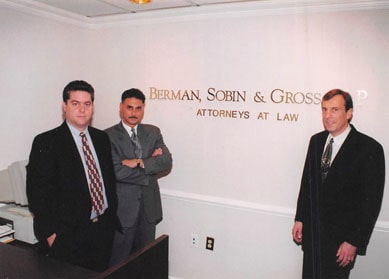
Berman Sobin Gross LLP is Maryland’s largest workers’ compensation law firm representing injured workers, with attorneys who have handled tens of thousands of hearings and hundreds of jury trials. The firm has attorneys and staff members fluent in Spanish, which matters in Salisbury’s food service workforce where Spanish-speaking workers make up a meaningful portion of the industry. The firm’s attorneys go beyond administrative hearings when a case requires it, and one of the firm’s founders literally wrote the treatise on Maryland workers’ compensation law that practitioners across the state rely on. If you are a restaurant worker on the Eastern Shore who has been hurt on the job, a Salisbury restaurant injury attorney from Berman Sobin Gross LLP will evaluate your claim honestly and tell you what your case is actually worth.