
Salisbury Manufacturing Worker Injury Attorney
Manufacturing work in Salisbury and across the Lower Eastern Shore puts workers in daily contact with heavy equipment, chemical exposure, repetitive motion demands, and industrial processes that leave little margin for error. When something goes wrong on the floor, the injuries tend to be serious. A Salisbury manufacturing worker injury attorney at Berman | Sobin | Gross LLP understands what those injuries actually cost, not just in medical bills but in lost wages, physical limitations, and the uncertainty that follows a worker who suddenly cannot do the job they have spent years learning to do.
What Makes Manufacturing Injuries Distinct from Other Workplace Claims
A claim that comes out of a manufacturing environment carries its own set of complications that do not show up the same way in office injury cases or even construction claims. The machinery involved, the pace of production, and the layered relationships between employers, staffing agencies, equipment manufacturers, and contractors create a more complicated picture of who is responsible and what benefits actually apply.
In Salisbury’s manufacturing sector, workers are employed across food processing plants, poultry operations, metal fabrication shops, and light industrial facilities scattered throughout Wicomico County and the surrounding area. These environments share common injury patterns: crush injuries from press equipment, lacerations from cutting tools and conveyor systems, hearing loss from sustained noise exposure, repetitive stress injuries in the hands and shoulders, and respiratory conditions tied to dust or chemical exposure. Each of these has specific medical documentation requirements and specific questions about causation that an employer or insurer will raise when it comes time to evaluate the claim.
Workers who go through the Maryland Workers’ Compensation Commission process without understanding what the employer’s side is doing can find themselves at a disadvantage they did not see coming. The insurance company evaluating your claim is not neutral. Their job is to minimize what they pay out, and they have experienced adjusters and attorneys working on exactly that from the moment the claim is filed.
How the Maryland Workers’ Compensation Process Actually Works for Injured Manufacturing Workers
Filing a workers’ compensation claim in Maryland starts with notifying your employer of the injury and seeking medical treatment. That part most workers know. What they often do not realize is how quickly decisions get made that affect the entire trajectory of a claim, and how early representation can change those outcomes.
Once a claim is filed with the Maryland Workers’ Compensation Commission, the employer’s insurer has the opportunity to accept, deny, or pay without prejudice, which means they can stop payments later. In manufacturing injury cases, you will typically see disputes about whether the injury is truly work-related, whether a pre-existing condition bears responsibility, and whether the authorized treating physician’s findings support the level of disability the worker is actually experiencing.
Hearings before the Commission are adversarial proceedings. The insurer will have representation. If the Commission’s decision is unsatisfactory, cases can go further, to the Circuit Court on appeal, and in significant cases, before Maryland’s appellate courts. The attorneys at Berman | Sobin | Gross LLP have handled hundreds of workers’ compensation jury trials and appeals before both of Maryland’s highest courts. That level of litigation experience matters when an insurance company believes a contested case is in their interest to fight.
For workers at temporary staffing agencies placed in Salisbury manufacturing facilities, there are additional questions about which employer is the responsible party and how workers’ compensation coverage layers between the staffing company and the host employer. These are exactly the kinds of complications that can result in workers getting shuffled between entities without a clear answer on coverage, which is why having an attorney evaluate the claim early prevents a lot of that delay.
Third-Party Claims When the Injury Involves Equipment or a Contractor
Workers’ compensation in Maryland is generally the exclusive remedy against an employer. But manufacturing injuries frequently involve equipment that was defective, contractors working on-site who created a hazard, or product manufacturers whose machinery had design or maintenance failures. In those situations, a separate personal injury claim against that third party may exist alongside the workers’ compensation claim.
This matters because workers’ compensation pays a portion of lost wages and covers medical treatment, but it does not compensate for pain and suffering. A successful third-party claim can reach damages that the compensation system simply does not provide. Identifying whether a third-party claim exists requires a close look at the circumstances of the injury: what equipment was involved, who manufactured it, whether proper warnings and safety guarding were in place, and whether any other employer or subcontractor contributed to what happened.
Berman | Sobin | Gross LLP handles both workers’ compensation and personal injury cases, which means injured manufacturing workers do not need to coordinate between two separate law firms to pursue both avenues of recovery. That matters in practice because the two claims involve overlapping evidence and timelines, and having one legal team manage both avoids gaps and inconsistencies that can otherwise hurt a case.
Questions Injured Salisbury Manufacturing Workers Ask
What if my employer says the injury was my own fault?
Maryland’s workers’ compensation system is a no-fault system. That means your own negligence does not bar you from receiving benefits. The injury must arise out of and in the course of employment, but the question of who was at fault is generally not relevant to whether you can collect workers’ compensation benefits.
What if the company sent me to their doctor and I disagree with the findings?
Insurance companies often rely on medical opinions from physicians they select. You have rights within the process to challenge those opinions and to obtain your own medical evaluation. How that challenge is structured and presented at a Commission hearing can significantly affect the outcome. This is one area where legal representation makes a real difference.
I was injured working for a staffing agency placed at a plant in Salisbury. Who covers my claim?
Staffing agency placements in manufacturing settings often involve concurrent employment, where both the agency and the host employer may have obligations. The answer depends on the specific arrangement between the parties. An attorney can review the employment contract and coverage documents to identify who the responsible insurer is and whether there are additional parties who should be part of the claim.
Can I be fired for filing a workers’ compensation claim?
Maryland law prohibits employers from retaliating against workers for filing workers’ compensation claims. If a termination follows closely after a claim is filed, or if you face demotion or a hostile work environment in connection with a claim, that conduct may give rise to a separate legal claim against the employer.
How long do I have to file my claim?
Maryland generally requires that a workers’ compensation claim be filed within two years of the date of the accidental injury or the date you knew, or reasonably should have known, that an occupational disease was connected to your work. Different rules apply to certain conditions. Waiting too long can mean losing the right to benefits entirely, which is why getting the claim properly filed and documented from the outset matters.
My hearing loss developed gradually from working in a loud manufacturing facility. Does that count?
Yes. Occupational hearing loss is a recognized condition under Maryland workers’ compensation law. The analysis involves the degree of hearing loss, the duration and level of noise exposure, and how the calculation of any age-related deduction is applied. Berman | Sobin | Gross LLP has successfully handled occupational deafness claims and has won appellate decisions that directly affect how those claims are calculated for workers.
What if my workers’ compensation benefits are not covering all of my expenses?
Workers’ compensation benefits are not designed to replace your full income, and the system does not compensate for every loss an injury causes. If your injury involved a third party, additional recovery may be available. An attorney can also make sure you are receiving every benefit you are actually entitled to under the compensation system, because underpayment and missed benefit categories are common when workers handle claims without representation.
Reaching Out to a Manufacturing Injury Lawyer Serving the Salisbury Area
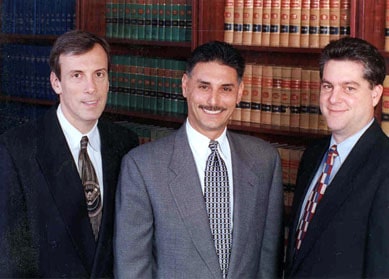
Berman | Sobin | Gross LLP has represented injured workers throughout Maryland for 35 years, growing from a three-attorney firm to more than 20 attorneys with offices across the state. The firm is the largest workers’ compensation law firm in Maryland representing injured workers, with the resources to pursue complex cases through the Commission, into the courts, and through appellate proceedings when that is what a case requires. One of the firm’s founders authored the definitive two-volume treatise on Maryland workers’ compensation law. That depth of knowledge is available to manufacturing workers in Salisbury and across the Eastern Shore who have been hurt on the job and need representation from a legal team that is prepared to fight through every stage of the process. To speak with a Salisbury manufacturing worker injury lawyer about your claim, contact Berman | Sobin | Gross LLP for a confidential case analysis.