

Salisbury Healthcare Worker Injury Attorney
Healthcare work in Salisbury and across Wicomico County carries risks that most industries never see. Nurses, patient care technicians, home health aides, hospital orderlies, and emergency medical staff face physical demands every shift that can produce serious, disabling injuries in an instant. When a healthcare worker on Maryland’s Eastern Shore is hurt on the job, the workers’ compensation system is supposed to step in. But “supposed to” and “actually does” are two different things. A Salisbury healthcare worker injury attorney from Berman Sobin Gross LLP helps close that gap by pursuing the full benefits injured workers have earned.
Why Healthcare Injuries in Salisbury Follow a Pattern Worth Understanding
Hospitals like TidalHealth Peninsula Regional serve as the healthcare anchor for the Eastern Shore, and facilities like this employ thousands of workers who lift patients, manage aggressive residents in long-term care, respond to emergencies in understaffed departments, and stand on hard floors for twelve-hour stretches. That environment produces injuries that cluster in recognizable ways.
Back injuries from patient handling lead the list. Safe patient handling protocols exist, but short-staffing or sudden emergency situations mean those protocols get bypassed. A worker who catches a falling patient, repositions someone without help, or responds to a code under pressure can sustain a herniated disc or torn muscle that requires surgery and months of recovery.
Needlestick injuries carry a different kind of weight. The physical wound may be minor, but the follow-up protocols, testing timelines, and potential exposure consequences create a workers’ compensation claim that extends far beyond the initial incident and requires careful documentation from the start.
Workplace violence is a growing problem in healthcare settings statewide. Healthcare workers in psychiatric units, emergency departments, and memory care facilities face assault risks that general industry workers do not. Maryland law covers injuries from workplace violence under workers’ compensation, but employers and insurers sometimes push back on these claims in ways that require legal response.
What Salisbury Healthcare Workers Often Get Wrong About Their Claims
The single most common mistake is underreporting or delaying a report because the injury seemed manageable at first. A pulled muscle after repositioning a patient may not feel like a case worth reporting. A week later, when the pain has worsened and MRI results show a disc injury, the delayed report becomes a problem. Maryland requires that an employee notify their employer of a work injury within ten days, and claims can be complicated significantly by gaps in that timeline.
A second issue is accepting an employer’s characterization of what happened. Healthcare employers have incident reporting systems, and how a supervisor documents an injury can affect how an insurer evaluates the claim. A worker who signs off on an incident report without reading it carefully may find that the report minimizes the mechanism of injury or shifts partial responsibility. That documentation matters at every stage of the process.
Third, healthcare workers are often reluctant to advocate for themselves in medical settings. There is a professional culture in healthcare where pushing back on a return-to-work recommendation feels uncomfortable. But the treating physician designated by an employer may not have a full picture of the physical demands of a particular role. A registered nurse’s job duties are not the same as an office worker’s, and a premature return-to-work clearance can cause reinjury or worsen an existing condition.
What Benefits Are Actually on the Table for Injured Eastern Shore Healthcare Workers
Maryland’s workers’ compensation system provides several categories of benefits, and knowing which ones apply to a specific situation matters enormously for the decisions a worker makes early in a claim.
Medical benefits cover treatment from authorized providers. The employer and insurer generally direct care, which means a worker does not automatically have the right to see any physician they choose. If authorized treatment is inadequate or a referral is being denied, there are formal mechanisms to challenge those decisions, but they require action.
Temporary total disability benefits replace a portion of lost wages when an injury prevents a healthcare worker from doing their job entirely. The wage replacement rate under Maryland law is two-thirds of the average weekly wage, subject to statutory maximums. For experienced healthcare workers earning strong wages in Salisbury’s regional healthcare economy, understanding how that maximum interacts with actual earnings is an important calculation.
Permanent partial disability benefits come into play when a worker reaches maximum medical improvement but still has measurable functional loss. A back injury that results in permanent lifting restrictions, a shoulder injury that limits range of motion, or hearing loss from repeated exposure can all produce permanent partial disability awards. The rating process involves medical evaluation, and how that evaluation is conducted directly affects the award amount.
Vocational rehabilitation is available when an injury makes returning to healthcare work impossible. For a nurse or technician who built a career around physical patient care and can no longer perform those duties, vocational rehabilitation services can include job training, education support, and job placement assistance.
Questions Healthcare Workers in Salisbury Ask Before Starting a Claim
If I was injured while helping a patient who became combative, does workers’ compensation cover that?
Yes. Injuries caused by patients, including violent or combative behavior, are covered under Maryland workers’ compensation when they occur in the scope of employment. Healthcare workers in psychiatric, emergency, and dementia care settings are particularly affected by this category of injury, and it is fully compensable.
My employer said I should use my health insurance instead of filing a workers’ comp claim. Is that my only option?
No. You have the right to file a workers’ compensation claim for a work-related injury regardless of what an employer suggests. Workers’ compensation covers medical costs without co-pays or deductibles in most cases and also provides wage replacement benefits that health insurance does not. Using your own insurance for a workplace injury may actually complicate your claim.
I work for a staffing agency that places me at different hospitals. Who is responsible for my workers’ comp coverage?
This is one of the genuinely complicated scenarios in healthcare workers’ compensation. The answer depends on the specific terms of the relationship between the staffing agency and the facility, and sometimes both entities share responsibility. These claims require careful legal analysis from the beginning.
Can my employer retaliate against me for filing a workers’ compensation claim?
Maryland law prohibits retaliation against workers who file compensation claims. Termination, demotion, or other adverse actions taken because a worker filed a claim can give rise to separate legal action. If you believe retaliation has occurred, document it and seek legal advice without delay.
My back injury was aggravated by patient lifting, but I had a prior back condition. Does that disqualify my claim?
Not under Maryland law. An aggravation of a pre-existing condition caused by work activity is compensable. The fact that a worker had prior treatment for a related condition does not extinguish their right to benefits when employment significantly worsened that condition.
What happens if the workers’ compensation insurer disputes my claim outright?
A disputed claim goes before the Maryland Workers’ Compensation Commission for a hearing. Both sides present evidence, and a Commissioner issues an order. That order can be appealed to the circuit court and, if necessary, further. Berman Sobin Gross LLP has handled cases at every level of this process, including jury trials and appeals before Maryland’s highest courts.
How long does a healthcare workers’ compensation claim typically take to resolve?
It varies significantly. An uncomplicated claim with clear liability and full recovery may close within months. A claim involving disputed causation, a permanent disability rating dispute, or retraining through vocational rehabilitation can take years. The decisions made at the beginning of a claim often shape how long and how well the process goes.
Representing Eastern Shore Healthcare Workers Who Need More Than a Standard Claim
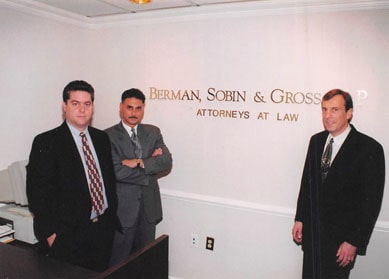
Berman Sobin Gross LLP has represented Maryland workers for 35 years, growing from three attorneys to more than twenty with offices throughout the state. The firm is the largest workers’ compensation firm in Maryland representing injured workers. One of its founders wrote the definitive two-volume treatise on Maryland workers’ compensation law that practitioners across the state continue to rely on.
This firm does not turn away difficult claims. When employers and insurers contest liability, dispute medical causation, or challenge the extent of a disability, Berman Sobin Gross LLP takes those fights to the Commission and into the courts when that is what the case requires. The firm has handled hundreds of workers’ compensation jury trials and argued before both of Maryland’s appellate courts, changing Maryland law in ways that now benefit injured workers across the state.
Healthcare workers in Salisbury and the broader Eastern Shore region deserve representation from attorneys who understand both what workers’ compensation law requires and what it takes to enforce it against a well-funded insurer. Every client who works with an attorney at this firm has a consistent point of contact throughout their case, someone who knows the details and remains accountable from the first consultation through resolution.
If you are a healthcare worker on Maryland’s Eastern Shore who has been injured on the job and are trying to figure out your next step, contact Berman Sobin Gross LLP for a confidential case analysis with a Salisbury healthcare worker injury lawyer who will give your situation a direct and honest evaluation.