

Rockville Utility Worker Injury Attorney
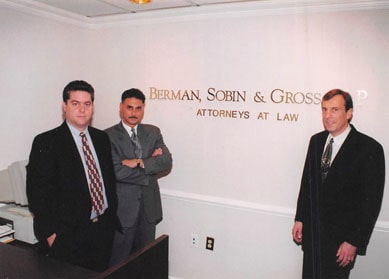
Utility work is among the most physically demanding and hazardous occupations in Maryland. Linemen, water and sewer crews, gas technicians, and telecommunications workers spend their days exposed to high voltage, pressurized lines, excavation hazards, heavy equipment, and unpredictable traffic in places like Veirs Mill Road, Hungerford Drive, and the dense infrastructure corridors running through Montgomery County. When something goes wrong on a job site, the injuries tend to be serious, and the workers’ compensation claims that follow tend to be complicated. A Rockville utility worker injury attorney at Berman | Sobin | Gross LLP understands what these jobs actually involve and what it takes to build a claim that reflects the full scope of what a worker has lost.
What Makes Utility Worker Injuries Different From Other Workers’ Comp Claims
Not all workers’ compensation claims are the same, and utility worker injuries often sit at a different level of complexity. Part of that is medical. Electrical burns, crush injuries from trenching collapses, traumatic brain injuries from falls off aerial lifts, and spinal damage from working in confined spaces frequently require extended treatment, multiple specialists, and long-term disability evaluation. The path from injury to maximum medical improvement is rarely short, and insurers begin applying pressure at every step.
Part of the complexity is also occupational. Utility workers are often employed through layered arrangements involving municipalities, private contractors, and subcontractors. Montgomery County and the City of Rockville each have their own workforce, while private utility companies and their contractors operate alongside them under different coverage structures. Identifying the right employer and the right insurer is not always obvious, and getting it wrong from the start can delay or undermine a claim.
There is also the question of a third-party claim. When a utility worker is hurt because of someone else’s negligence, such as a driver who strikes a roadside crew or a general contractor who created an unsafe excavation, that worker may have rights beyond the workers’ compensation system. Maryland law allows injured workers to pursue third-party civil claims without giving up their comp benefits, though how those two tracks intersect requires careful handling.
The Hazards That Send Rockville Utility Workers to the Hospital
Montgomery County’s ongoing infrastructure investment, including road expansions, data network build-outs, and aging water main replacements throughout Rockville, means utility crews are consistently active across the area. The work environment shifts constantly, and so do the dangers.
Electrocution and arc flash incidents remain a leading cause of fatal and catastrophic injuries among electrical utility workers. Even when protective equipment is in place, proximity to energized lines creates risks that cannot be fully engineered away. High-pressure gas leaks and underground explosions represent another category of severe injury, often resulting in burns and blast trauma. Trenching and excavation collapses, which can occur without warning in older soil conditions common throughout Montgomery County’s developed corridors, create burial and crush hazards. Traffic hazards affect crews working roadside constantly, and being struck by a vehicle while operating in a work zone is a recognized source of severe injury and fatality. Falls from bucket trucks, utility poles, and aerial equipment round out the most serious injury categories.
Repetitive stress and occupational disease claims also emerge over time for long-term utility workers. Hearing loss from sustained noise exposure, respiratory disease from chemical or environmental exposure, and cumulative joint damage from years of physically demanding work are all compensable under Maryland law, though proving them requires building a medical and occupational record that connects the condition to the work history.
How a Utility Worker Injury Claim Actually Unfolds
After a serious injury, the immediate priority is medical treatment. Under Maryland’s workers’ compensation system, the employer and insurer have the right to direct care through authorized providers, which can shape the quality and scope of treatment a worker receives. If a worker disagrees with an authorized provider’s conclusions, there are mechanisms for independent evaluation, but knowing when and how to use them matters.
The Maryland Workers’ Compensation Commission handles these claims administratively, and hearings are typically held in Rockville for Montgomery County workers. The Commission sets benefits for temporary total disability, temporary partial disability, and permanent impairment based on medical evidence, vocational factors, and the employee’s average weekly wage before the injury. For utility workers with overtime, shift differentials, and supplemental pay, accurately calculating the average weekly wage is a step that deserves real attention. Underestimating it at the start of a claim produces lower benefit calculations that can carry through the life of the case.
For workers dealing with permanent impairment, the process of rating and resolving those benefits involves negotiation and, when agreement isn’t possible, contested hearings. Employers and their insurers often present medical experts who minimize impairment findings. Berman | Sobin | Gross LLP has taken cases beyond administrative hearings and into circuit court and jury trials when that is what a client’s situation requires. The firm’s attorneys have argued workers’ compensation appeals before Maryland’s highest courts, including cases that changed how Maryland law applies to injured workers statewide.
Questions Rockville Utility Workers Often Ask
Can I choose my own doctor after a utility work injury?
Maryland gives employers the right to direct initial medical care after a work injury. However, workers retain the right to seek evaluation from a physician of their choosing and to request that the Commission authorize a change in treating provider under certain circumstances. How this plays out depends on the specifics of a case, but you are not permanently locked into an insurer’s preferred provider network without any recourse.
What if my injury was caused by someone other than my direct employer?
This is common in utility work, where crews operate near other contractors, in public roadways, or alongside municipal workers. When a third party’s negligence contributed to the injury, Maryland law allows a separate personal injury claim while workers’ compensation benefits continue. These two tracks interact in specific ways, particularly around how any third-party recovery is divided, and handling both at once requires coordinated strategy from the beginning.
How is my average weekly wage calculated if I work variable hours?
Maryland uses a specific formula based on wages earned in the period before the injury. For utility workers who earn overtime regularly, work union scale, or receive shift premiums, accurately documenting those earnings is critical. The formula is not simply a matter of dividing your base hourly rate, and small differences in how the calculation is done can produce meaningfully different benefit levels over a long period of disability.
My employer says my injury was pre-existing. What does that mean for my claim?
A pre-existing condition does not bar a workers’ compensation claim in Maryland. If the work injury aggravated, accelerated, or combined with a prior condition to produce disability, the injury is still compensable. The key is building a medical record that clearly shows what the work did to your condition, not just what your condition was before the injury.
What happens if the Commission’s decision doesn’t reflect my actual losses?
Maryland workers’ compensation decisions can be appealed to the circuit court, and from there to the Court of Special Appeals and the Court of Appeals. Berman | Sobin | Gross LLP has handled workers’ compensation jury trials and appellate arguments at Maryland’s highest courts, and the firm does not treat an administrative hearing outcome as the end of the road when a client’s interests have not been adequately served.
How long do I have to file a workers’ compensation claim in Maryland?
Generally, a claim must be filed within two years of the injury or within two years of when the worker knew or reasonably should have known that a condition was related to their work. For occupational diseases like hearing loss or respiratory illness, which develop gradually, the discovery rule can shift the applicable timeframe. Missing the deadline typically bars recovery, which is why getting the claim on file promptly matters.
Does Berman | Sobin | Gross LLP handle utility worker cases outside of Rockville?
Yes. The firm serves clients throughout Maryland, including Montgomery County, Frederick County, Baltimore, and communities across the state. Utility workers employed anywhere in Maryland can work with the firm’s attorneys regardless of where they live or where the injury occurred.
Rockville Utility Workers Have Options After a Serious Injury
For 35 years, Berman | Sobin | Gross LLP has represented Maryland workers in industries where the physical demands are real and the consequences of an injury are severe. The firm is the largest workers’ compensation law firm in Maryland representing injured workers, and its attorneys have the resources to pursue cases that require medical experts, vocational consultants, and courtroom litigation. One of the firm’s founders wrote the definitive legal treatise on workers’ compensation in Maryland, the same resource Maryland practitioners still rely on today. If you are a utility worker in the Rockville area dealing with the aftermath of a serious on-the-job injury, the attorneys at Berman | Sobin | Gross LLP are ready to evaluate your situation and help you understand what your claim is actually worth. Contact the firm for a confidential case analysis with a Rockville utility worker injury lawyer who knows this area of law from the ground up.