

Rockville Transit Worker Injury Attorney
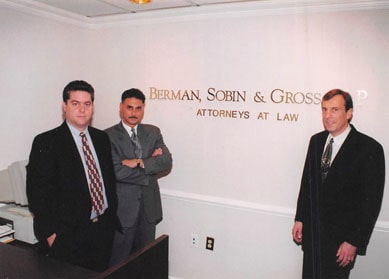
Transit workers in Rockville and throughout Montgomery County face a category of occupational risk that most people who board a bus or step onto a Metro platform never think about. Drivers, maintenance crews, mechanics, station personnel, and paratransit operators deal with physical demands, unpredictable passengers, and equipment hazards every shift. When a transit worker gets hurt, the path to compensation is rarely straightforward. Rockville transit worker injury attorneys at Berman | Sobin | Gross LLP have spent 35 years representing the working people of Maryland, including the men and women who keep public transportation moving across the region.
Why Transit Work Produces Distinct and Serious Injuries
The injury profile of transit employment does not look like a typical office job claim, and it does not look like most construction site cases either. Bus operators experience repetitive stress to the lower back, shoulders, and wrists from constant vibration and manual steering over long routes. Slip and fall incidents happen when drivers board and exit vehicles, when mechanics work in maintenance yards on slick surfaces, and when station personnel move through platforms in all weather conditions. Assault is a genuine occupational hazard in transit work, and Maryland workers’ compensation covers injuries caused by passenger violence when those injuries arise out of the course of employment.
Paratransit workers, who assist passengers with disabilities, face elevated risk of back and shoulder injuries from lifting, transferring, and securing riders. Metro and light rail maintenance personnel work in and around energized equipment, moving trains, and confined spaces. The cumulative toll of these conditions means that many transit workers do not have one dramatic accident, but rather a history of building physical wear that finally becomes disabling. Maryland workers’ compensation recognizes both acute traumatic injuries and occupational disease or cumulative trauma claims, and it matters which category applies to a given worker’s situation when filing and litigating a claim.
Montgomery County Transit Employment and the Compensation System
Rockville sits at the heart of Montgomery County’s transit network, served by Ride On, the Metrorail Red Line, and connecting bus routes that reach into the broader Washington area. Workers employed by Montgomery County government, the Washington Metropolitan Area Transit Authority (WMATA), private bus contractors, or paratransit providers all fall under different employer and insurance structures, but Maryland workers’ compensation law applies broadly to employees injured in the state regardless of who operates their employer’s program.
WMATA occupies an unusual legal position because it is an interstate compact agency covering Maryland, Virginia, and the District of Columbia. This can create jurisdictional questions when a Maryland-based transit worker is injured, particularly if the injury happens across a state line during a route. These are precisely the kinds of procedural and substantive complexities that require attorneys with deep familiarity in Maryland workers’ comp rather than a generalist approach. Berman | Sobin | Gross LLP has handled cases before the Maryland Workers’ Compensation Commission, in the circuit courts, and before Maryland’s highest courts, and the firm does not step back from cases that require careful analysis of which law applies and where the claim belongs.
Montgomery County has also been the subject of appellate litigation that directly shaped how public safety and county employees pursue compensation. The firm’s record of appellate victories in Montgomery County cases, including decisions on overtime wage calculations and public safety employee benefits, reflects the level of engagement Berman | Sobin | Gross LLP brings to claims involving county and transit workers in this region.
What a Denied or Disputed Transit Injury Claim Actually Looks Like
Transit employers and their insurers dispute claims on several predictable grounds. They may argue that the injury did not arise out of the employment, particularly for incidents that happen in parking lots, during shift changeovers, or on routes that straddle jurisdictions. They dispute cumulative trauma claims by challenging causation, arguing that a worker’s condition pre-existed the employment or resulted from off-duty activity. They challenge credibility when no witness observed an acute incident, which is common in single-operator bus situations. And they use their own medical experts to contest the severity or permanence of an injury.
One of our firm’s founders literally wrote the two-volume treatise that Maryland practitioners use as the reference on workers’ compensation law. That foundation has practical consequences for how the firm prepares and litigates transit worker claims. When an insurer retains a medical expert to minimize an injury, the attorneys at Berman | Sobin | Gross LLP know the legal standards that govern the admissibility of those opinions, including the rule established in City of Frederick v. Shankle, which the firm itself won, holding that employer medical experts may not testify if their opinions conflict with established scientific standards governing occupational disease presumptions.
The firm handles cases that other attorneys have declined or that stalled after an initial administrative hearing. If a transit worker’s claim has been denied, underpaid, or poorly handled at the Commission level, there is often still a viable path forward, but it requires attorneys prepared to go to circuit court and beyond.
Questions Transit Workers in Rockville Often Ask
Does workers’ compensation cover injuries caused by a passenger assault on my bus or at a transit station?
Yes. Injuries caused by passenger violence are compensable under Maryland workers’ compensation when they arise out of and in the course of employment. A transit worker who is physically attacked during a shift, whether by a rider on a bus, at a stop, or in a station, has the same right to file a workers’ compensation claim as someone injured by a mechanical failure or a fall. The claim must establish that the assault was connected to the work environment rather than a purely personal dispute unrelated to the job.
I have been driving a bus for years and my back condition developed gradually. Can I still file a claim?
Cumulative trauma and occupational disease claims are recognized under Maryland law. A gradual injury that results from the repetitive physical demands of transit work can support a workers’ compensation claim even when there was no single accident. These claims typically require medical evidence connecting the condition to the specific demands of the job, and the filing deadlines differ from acute injury claims, so it is worth having the situation evaluated promptly.
I work for WMATA. Does Maryland workers’ compensation law apply to my injury?
WMATA’s interstate compact structure means the answer depends on where the injury occurred and the specifics of the employment relationship. Maryland workers’ compensation may apply, or there may be arguments for coverage under the District of Columbia or Virginia systems. This is one area where getting the jurisdictional analysis right at the outset of a claim matters significantly, because filing in the wrong forum can create complications that affect recovery.
My employer is saying my injury is not serious enough to take me off full duty. What are my options?
An employer’s characterization of an injury does not control the outcome of a workers’ compensation claim. Workers are entitled to independent medical evaluation, and the Commission makes its own findings on the extent of disability and whether the injury prevents the worker from performing their regular duties. Light duty assignments also have legal implications for wage replacement benefits, a point the firm successfully argued in Montgomery County v. Deibler, where the court held that public safety workers on light duty can still receive compensation for lost overtime wages.
What if I am a contract or part-time transit worker rather than a full county or WMATA employee?
Maryland workers’ compensation applies to employees regardless of full-time or part-time status. Whether a worker is covered as an employee versus an independent contractor is a distinct question that turns on the specifics of the work arrangement. Misclassification of workers is a real issue in transportation and paratransit contracting, and if an employer argues that a worker was an independent contractor to avoid coverage, that argument can be challenged.
Can I also pursue a personal injury lawsuit if my transit injury involved a third party’s negligence?
Workers’ compensation and third-party personal injury claims are separate. If a transit worker’s injury involved negligence by a party other than the employer, such as a manufacturer of defective equipment or a driver who caused a collision with a bus, a third-party claim may be available alongside the workers’ compensation claim. These cases require coordination between the two tracks, and Maryland law addresses how compensation received through one affects the other.
How long do I have to file a workers’ compensation claim for a transit work injury in Maryland?
Maryland generally requires that a claim be filed within two years of the date of injury or, for occupational disease, within two years of when the worker knew or should have known the condition was work-related. Missing the filing deadline can forfeit the right to benefits entirely, which is one reason that delay in evaluating a claim works against the injured worker.
Transit Workers Across the Rockville Region Can Reach Our Firm
Berman | Sobin | Gross LLP serves injured transit workers throughout Montgomery County and the broader Maryland area from offices in Gaithersburg and several other locations across the state. The firm is the largest workers’ compensation firm in Maryland representing injured workers, with attorneys who have handled tens of thousands of hearings and hundreds of jury trials. For a transit worker dealing with a disputed claim, an unresponsive insurer, or a settlement offer that does not reflect the full value of an injury, the firm offers a confidential case analysis without obligation. Attorneys at the firm who are fluent in Spanish are available for clients who prefer to communicate in that language. A Rockville transit injury attorney from Berman | Sobin | Gross LLP will stay with your case from the initial filing through final resolution, whether that means the Commission, the circuit courts, or appellate argument.