

Rockville Retail Worker Injury Attorney
Retail work looks low-risk from the outside. Stocking shelves, running a register, helping customers. But the workers’ compensation claims that come out of Rockville’s retail sector tell a different story. Slip and fall injuries on freshly mopped floors, back injuries from lifting improperly packaged stock, repetitive strain from scanning thousands of items daily, crush injuries from loading dock accidents at the distribution hubs off Shady Grove Road. If you were hurt working in a retail environment in or around Rockville, a Rockville retail worker injury attorney at Berman | Sobin | Gross LLP can evaluate what you are owed and help you pursue it.
Why Retail Injuries Generate More Workers’ Comp Disputes Than People Expect
Retailers and their insurance carriers know their claims history. Large chains have risk management departments whose job is to control what they pay on injury claims. That means your claim may be scrutinized differently than an injury claim at a smaller employer.
A few patterns come up repeatedly in retail workers’ compensation cases. Employers will argue that an injury happened outside of work, pointing to any physical activity a worker mentions away from the job. They will classify injuries as pre-existing conditions, especially in cases involving back, knee, or shoulder problems. They will dispute whether the injury happened on the clock or during a break. And for repetitive stress injuries, which are very common in retail, they will argue there is no single identifiable incident that triggered the condition.
None of these arguments are automatic victories for an employer. But they do change how a claim needs to be built and presented. Workers who submit a claim without legal guidance often find themselves answering questions from insurance adjusters in ways that inadvertently harm their own case.
The Specific Hazards That Put Rockville Retail Workers in Danger
Rockville has a dense commercial corridor along Rockville Pike, one of the busiest retail strips in Montgomery County. Big box stores, grocery chains, home improvement retailers, auto parts outlets, and enclosed malls all operate along or near this corridor. Each type of retail environment carries its own injury profile.
Grocery and big box store workers face the highest frequency of musculoskeletal injuries. Stock workers in these environments lift and move hundreds of pounds of product per shift, often in awkward positions, on concrete floors, in refrigerated sections, or in cramped backroom spaces. These workers also face slip hazards from spills, broken packaging, and condensation from refrigeration units.
Workers in home improvement and hardware stores face additional hazards from heavy merchandise stored at height. Falling merchandise from inadequate shelving is a recognized cause of serious injury in these environments. Forklift and pallet jack operations in the warehouse sections of these stores add another layer of risk.
Retail workers at smaller specialty stores and in mall settings are not immune. Repetitive motion injuries from stocking, hanging merchandise, and extended time at point-of-sale stations are common. Security personnel who respond to shoplifting incidents face injury risks that are rarely discussed but well documented in workers’ compensation records across Maryland.
What Maryland’s Workers’ Compensation System Actually Covers for Retail Employees
Maryland law requires employers to carry workers’ compensation coverage for their employees. When a retail worker is injured on the job, the system is designed to provide medical treatment coverage and wage replacement during the period of disability. In cases of permanent injury, additional benefits may apply based on the severity and nature of the permanent impairment.
For most retail workers, temporary total disability benefits kick in when an injury prevents them from working entirely. Temporary partial disability applies when a worker can return to some duties but at reduced hours or in a modified role. Permanent partial disability benefits compensate workers for lasting physical limitations that do not fully prevent work but do reduce their capacity.
The medical component of a workers’ comp claim matters enormously. The employer and insurer have the right to direct medical care in many situations, which means the treating physician may be one selected by the insurance carrier. This is one of the more consequential aspects of the claims process, and it is one that many injured workers do not realize until well into their claim.
For retail workers with repetitive stress injuries, occupational disease provisions in Maryland law may apply. These claims have their own filing requirements and their own evidentiary demands, and they often require medical evidence connecting the work activity to the specific condition that developed.
Questions Retail Workers in Rockville Ask Before Hiring an Attorney
I reported my injury and my employer said I should be fine with just going to their clinic. Do I need a lawyer?
An employer-directed clinic will provide initial care, but the physician there works within a relationship with the employer’s insurer. You have rights to independent medical evaluation in certain circumstances, and you have rights in how your claim is documented from the beginning. Consulting with an attorney before your claim is fully developed can help you understand those rights before decisions are made that are harder to reverse later.
My back has been bothering me for years, but my job at a Rockville warehouse store clearly made it worse. Can I still file a claim?
Yes. Maryland workers’ compensation law recognizes aggravation of pre-existing conditions as a compensable injury. If work activity accelerated, worsened, or lit up a condition that was previously manageable, you have grounds for a claim. These cases do require careful medical evidence, but a pre-existing condition is not a bar to recovery.
I developed carpal tunnel syndrome from years of scanning at the register. Is that covered?
Repetitive use conditions like carpal tunnel syndrome can qualify as occupational diseases under Maryland law. The challenge is establishing the causal connection between your specific job duties and the condition. Medical records and documentation of your work activities over time both matter in building this type of claim.
My employer is offering me a settlement. How do I know if it is fair?
Settlement value in a workers’ compensation case depends on multiple factors including the nature and permanence of your injury, your age, your earning capacity, and what future medical treatment you may need. An attorney can assess whether a settlement offer reflects those factors or falls short. Once you settle certain claims, you may give up future rights, so the evaluation before you sign matters significantly.
I was hurt at a Rockville retail store while I was working there, but I am a contract or seasonal employee. Am I covered?
Coverage under Maryland’s workers’ compensation law extends to employees generally, not just full-time permanent staff. Seasonal and part-time retail workers are typically covered. Whether a worker has been misclassified as an independent contractor is a separate question that warrants a careful look, because misclassification does not automatically defeat a claim.
My injury happened months ago and I did not file a claim right away. Is it too late?
Maryland has filing deadlines for workers’ compensation claims, and delay can complicate matters. However, the timeline for repetitive stress injuries or conditions that developed gradually is calculated differently than a single-incident injury. The answer depends on the facts of your situation, which is why getting a case evaluation promptly is worth doing rather than assuming the window has closed.
The workers’ compensation insurer sent me for an independent medical examination. What should I know about that?
An insurer-requested IME is conducted by a physician selected by the insurer, and the results of that exam can be used to limit or deny your benefits. You have the right to understand what the IME found and to present contrary medical evidence through your own treating physician or through an evaluation arranged by your attorney. These examinations are a common inflection point in contested claims.
Retail Workers in Rockville Have a Strong Advocate in Their Corner
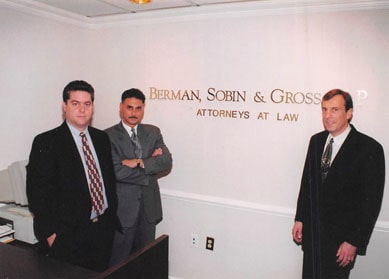
Berman | Sobin | Gross LLP has spent 35 years representing Maryland workers across industries, from first responders and tradespeople to the retail employees who keep the state’s commercial sector running. The firm is the largest workers’ compensation law firm in Maryland representing injured workers, with offices across the state including locations that serve Montgomery County. One of the firm’s founders literally wrote the treatise on workers’ compensation law in Maryland, a resource that continues to guide practitioners throughout the state. The firm handles cases that go beyond the administrative hearing level, including jury trials and appellate work before Maryland’s highest courts. Retail workers in Rockville who have been told their claim is not worth pursuing, or who have had an initial claim denied, are exactly the kind of clients this firm was built to represent. Contact Berman | Sobin | Gross LLP to talk through what happened and what options are available to you as an injured retail worker in Rockville.