

Rockville Firefighters, Paramedics & EMTs Injury Attorney
Firefighters, paramedics, and EMTs in Rockville and across Montgomery County run toward situations that most people flee. That physical reality catches up with workers’ bodies over time, and it also produces sudden, catastrophic injuries on a single call. When that happens, the workers’ compensation system in Maryland does not treat these workers the same way it treats everyone else. There are specific statutes, specific presumptions, and specific benefit structures that apply to public safety employees, and understanding how those rules work, and how employers and insurers often try to work around them, is what Rockville firefighters, paramedics & EMTs injury attorneys at Berman | Sobin | Gross LLP do every day.
What Maryland’s Public Safety Presumptions Actually Cover
Maryland law extends a significant protection to firefighters and other public safety employees that does not exist for most workers. For conditions like heart disease, lung disease, and hypertension, the law presumes that the condition is job-related if you are a covered public safety employee. You do not have to prove, step by step, that a specific exposure on a specific date caused your cardiovascular or pulmonary disease. The burden shifts. The employer has to show the condition did not arise from your work, which is a very different fight than the one most injured workers face.
That presumption matters enormously in practice. Heart disease is one of the leading causes of line-of-duty deaths and disabilities among firefighters. Without the presumption, a firefighter battling coronary artery disease after two decades of smoke exposure and physical exertion at structure fires would face an uphill struggle to connect their condition to the job in the way standard workers’ compensation claims require. With the presumption, that dynamic changes. But the presumption does not apply automatically or without dispute. Montgomery County and other employers regularly challenge it, and those challenges require an attorney who knows the law well enough to hold the line.
The firm’s appellate record reflects exactly that kind of work. In Montgomery County v. Pirrone, Berman | Sobin | Gross LLP secured a ruling that the heart, lung, and hypertension presumption applies to public safety workers even after retirement or while off duty. In City of Frederick v. Shankle, the firm successfully excluded employer medical experts who attempted to testify that the occupational disease presumption lacked scientific foundation. These are not abstract legal victories. They define how Maryland law actually works for injured first responders today.
EMTs, Paramedics, and the Enhanced Benefits Question
One of the less understood areas of Maryland workers’ compensation law involves whether EMTs and paramedics qualify as public safety employees for purposes of enhanced compensation. This distinction has real consequences. Public safety employee status opens the door to the occupational disease presumptions described above, as well as to different benefit calculations and protections.
The firm litigated this exact question in Downer v. Baltimore County and obtained a ruling establishing that emergency medical technicians are public safety employees entitled to the same enhanced compensation benefits as other public safety workers. That case extended meaningful legal protections to a class of workers whose status had been contested. If you are an EMT or paramedic who has been told you do not qualify for certain benefits, that analysis may be wrong, and it is worth getting a second opinion from attorneys who have actually shaped the law in this area.
Rockville-area EMTs and paramedics often work in environments that blend county, municipal, and contracted service structures, which can create additional layers of complexity around who the employer actually is, what coverage applies, and which benefit structure governs a particular claim. Getting that baseline right is something that affects every other decision in the case.
Common Injuries That Bring Rockville First Responders to This Firm
The injuries that end careers or create long-term disability for firefighters, paramedics, and EMTs in Rockville span a wide range. Musculoskeletal injuries from vehicle extrications, patient lifting, and structural collapses are frequent. Exposure injuries from smoke, chemicals, and carcinogenic fire byproducts produce occupational diseases that may take years to manifest. The physical demands of the work combined with the unpredictability of emergency scenes create conditions where repetitive strain injuries and acute traumatic injuries occur constantly.
Traumatic brain injuries from falls, vehicle accidents during emergency response, and structural failures at fire scenes are among the most serious claims. These cases require careful handling because TBI symptoms are often not immediately obvious, and employers and insurers may contest the causal relationship between a work event and the neurological changes that show up later. Hearing loss from ongoing exposure to sirens, power tools, and structure fires is another condition that Berman | Sobin | Gross LLP has handled extensively, including in Montgomery County v. Cochran and Bowen, which clarified how the age deduction for occupational deafness is calculated for firefighters.
Mental health injuries, including post-traumatic stress arising from repeated exposure to traumatic calls, are increasingly recognized under Maryland law. These claims present unique evidentiary challenges and often face more scrutiny from employers than physical injuries. The firm’s experience across the full range of first responder injury claims means clients are not working with attorneys who treat PTSD claims as unfamiliar territory.
What Happens When the County or City Contests the Claim
Many first responders who file workers’ compensation claims in the Rockville area are dealing with Montgomery County as their employer. Montgomery County, like other government employers, has access to sophisticated legal and medical resources devoted specifically to defending workers’ compensation claims. That is not a reason to be discouraged; it is a reason to work with attorneys who have extensive experience litigating against those resources specifically.
Berman | Sobin | Gross LLP has handled not just tens of thousands of administrative hearings but also hundreds of workers’ compensation jury trials and appeals before Maryland’s highest courts. When a county employer brings in a medical expert to contest an occupational disease claim, the firm knows what those witnesses will say and how to challenge it. When an employer argues that a light-duty assignment eliminates the right to wage loss benefits, the firm knows the counterargument and has the case law to back it up, including Montgomery County v. Deibler, which established that public safety workers receiving full salary on light duty can still receive compensation for wage losses related to overtime they had been earning before the injury.
Claims that reach an impasse at the Workers’ Compensation Commission sometimes need to go further. Berman | Sobin | Gross LLP handles appeals and circuit court litigation when that is what a case requires. If other attorneys have declined to take a case past the administrative stage, the firm evaluates those claims and steps in when there is a path worth pursuing.
Answers to Questions First Responders Often Ask
Does the occupational disease presumption apply if my injury developed gradually over many years?
Yes. The heart, lung, and hypertension presumptions under Maryland law are specifically designed for conditions that develop over time rather than from a single identifiable incident. The gradual nature of the condition does not undermine the claim; it is exactly what the presumption was intended to address for public safety workers.
I am on light duty after my injury. Am I still entitled to wage loss benefits?
Potentially yes. Maryland case law, including the Montgomery County v. Deibler decision that Berman | Sobin | Gross LLP obtained, specifically holds that public safety workers receiving full base pay on light duty can still pursue compensation for lost overtime they had regularly been earning before the injury. The analysis depends on your specific situation.
I retired before my heart condition was diagnosed. Can I still file a claim?
The Montgomery County v. Pirrone ruling established that the heart, lung, and hypertension presumption applies even after retirement or while a worker is off duty. Retirement alone does not close the door on a compensable occupational disease claim for a former public safety employee.
My employer’s doctor says my condition is not work-related. Does that end my claim?
No. An employer’s medical expert is one piece of evidence, not a final determination. The Workers’ Compensation Commission weighs all of the medical evidence, and under the occupational disease presumption framework, the employer’s doctor has to overcome a legal burden rather than simply offering an alternative opinion. The firm has successfully challenged employer medical witnesses in cases that went to the highest levels of Maryland’s appellate courts.
I am an EMT, not a firefighter. Do I qualify for the same protections?
Under Maryland law following the Downer v. Baltimore County ruling, EMTs are public safety employees entitled to the same enhanced compensation benefits as other public safety workers. The specific application to your claim depends on the details of your employment structure, but EMT status alone does not disqualify you.
Can I receive vocational rehabilitation benefits while already drawing a service-connected disability retirement?
Yes, under Maryland law as interpreted in Fikar v. Montgomery County, a case Berman | Sobin | Gross LLP handled. Injured workers receiving service-connected disability retirement are still eligible for vocational rehabilitation services through workers’ compensation.
How long do I have to file a workers’ compensation claim in Maryland?
The filing deadlines in Maryland vary depending on the type of injury and when it was discovered, particularly for occupational diseases where the onset is gradual. Missing the filing deadline can bar a claim entirely. Getting an evaluation of your timeline early in the process is important for that reason.
Talking to a Rockville First Responder Injury Attorney at Berman | Sobin | Gross LLP
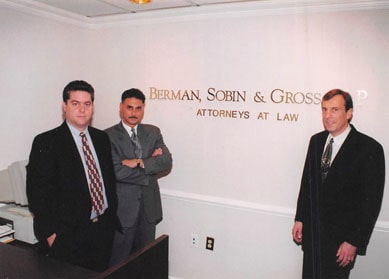
For 35 years, Berman | Sobin | Gross LLP has represented firefighters, paramedics, EMTs, and other first responders across Maryland, including throughout Montgomery County and the Rockville area. The firm has offices in Gaithersburg, Lutherville, Baltimore, and Frederick, and serves clients throughout the state. One of the firm’s founders wrote the definitive two-volume treatise on workers’ compensation law in Maryland. That depth of knowledge is not incidental. It shows up in how claims are built, how hearings are prepared, and how the firm’s attorneys respond when an employer brings in expert witnesses to contest a claim. If you are a Rockville firefighter, paramedic, or EMT dealing with a work injury or occupational disease, the attorneys at Berman | Sobin | Gross LLP are available to evaluate your claim and explain where you stand.