
Pikesville Worker Injury Attorney
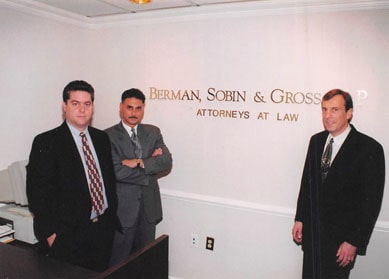
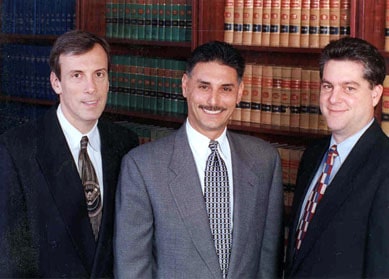
Work injuries in Pikesville cut across a wide range of industries. The warehouses and distribution centers near the Baltimore Beltway, the healthcare facilities along Reisterstown Road, the construction crews working residential and commercial projects throughout the corridor, the retail employees and food service workers who keep the community running daily. When something goes wrong at work in any of these settings, the injured worker suddenly faces a claims process that moves quickly, involves medical providers selected or approved by the employer, and puts the employee in the position of building a case without the same resources that employers and insurers already have in place. A Pikesville worker injury attorney at Berman | Sobin | Gross LLP has spent 35 years handling exactly this kind of imbalance, and the firm has grown to become the largest workers’ compensation law firm in Maryland representing injured workers.
What the Workers’ Compensation Process Actually Looks Like for Pikesville Workers
Maryland workers’ compensation operates through the Workers’ Compensation Commission, which means your claim is handled administratively before it ever reaches a court. That structure works reasonably well for straightforward claims where liability is clear, the medical treatment is limited, and everyone agrees on what happened. But claims that involve disputed causation, significant permanent injury, occupational disease, or pre-existing conditions treated as a disqualifier rather than a complicating factor, those claims get contested, and contested claims need careful handling from the start.
The Pikesville area falls within Baltimore County, and many employers in the area are large enough to have dedicated claims management staff or third-party administrators working the file from day one. That means decisions about your medical care, your wage replacement benefits, and your return-to-work status are being made by people whose job is to manage costs. Your job is to recover. The asymmetry is real, and it matters most during the early weeks of a claim when critical decisions are still being made.
One of the most common mistakes injured workers make is treating the workers’ comp process as a simple paperwork exercise. Missing a reporting deadline, signing a document that appears routine but limits your claim, accepting a vocational rehabilitation assignment that undervalues your actual earning capacity, or failing to adequately document a worsening condition can all affect what benefits you ultimately receive. Maryland law provides a defined window for filing claims and for appealing Commission decisions, and those deadlines do not bend.
The Injuries That Create the Most Complicated Claims
Not all work injuries are treated the same way under Maryland workers’ compensation law, and some types of injuries are harder to establish, more aggressively contested, or more likely to generate a permanent impairment claim that brings the full weight of insurer opposition to bear.
Repetitive stress and cumulative trauma injuries, the kind that build up over months or years of doing the same physical work, are routinely challenged on causation grounds. Employers and their medical experts frequently argue that degenerative conditions predated the employment, or that the work activities were not sufficiently connected to the diagnosed impairment. These arguments sound medical and technical, but they are also legal arguments, and the way your attorney presents medical evidence, examines medical witnesses, and challenges employer-selected IME opinions directly affects the outcome.
Occupational disease claims, particularly those involving exposure to chemicals, solvents, or other substances at workplaces in the Baltimore region, require the injured worker to establish both the existence of the disease and the connection to workplace exposure. This is different from a traumatic accident where the mechanism of injury is obvious. The timeline is longer, the evidence is more technical, and the stakes are often higher because these conditions can be severely disabling.
For Pikesville workers who are first responders or public safety employees, Maryland law provides additional presumptions for certain conditions including heart disease, hypertension, and lung disease. Berman | Sobin | Gross LLP has litigated these presumptions at the appellate level and secured rulings that clarified and expanded protections for firefighters, EMTs, and law enforcement officers throughout the state. These are not abstract legal victories. They directly determine whether a specific worker’s condition is covered.
How This Firm Approaches Cases Other Firms Turn Down
Berman | Sobin | Gross LLP does not screen for simple claims. The firm’s founders built its reputation specifically by handling the cases that require more resources, deeper medical investigation, and willingness to take a dispute past the Commission and into the circuit courts or appellate courts when the law or the facts warrant it. One of the firm’s founders wrote the definitive two-volume legal treatise on workers’ compensation in Maryland, which remains the authoritative reference for practitioners across the state. That depth of knowledge is not incidental. It reflects what this firm actually does with difficult cases.
For Pikesville workers who have already been told their case is too complicated or that an appeal is not worth pursuing, that assessment deserves a second opinion. The firm has handled hundreds of workers’ compensation jury trials and argued appeals before Maryland’s highest courts. The experience on which that record is built is precisely what complex cases require.
Attorneys at Berman | Sobin | Gross LLP stay with their clients as the primary contact throughout the life of a case, which matters in longer disputes where continuity makes a difference. The firm also has Spanish-speaking attorneys and staff, which is relevant to many workers in the Pikesville and broader Baltimore County community.
Questions Pikesville Injury Claimants Ask Early in Their Case
Does it matter that I was partially at fault for my injury?
Maryland workers’ compensation is a no-fault system. You do not need to prove your employer was negligent to receive benefits, and your own role in the accident does not bar you from recovering. The main exceptions involve intentional self-harm or being under the influence of alcohol or drugs at the time of injury.
My employer says my injury is not covered because it happened during a task I was not supposed to be doing. Is that accurate?
Not necessarily. Maryland courts have interpreted the “arising out of and in the course of employment” standard in ways that often protect workers who deviate from assigned tasks, particularly where the employer was aware that such deviations were common. This is a legal question that depends heavily on the specific facts and is worth evaluating carefully.
Can I choose my own doctor for treatment?
Maryland law allows injured workers to select from a list of authorized providers, but the employer or insurer often has influence over that process at the outset. There are mechanisms for changing treating physicians or requesting authorization for specific treatment, and how you navigate those requests can affect both your medical care and the evidentiary record in your claim.
My employer is offering me light duty that I cannot physically do. What are my options?
A return-to-work offer that does not match your actual medical restrictions can be challenged. If a treating physician has documented restrictions that the offered position does not accommodate, accepting an assignment that makes your condition worse or refusing an assignment that genuinely falls within your restrictions have different legal consequences. Getting guidance before you respond is worth the time.
What happens if my workers’ comp claim is denied after the Commission hearing?
You have the right to appeal a Commission decision to the circuit court, and from there to Maryland’s appellate courts. Berman | Sobin | Gross LLP has taken cases through the full appellate process when the legal or factual grounds justified it, including in cases where other firms stopped at the administrative level.
I was injured as a public safety worker. Does the workers’ comp process work differently for me?
Public safety employees in Maryland, including firefighters, EMTs, and law enforcement officers, have access to statutory presumptions and enhanced benefit provisions that do not apply to the general workforce. These protections are significant, but they are also the subject of ongoing employer challenges, and the case law interpreting them continues to develop. This firm has directly shaped that case law through its appellate work.
How long do I have to file a workers’ compensation claim in Maryland?
Generally, you have two years from the date of the accidental injury, or from the date you knew or should have known that a disease was related to your occupation, to file with the Commission. Failing to report the injury to your employer promptly can create separate procedural complications. These timelines are strict and should not be treated casually.
Reach Out to a Pikesville Work Injury Lawyer
Workers in Pikesville and throughout Baltimore County who are dealing with a workplace injury deserve clear, honest information about what their claim is worth, what obstacles are likely to arise, and what it actually takes to get through the process with their benefits intact. Berman | Sobin | Gross LLP has offices throughout Maryland and has been representing injured workers for 35 years, handling claims at every level from initial filing through appellate litigation. To speak with a Pikesville work injury lawyer about your situation, contact Berman | Sobin | Gross LLP for a confidential case analysis.