

Pikesville Roofer Injury Attorney
Roofing is consistently ranked among the most dangerous occupations in the country. Falls from heights, nail gun accidents, heat exhaustion, structural collapses, and electrical contact from overhead lines are not hypothetical risks on a roofing job site. They happen, and they happen in Pikesville just as they do everywhere else. When a roofer gets hurt, the path from injury to benefits is rarely straightforward. A Pikesville roofer injury attorney who understands how roofing work is classified, how Maryland’s workers’ compensation system applies to construction trades, and what to do when an employer or insurer pushes back can make a real difference in whether an injured worker recovers the full value of their claim or ends up leaving benefits on the table.
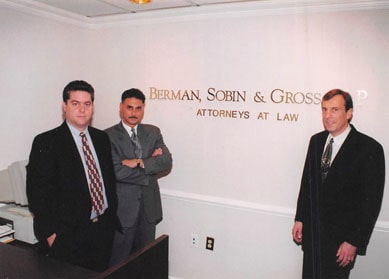
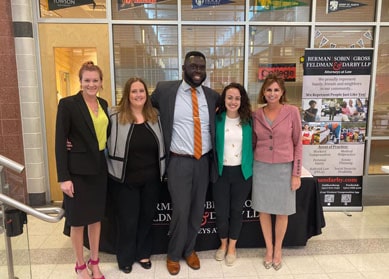
Berman | Sobin | Gross LLP has represented injured workers throughout Maryland for 35 years. The firm has grown from three attorneys to more than 20, with offices across the state, and it remains the largest workers’ compensation firm in Maryland representing injured workers. That depth of experience matters particularly in roofing cases, which often involve disputed liability, questions about independent contractor status, and injuries serious enough to require long-term medical care and extended time away from work.
Why Roofing Injuries Produce Some of Maryland’s Most Contested Workers’ Comp Claims
Roofing injuries tend to be serious. A fall from a two-story roofline often means orthopedic injuries, head trauma, spinal damage, or worse. These are not the kinds of claims that insurers resolve quickly and quietly. The higher the medical costs and the longer the disability, the more aggressively insurance carriers examine whether they can dispute the claim, challenge the degree of injury, or argue that a pre-existing condition was the real cause of the worker’s limitations.
There is also the question of how roofing workers are classified. A significant number of roofers in the Baltimore metro area, including Pikesville, work for smaller contractors who may classify workers as independent contractors rather than employees. Under Maryland law, the workers’ compensation system covers employees, not independent contractors. This distinction becomes a central battleground in many roofing injury claims. Whether that classification holds up legally depends on the actual working relationship, not just what the paperwork says. Courts and the Maryland Workers’ Compensation Commission look at factors like who controlled the work, who supplied the equipment, whether the worker could work for others simultaneously, and how the worker was paid. A roofer who was labeled a contractor but functioned like an employee may still have a valid claim.
Even roofers who are clearly employees can face disputes over causation. A worker with any prior back or knee history may find that the employer’s insurer argues the current injury is not work-related, or that treatment beyond a basic level is not necessary. These arguments can be countered with the right medical documentation and legal framing, but they do not resolve themselves.
The Specific Injuries Roofers Sustain and What They Mean for a Claim
Not all workplace injuries follow the same trajectory through the workers’ compensation system. Roofing injuries tend to cluster in ways that shape what compensation looks like and how long a claim stays open.
Falls are the most common catastrophic event on roofing jobs. A fall onto a hard surface can produce traumatic brain injuries, vertebral fractures, shoulder and hip fractures, and internal injuries. These cases often involve extended hospitalization, surgery, rehabilitation, and permanent limitations. In Maryland, a worker with permanent impairment is entitled to Permanent Partial Disability or Permanent Total Disability benefits, depending on the severity. Documenting permanent impairment accurately, and making sure the impairment rating reflects the full scope of the injury, is one of the most consequential parts of a serious roofing claim.
Repetitive stress injuries are also common among roofers who have been in the trade for years. Rotator cuff deterioration, knee damage from repeated kneeling on sloped surfaces, and lower back degeneration from carrying heavy bundles of shingles do not always present as single acute events. Maryland’s workers’ compensation system does cover occupational diseases and conditions that develop gradually from work exposures, but these claims require a clear connection between the job duties and the medical findings.
Heat-related illness deserves particular attention for roofers working through Maryland summers. Pikesville and the broader Baltimore County area can see extended stretches of high heat and humidity, and rooftop temperatures in direct sun can exceed air temperature by 40 degrees or more. Heat stroke and heat exhaustion are recognized work-related conditions when they result from job duties performed in dangerous conditions.
When a Third Party, Not Just the Employer, Bears Responsibility
Workers’ compensation is not always the only avenue available after a roofing injury. When a party other than the direct employer contributed to the conditions that caused the injury, a separate personal injury claim may be available alongside the workers’ comp claim.
On a roofing job, that third party might be a general contractor who controlled site safety and failed to ensure adequate fall protection. It might be a property owner who concealed a structural defect that caused a roof collapse. It could be the manufacturer of defective safety equipment or a ladder that failed. It might even be a subcontractor working the same site who created a hazard.
These third-party claims are separate from the workers’ compensation system and are not subject to the same caps and limitations. They can compensate for pain and suffering, full wage loss, and other damages that workers’ compensation does not cover. Berman | Sobin | Gross LLP handles personal injury cases alongside workers’ compensation, which matters for injured roofers whose situations may involve both types of claims at once.
Questions Injured Roofers in Pikesville Ask
I was told I am an independent contractor. Does that mean I cannot file a workers’ comp claim?
Not necessarily. Maryland law applies a functional test to whether a worker is truly an independent contractor or was actually operating as an employee. If the company controlled how, when, and where you did your work, supplied your tools, required you to work exclusively for them, or otherwise treated you like an employee, the independent contractor label may not hold up. This is worth examining before accepting that you have no claim.
What if my employer says the fall was my own fault?
Maryland’s workers’ compensation system is a no-fault system. You do not have to prove that your employer was negligent to receive benefits. The relevant question is whether the injury arose out of and in the course of your employment. Contributory fault is generally not a defense the employer can use to deny a workers’ comp claim.
I was injured by a subcontractor on the job site. Who do I file against?
You would file a workers’ compensation claim against your direct employer. If the subcontractor’s negligence caused or contributed to your injury, there may also be a separate civil claim against that subcontractor. These two tracks can run simultaneously in Maryland.
How long do I have to file a workers’ compensation claim in Maryland?
Generally, you must file within two years of the date of your accidental injury, or for occupational diseases, within two years of when you knew or should have known the condition was work-related. There are specific notice requirements as well. Delaying can create complications, so it is worth getting a claim evaluated sooner rather than later.
The insurance company scheduled me for an independent medical examination. What should I expect?
An IME requested by the insurance carrier is conducted by a physician of their choosing, not yours. These examinations are often used to generate opinions that the injury is less severe than claimed, that treatment is no longer necessary, or that maximum medical improvement has been reached. You are generally required to attend, but you are not required to navigate the process without representation.
Can I lose my workers’ comp benefits if my employer fires me after I file a claim?
Retaliation against workers for filing a compensation claim is prohibited under Maryland law. Your medical benefits and wage replacement are tied to your injury, not your continued employment. If you were terminated after filing, that is a separate issue worth discussing with an attorney, but it does not automatically end your entitlement to workers’ compensation benefits.
What does Permanent Partial Disability actually mean for a roofer whose shoulder will never fully recover?
Permanent Partial Disability benefits compensate for lasting impairment to a specific body part or function. In Maryland, the Workers’ Compensation Commission assigns a percentage of disability to the affected body part, and benefits are calculated based on that percentage and the statutory value of the body part. For a roofer who has permanently lost range of motion or strength in a shoulder, this can represent a significant award, and the accuracy of the disability rating matters considerably.
Talking to a Pikesville Roofing Injury Lawyer Before the Process Moves Any Further
Roofing injury claims in the Pikesville area move through the Maryland Workers’ Compensation Commission and, when contested, into the courts. Berman | Sobin | Gross LLP’s attorneys have handled workers’ compensation cases at every level, from initial filings through Commission hearings, jury trials, and appeals before Maryland’s highest courts. One of the firm’s founders authored the leading treatise on Maryland workers’ compensation law. That kind of depth does not come from taking only the easy cases. If another attorney has already turned down your roofing injury claim or declined to take it past a hearing, that is not the end of the road. Attorneys at Berman | Sobin | Gross LLP evaluate difficult claims and will tell you honestly what options are available. Reaching out for a case analysis costs nothing and gives a Pikesville roofing injury attorney the chance to assess what your claim is actually worth and how to pursue it.