

Pikesville Postal Worker Injury Attorney
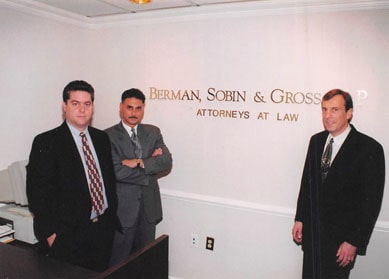
Postal workers in Pikesville carry one of the most physically demanding routes in the greater Baltimore area. They walk miles daily, handle heavy parcels, drive delivery vehicles in dense suburban traffic, and work in conditions that range from icy driveways in January to heat advisories in August. When a mail carrier or postal employee gets hurt on the job, the path to benefits is not always straightforward. The Pikesville postal worker injury attorney team at Berman | Sobin | Gross LLP has spent 35 years representing Maryland workers in exactly these situations, and we know what it takes to build a strong claim.
Why Federal Employment Changes Everything for Injured Postal Workers
Most workers in Maryland are covered by the state workers’ compensation system. Postal employees are different. The United States Postal Service is a federal agency, which means injured USPS workers file claims under the Federal Employees’ Compensation Act, commonly called FECA, administered by the Office of Workers’ Compensation Programs within the U.S. Department of Labor.
This distinction matters enormously in practice. FECA has its own filing procedures, its own deadlines, its own medical authorization process, and its own appeal track. The Maryland Workers’ Compensation Commission, which handles virtually every other work injury claim in the state, has no jurisdiction over a USPS employee’s injury. Submitting the wrong forms, missing OWCP-specific deadlines, or failing to document causation the way the federal system requires can derail a legitimate claim before it gains any traction.
At the same time, postal workers who are injured through someone else’s negligence, a driver who strikes a mail carrier on a Pikesville street, for example, may have a separate personal injury claim entirely independent of their federal benefits. These two tracks can run simultaneously, and handling them correctly requires attention to how one affects the other.
The Injuries That Actually Bring Pikesville Postal Workers to Our Office
Dog bites are among the most common reasons postal workers contact us. Letter carriers throughout Pikesville and the surrounding neighborhoods regularly encounter dogs that are not secured, and a serious bite can mean surgery, infection, missed work, and permanent scarring. These cases often involve a third-party liability claim against the dog’s owner in addition to a federal workers’ compensation filing.
Slip and fall injuries rank equally high. Driveways, steps, and sidewalks throughout the older residential sections of Pikesville, particularly during winter months, create serious hazards. A carrier who goes down hard on ice may sustain fractures, spinal injuries, or traumatic head injuries that require extended treatment and potentially permanent work restrictions.
Repetitive stress injuries are less dramatic but can end a career just as decisively. Decades of carrying heavy satchels, twisting to reach mailboxes, and sorting at awkward angles produce shoulder tears, carpal tunnel syndrome, and chronic lower back degeneration. These conditions develop gradually, which often leads the OWCP to scrutinize causation more aggressively than it would for a single acute incident.
Vehicle accidents are also a significant source of serious injuries. Mail carriers operating postal vehicles on roads like Reisterstown Road or Old Court Road are exposed to Baltimore-area traffic daily. A collision serious enough to cause traumatic injury may give rise to both a FECA claim and a third-party negligence action, which requires careful coordination to preserve full recovery.
What the FECA Claims Process Actually Looks Like
Filing under FECA starts with reporting the injury to the postal supervisor and completing the appropriate OWCP form, either Form CA-1 for traumatic injuries or Form CA-2 for occupational disease. Timely filing matters. For traumatic injuries, a claim filed within 30 days of the incident preserves continuation of pay rights for up to 45 days, a critical bridge while the formal claim is processed.
From there, the OWCP reviews the claim, requests medical documentation, and makes an initial decision on whether the injury is accepted. Accepted claims generate authorization for treatment with OWCP-approved providers. Disputed claims can be contested through a reconsideration request, an appeal to the Employees’ Compensation Appeals Board, or, in some situations, through federal district court.
The appeals process under FECA is its own track and operates differently from any Maryland state court procedure. Understanding how to frame medical evidence, what the ECAB looks for, and how to present causation arguments at each level requires familiarity with a system that most general practice attorneys rarely encounter.
Berman | Sobin | Gross LLP has built its practice around the workers who depend on these systems to survive an injury. We go where the case requires, including beyond administrative hearings when that is what it takes to get results for a client.
Questions Pikesville Postal Employees Ask After a Work Injury
Can I use my own doctor, or do I have to see a postal service physician?
Under FECA, you may initially choose your own treating physician. However, once treatment begins, changes in your treating provider typically require OWCP approval. Getting this right from the start avoids gaps in coverage and disputes over whether bills will be paid.
What if the OWCP denies my claim?
A denial is not the end. FECA provides multiple layers of review, including reconsideration within one year of the denial and appeal to the Employees’ Compensation Appeals Board. The strength of your medical documentation and the way causation is argued at each stage significantly affects the outcome. Many initially denied claims succeed on appeal when presented correctly.
I was hurt by a private driver while delivering mail. Can I still file a workers’ comp claim and sue the driver?
Yes, but the two claims must be handled carefully. FECA allows for third-party actions, and the OWCP has a right of reimbursement out of any third-party recovery. How you structure the personal injury claim and what you report to the OWCP affects your net recovery. These situations benefit from coordinated handling by attorneys who work in both areas.
My injury developed over years of physical work, not from a single incident. Can I still file?
Yes. FECA covers occupational diseases and cumulative trauma conditions, not just acute injuries. The causation standard requires medical evidence linking the condition to specific aspects of your postal duties, and the filing uses Form CA-2 rather than CA-1. These claims take more documentation to support, but they are fully compensable when properly presented.
Will my claim affect my federal retirement benefits?
FECA and federal retirement benefits are distinct systems, but they can interact in ways that affect your long-term financial picture. Receiving FECA disability compensation while eligible for federal retirement requires careful planning. This is an area where getting advice early, before locking into one benefit stream, can make a meaningful difference.
What if I was injured while working for a postal contractor rather than directly for USPS?
Contractor status changes the analysis significantly. Employees of postal contractors are generally covered by the Maryland workers’ compensation system, not FECA. Who employed you, under what kind of arrangement, and how your duties were defined all factor into determining which system applies and which potential defendants may be liable.
How long does a FECA claim take to resolve?
Initial acceptance or denial decisions from the OWCP typically come within a few months of a complete filing, but cases involving ongoing disability, disputes over permanent impairment, or vocational rehabilitation can extend for years. Staying on top of OWCP requests for updated medical evidence and responding to inquiries promptly matters throughout the life of the claim.
Representing Postal Workers Throughout the Pikesville Area
Pikesville sits at the intersection of Baltimore County’s western corridor and some of its most established residential neighborhoods. Postal routes here include everything from apartment complexes and townhouse developments near the Beltway to sprawling residential streets further out toward Owings Mills. The variety of terrain, traffic conditions, and property types creates a corresponding variety of injury scenarios, and no two claims are identical in their facts or their documentation needs.
Berman | Sobin | Gross LLP serves clients throughout Baltimore County, Baltimore City, and the surrounding region. Attorneys from our firm are available at offices in Lutherville, Baltimore, Gaithersburg, and Frederick. With over 20 attorneys and more than three decades handling Maryland workers’ compensation and related federal injury claims, we have the depth to take on the cases that require real work.
Reach Out to a Postal Worker Injury Lawyer Serving Pikesville
Postal service employment does not shield workers from serious physical harm. When an injury happens, federal law provides a framework for recovery, but the framework only works for claimants who understand how to use it. If you are a postal worker in Pikesville dealing with a work-related injury and trying to figure out what your options are, contact Berman | Sobin | Gross LLP for a confidential case analysis. Our Pikesville postal worker injury lawyers are ready to review what happened and help you move forward with a clear picture of your rights.