

Pikesville Manufacturing Worker Injury Attorney
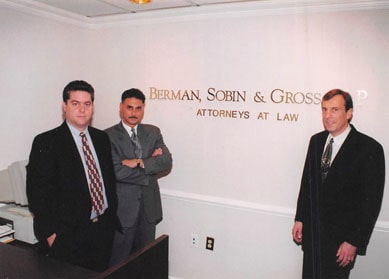
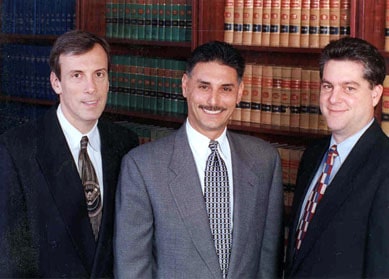
Manufacturing work in Pikesville and the surrounding Baltimore County corridor carries physical demands that most office workers never think about. Press operators, assembly line technicians, warehouse handlers, maintenance crews, and machine operators face hazards every shift that can turn a routine workday into a life-altering event. When a serious injury happens on the factory floor, the workers’ compensation system in Maryland is supposed to be there. Getting it to actually deliver the benefits you are owed is a different matter. The attorneys at Berman | Sobin | Gross LLP have spent 35 years representing Maryland’s working people, and they understand precisely where manufacturing claims run into trouble and how to move through those obstacles.
What Gets Manufacturing Workers Hurt in the Pikesville Area
The industrial and light manufacturing operations around Pikesville sit within a dense employment corridor that stretches from the northwest Baltimore suburbs toward Owings Mills and Reisterstown. The types of injuries that generate workers’ compensation claims in these facilities tend to cluster in predictable categories, and knowing that pattern matters when building a claim.
Machinery contact injuries are among the most serious. A worker who gets a hand caught in an unguarded press or loses fingers to a conveyor mechanism faces months of surgery, rehabilitation, and lost income. These injuries often involve third-party liability against equipment manufacturers in addition to a standard workers’ comp claim, which changes the legal strategy considerably.
Repetitive strain injuries develop more slowly but disable just as completely. A worker who runs the same motion thousands of times per shift for years may develop carpal tunnel syndrome, rotator cuff tears, or lumbar disc damage. These claims are frequently contested because the employer’s insurer will argue the condition is not work-related or was caused by activities outside the workplace. That is exactly where having attorneys who know how to counter those arguments becomes critical.
Toxic exposure is a category that often goes unrecognized until serious health consequences appear. Workers who handle solvents, adhesives, metal dust, or industrial chemicals without adequate protective equipment can develop occupational lung disease, neurological damage, or other systemic conditions. By the time symptoms become impossible to ignore, the exposure has been ongoing for years. These claims require a different kind of documentation and medical evidence than a traumatic injury, and they are often the type of case other firms decline to take.
Falls from elevation, forklift accidents, and loading dock incidents round out the picture. Baltimore County industrial facilities have seen serious fatalities and catastrophic injuries from each of these scenarios. The workers’ compensation system does not automatically make these claims easy, regardless of how obvious the facts appear.
Where Manufacturing Claims Break Down and Benefits Get Denied
Maryland workers’ compensation is a no-fault system in theory. In practice, insurers and self-insured employers look for every available reason to minimize, delay, or outright deny claims. Understanding where claims typically run into trouble helps workers know what they are facing.
Late notice is one of the most commonly cited reasons for dispute. Maryland law requires that an injured worker notify the employer of a workplace injury within a specific timeframe. In the chaos immediately following a serious manufacturing accident, workers sometimes focus on getting medical care rather than documenting notification. If the employer later claims they were not properly notified, the claim becomes contested from the start.
Independent medical examinations, or IMEs, are another pressure point. The insurer has the right to send a worker to a physician of its choosing. These physicians are paid to evaluate workers, and their findings frequently favor the employer. When an IME report contradicts the treating physician’s conclusions about the nature or extent of an injury, the claim goes to a hearing before the Workers’ Compensation Commission. That hearing requires preparation, evidence, and someone who knows how to present a medical record against a contrary expert opinion.
Occupational disease claims, particularly the slow-developing exposure cases, face the highest denial rates. Establishing that a condition is causally connected to workplace exposure requires expert medical testimony, documented exposure history, and often a fight through multiple hearing levels. These are exactly the cases that Berman | Sobin | Gross LLP’s attorneys take on, including ones that have already been denied or that other firms have turned away.
What the Workers’ Compensation Process Actually Looks Like for Manufacturing Injuries
After a worker reports an injury and files a claim with the Maryland Workers’ Compensation Commission, the employer and its insurer have the ability to accept or contest that claim. For straightforward traumatic injuries with clear medical documentation, some claims proceed without major resistance. For the more serious manufacturing injuries, and especially for occupational disease claims, contested proceedings are common.
At a Commission hearing, both sides present evidence. Medical records, treating physician opinions, IME reports, witness statements, and documented work history all come into play. The Commissioner issues a decision that can be appealed to circuit court if either side disagrees with the outcome. Cases can also go before a jury in circuit court, which is a process that requires real trial experience, not just administrative hearing familiarity.
Berman | Sobin | Gross LLP has handled hundreds of workers’ compensation jury trials and has argued cases before both of Maryland’s highest courts. One of the firm’s founders literally wrote the definitive two-volume treatise on workers’ compensation law in Maryland, the resource other attorneys and judges rely on. That depth of knowledge shapes how the firm approaches every stage of a manufacturing worker’s claim, from the initial filing through any appeals that become necessary.
Workers hurt in manufacturing settings should also be aware that when third parties, such as equipment manufacturers or contractors on site, contributed to the conditions that caused an injury, there may be a personal injury claim that runs alongside the workers’ comp case. Coordinating these claims to maximize recovery without creating legal conflicts requires careful handling from the beginning.
Questions Manufacturing Workers Often Ask About Their Claims
Can I receive workers’ compensation benefits if the injury was partly my fault?
Maryland workers’ compensation is a no-fault system, which means your own role in the accident generally does not bar your claim. There are limited exceptions, such as injuries caused by intoxication, but ordinary workplace error does not disqualify a worker from receiving benefits.
My employer is disputing that my repetitive strain injury is work-related. What are my options?
Disputed causation is one of the most common issues in repetitive motion claims. The Commission will evaluate medical evidence from both sides. Securing a treating physician’s detailed opinion connecting your diagnosis to specific work activities is critical. An attorney can help you build that medical record and present it effectively at a hearing.
I was hurt by a piece of machinery at work. Can I sue the manufacturer in addition to filing a workers’ comp claim?
Potentially, yes. If defective equipment design or manufacture contributed to your injury, a products liability claim against the manufacturer may be available. This is a separate legal action from your workers’ compensation claim and can result in compensation for damages that workers’ comp does not cover, including pain and suffering.
The insurer sent me to their doctor, who said my injury is not that serious. What happens now?
The IME physician’s opinion will likely be presented at a Commission hearing. It is not automatically decisive. Your treating physician’s records and opinions carry weight, and the Commission evaluates conflicting medical evidence. Having legal representation helps ensure your treating physician’s findings are presented completely and effectively.
How long do I have to file a workers’ compensation claim in Maryland?
Maryland law generally requires a claim to be filed with the Workers’ Compensation Commission within two years of the date of injury or the date of disablement for occupational disease claims. However, the employer notification requirements are shorter and should be handled as quickly as possible after an injury occurs.
My claim was denied. Is it worth pursuing further?
Initial denials are not final decisions. Workers have the right to request a Commission hearing, and if that outcome is unfavorable, to appeal to circuit court. Berman | Sobin | Gross LLP specifically handles the challenging and previously denied claims that other firms have turned down. Whether further pursuit makes sense depends on the specific facts, but a denial alone does not close the door.
What benefits can a manufacturing worker receive through workers’ compensation?
Maryland workers’ compensation covers medical treatment related to the work injury, temporary total disability payments while the worker is unable to work, temporary partial disability if the worker can return at reduced capacity, and permanent disability awards based on the nature and extent of lasting impairment. In fatal cases, death benefits are available to surviving dependents.
Injured Manufacturing Workers in the Pikesville Area Deserve Serious Representation
A manufacturing injury changes everything fast. Lost wages, mounting medical bills, uncertainty about whether you can return to the same work, and an insurance process that was not designed to make things easy for you. Berman | Sobin | Gross LLP has offices in Lutherville, Baltimore, Gaithersburg, and Frederick, and the firm serves workers throughout Baltimore County and across Maryland. The attorneys here take on the difficult manufacturing injury claims, including occupational disease cases, denied claims, and cases that require going beyond the Commission into the courts. Workers in Pikesville dealing with a serious job injury deserve attorneys who will stay with them through every stage of the process. Contact Berman | Sobin | Gross LLP to have your claim evaluated by a Pikesville manufacturing worker injury attorney who knows this area of law and is prepared to see your case through.