
Pikesville Firefighters, Paramedics & EMTs Injury Attorney
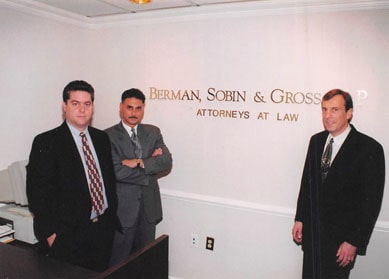
Firefighters, paramedics, and EMTs in Pikesville run toward emergencies the rest of us flee. The physical demands of that work accumulate quietly at first, then often all at once. When an injury or occupational illness forces a first responder out of service, the workers’ compensation system that should be there for them can feel like another obstacle. Pikesville firefighters, paramedics, and EMTs injury attorneys at Berman | Sobin | Gross LLP have spent 35 years representing exactly these workers, and the laws that apply to public safety employees are different enough from standard workers’ comp that who handles the claim genuinely matters.
What Sets First Responder Claims Apart from Standard Workers’ Comp in Maryland
Maryland has built specific legal protections into its workers’ compensation framework for public safety employees, including firefighters, paramedics, and EMTs. Among the most significant is a statutory presumption that certain conditions, including heart disease, lung disease, and hypertension, are presumed to be job-related when a first responder develops them. This shifts the burden to the employer or its insurer to prove the condition was not caused by the job, rather than requiring the worker to prove it was.
That presumption sounds straightforward, but employers and their insurers routinely fight it. They retain medical experts to challenge the scientific basis of the presumption, contest whether it applies in a particular situation, or argue about the timing of the diagnosis. Berman | Sobin | Gross LLP won the case of City of Frederick v. Shankle, which established that employer medical experts who try to testify that the presumption for public safety occupational diseases is scientifically unsound cannot be permitted to do so. That ruling did not happen by accident. It reflects what happens when a firm with deep roots in public safety workers’ compensation takes the hard cases all the way through.
The firm also won Downer v. Baltimore County, which established that EMTs qualify as public safety employees and are entitled to the same enhanced compensation benefits as other public safety workers. Before that ruling, EMTs in Maryland were being treated as general employees for compensation purposes. That distinction matters significantly when calculating benefits.
Injuries That End Careers and Occupational Diseases That Build Over Time
Pikesville-area first responders face two broad categories of work-related harm. Traumatic injuries happen fast: a fall while descending from an apparatus, a back injury during a patient transfer, a shoulder torn while forcing entry, a concussion sustained at a motor vehicle collision scene. These injuries generate immediate medical bills and lost wages, and the claims process begins with filing at the Maryland Workers’ Compensation Commission.
Occupational diseases are slower and often more legally complex. Firefighters face elevated risks of certain cancers, cardiac conditions, and respiratory disease from years of smoke and chemical exposure. Paramedics and EMTs face physical strain injuries that worsen gradually across thousands of patient lifts, as well as exposure to infectious disease. The challenge with occupational disease claims is establishing the connection between the condition and the job when symptoms develop over years rather than in a single incident.
Maryland’s presumption laws exist precisely because that connection is often difficult to prove through traditional evidence. But the presumption only protects a worker if the claim is filed correctly and defended aggressively when challenged. A first responder who tries to navigate an occupational disease claim without counsel who genuinely understands this area of law is at a real disadvantage.
One issue that comes up repeatedly in first responder cases is what happens when an injured worker is placed on light duty. Montgomery County v. Deibler, a case Berman | Sobin | Gross LLP won, established that public safety workers receiving full salary on light duty can still receive compensation for lost wage-earning capacity tied to overtime they were earning before the injury. That matters considerably for Pikesville firefighters whose total compensation includes substantial overtime income.
What Happens After You File and Why the Process Gets Complicated
Filing a workers’ compensation claim is not the end of the fight; for many first responders, it is the beginning of one. Employers and their insurers have significant resources, and they use them. Medical examinations are arranged by the employer, and the doctors conducting them are paid by the party trying to minimize your claim. Treatment may be approved, delayed, or denied. Permanent impairment ratings become contested. The question of whether you can return to your prior job or any job enters the picture.
When a case involves disputed medical evidence or significant benefit amounts, it typically moves toward a hearing before the Workers’ Compensation Commission. Attorneys at Berman | Sobin | Gross LLP have represented clients in tens of thousands of hearings and handled hundreds of workers’ compensation jury trials. The firm does not treat the Commission hearing as a final stop. When outcomes need to be challenged further, the firm takes cases into the circuit courts and has argued before both of Maryland’s highest courts.
For Pikesville first responders, this matters because Baltimore County encompasses Pikesville, and the government employer relationships, union benefit structures, and local administrative processes that apply here have their own contours. Having attorneys who are familiar with how cases actually move through this system, rather than attorneys learning as they go, affects real outcomes.
Questions First Responders in Pikesville Ask About Their Injury Claims
Does the workers’ compensation presumption apply to me if I retired before my condition was diagnosed?
The ruling in Montgomery County v. Pirrone, which Berman | Sobin | Gross LLP won, established that the presumption for heart disease, lung disease, and hypertension applies to public safety workers even after retirement or while off duty. Retirement does not extinguish the presumption if the condition has its roots in your service.
I am an EMT, not a firefighter. Do I have the same legal protections?
Yes. The Downer v. Baltimore County decision established that EMTs are public safety employees under Maryland law and are entitled to the same enhanced compensation benefits that apply to firefighters and other public safety workers. The classification matters significantly for how benefits are calculated and what presumptions apply.
My employer is offering a settlement. How do I know if it is fair?
Settlement values in workers’ compensation cases depend on the nature and extent of your injury or disease, your age, your wage history including overtime, your ability to return to work, and projected future medical needs. Without understanding how these factors are typically evaluated, it is nearly impossible to assess whether a settlement offer reflects what you are actually owed. The attorneys at Berman | Sobin | Gross LLP can review a proposed settlement and give you an honest assessment.
My claim was denied. Is that the end?
A denial from the Commission or an adverse ruling at a hearing is not necessarily the end. Workers’ compensation decisions can be appealed, first within the Commission process and then into the circuit courts. Berman | Sobin | Gross LLP specifically handles cases that have been denied or where other attorneys have declined to pursue further, including cases that go to jury trial or appellate review.
What if my injury keeps me from doing my job but I can still work in some capacity?
Partial disability benefits exist precisely for this situation. Maryland workers’ compensation law provides for temporary partial disability and permanent partial disability, recognizing that an injury can reduce earning capacity without eliminating it entirely. The calculation involves comparing pre-injury and post-injury wage capacity, and for first responders with overtime and specialty pay, getting that calculation right matters.
I was injured responding to a call in another county. Does that change where I file?
The relevant jurisdiction is typically where you are employed, not where the injury occurred. If you work for a Pikesville-area fire department or EMS service, your claim would ordinarily be filed in Maryland regardless of where the incident happened. There are limited exceptions involving out-of-state incidents, but most Maryland-based first responders file in Maryland.
Can I also pursue a personal injury claim if a third party caused my injury?
Maryland allows workers to pursue a third-party personal injury claim alongside a workers’ compensation claim when someone other than the employer or a coworker caused the injury. This comes up in first responder cases involving vehicle collisions, defective equipment, or injuries caused by a private party at a scene. These claims are handled separately and the compensation structures are different.
Pikesville First Responders Deserve Counsel Who Has Handled These Cases Before
Berman | Sobin | Gross LLP is the largest workers’ compensation law firm in Maryland representing injured workers. The firm serves clients throughout the Baltimore area and across the state, and its attorneys have handled cases specific to the public safety sector at every level of the Maryland court system. One of the firm’s founders wrote the definitive two-volume treatise on workers’ compensation in Maryland, the reference other attorneys and courts consult. The firm employs attorneys and staff fluent in Spanish and is equipped to work with clients across language backgrounds. When you work with one of the firm’s attorneys, that attorney stays with your case from start to finish rather than passing you through a rotating roster of contacts. For a Pikesville firefighter, paramedic, or EMT who has been injured and needs someone to actually understand what that claim involves, Berman | Sobin | Gross LLP is prepared to evaluate the situation and handle what comes next. Contact the firm to discuss your claim with a Pikesville first responder injury attorney.