

Pikesville Communication Workers Injury Attorney
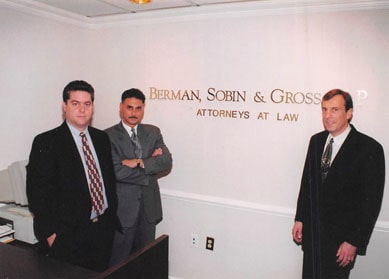
Communication workers in Pikesville and throughout the Baltimore County corridor take on physical risks that rarely make headlines: climbing utility poles in ice storms, pulling heavy cable through tight conduit, operating in traffic-adjacent worksites, and spending years in postures that quietly destroy joints and nerves. When those risks result in a disabling injury, the workers’ compensation system is supposed to step in. In practice, getting meaningful benefits often requires knowing exactly how that system works and where employers and their insurers are most likely to push back. Pikesville communication workers injury attorneys at Berman | Sobin | Gross LLP have spent 35 years representing the full range of workers who keep Maryland’s infrastructure running, and they understand the specific pressures telecommunications and cable workers face when they try to bring a claim.
The Injuries That Define This Work, and Why They Complicate Claims
Cable, telephone, and telecommunications work produces two categories of injury that show up repeatedly in workers’ compensation claims: traumatic accidents and cumulative injuries that build over years of repetitive motion and awkward positioning.
Traumatic accidents tend to involve falls from heights, vehicle incidents, or electrocution. A technician working off a bucket truck in Pikesville’s older residential neighborhoods, where utility infrastructure is dense and access is tight, faces fall risks that most office workers never encounter. When those falls happen, the injuries are often serious: spinal fractures, traumatic brain injuries, torn ligaments in the knee or shoulder. These cases can generate disputes over whether the accident was caused by a defective piece of equipment, a failure to provide proper safety gear, or a hazard the employer was aware of and failed to address.
Cumulative injuries are a different category of problem entirely. Carpal tunnel syndrome, thoracic outlet syndrome, rotator cuff degeneration, and cervical disc damage can all result from the sustained physical demands of communications work. Insurers frequently contest these claims on the grounds that the condition is degenerative, pre-existing, or unrelated to work activity. The documentation burden is heavier, and the medical arguments are more technical. Attorneys who handle these cases regularly know how to build the evidentiary foundation that supports a claim through years of repetitive trauma rather than a single dated incident.
What Communication Workers in Baltimore County Actually Encounter When They File
Baltimore County’s workers’ compensation claims are processed through the Maryland Workers’ Compensation Commission, and the administrative process has specific procedural requirements that can affect a claim’s outcome before the first hearing is ever scheduled. Workers who miss the notice deadline, who receive medical treatment from an unauthorized provider before establishing the claim, or who return to work under modified duty without understanding how that affects their wage benefit calculation can find themselves in a materially worse position than if they had gotten guidance early.
Communication workers in Pikesville are often employed by large national carriers or subcontractors who have dedicated claims management operations. Those operations are designed to control costs, which frequently means disputing whether an injury is work-related, whether the medical treatment proposed is necessary, and whether the degree of disability being claimed is accurate. A worker going through this process without representation is being asked to argue technical legal and medical questions against professionals whose full-time job is resolving those questions in the employer’s favor.
The geography of the work matters here too. Communications workers who cover service territories across Baltimore County, into Owings Mills, Pikesville proper, and into the western suburbs may have incidents across multiple worksites over time. When a cumulative injury claim is filed, the question of which employer and which policy period bears responsibility can become contested. Maryland workers’ compensation law has specific rules for how these cases are allocated, and understanding those rules matters for making sure the right parties are brought into the claim.
Benefits That Apply, and How They Can Be Cut Short
Maryland’s workers’ compensation system provides several categories of benefits for injured communication workers: payment for medical treatment, temporary total disability when a worker cannot work at all, temporary partial disability when a worker is earning less due to physical restrictions, and permanent partial disability when a condition leaves lasting functional impairment. In cases involving the most serious injuries, permanent total disability benefits may apply.
Each of these benefit categories has its own rules, and each is subject to dispute by the employer’s insurer. Medical benefits are often contested through the insurer’s choice of authorized treating physician, which can result in medical opinions that systematically understate the severity of a condition. Temporary disability benefits can be terminated prematurely if an employer claims a worker is capable of performing modified duty that the worker reasonably cannot perform. Permanent partial disability awards depend heavily on how impairment is rated and which body part or system is at issue, and ratings performed by employer-retained physicians frequently come in lower than those provided by a worker’s own treating doctors.
For communications workers whose injuries involve hearing loss, a category that affects those who work near heavy equipment, generators, and industrial environments, Maryland has a specific occupational deafness statute with its own calculation rules. The firm’s attorneys have litigated these issues at the appellate level, including the case of Montgomery County v. Cochran and Bowen, which clarified how the age deduction in the occupational deafness statute is calculated for injured workers. That kind of precedent-level experience shapes how the attorneys at Berman | Sobin | Gross LLP evaluate and build these specific claims.
Questions Communication Workers Ask About Their Claims
Can I choose my own doctor after a work injury in Maryland?
Maryland workers’ compensation law gives the employer and insurer some control over the selection of authorized treating physicians, but workers have rights within that framework. You can request a change of physician, seek a second opinion in certain circumstances, and consult your own providers for an independent assessment of your condition. An attorney can advise you on how to pursue the medical treatment you actually need without jeopardizing your claim.
What if my employer says my injury is pre-existing and not covered?
Maryland law does not require that a work injury be the sole cause of a condition. If work activity aggravated, accelerated, or combined with a pre-existing condition to produce the current disability, the claim may still be compensable. These arguments require careful medical evidence, and they are exactly the kind of contested issue that benefits from legal representation.
I was hurt as a subcontractor. Do I have a workers’ compensation claim?
Worker classification disputes are common in the telecommunications industry. Whether someone classified as an independent contractor is actually entitled to workers’ compensation coverage depends on a factual and legal analysis of the working relationship. In many cases, workers who were told they were contractors have valid claims against either the direct employer or a statutory employer up the contracting chain.
My modified duty assignment requires work I physically cannot do. What are my options?
A return-to-work offer that exceeds your medically documented restrictions does not automatically end your wage benefits. This is a factual dispute that can be litigated before the Commission. Documentation from your treating physician about what you can and cannot do physically is critical, and the timing of how you respond to a modified duty offer has procedural implications that an attorney can help you navigate.
How long does a workers’ compensation claim typically take to resolve in Maryland?
There is no single timeline. Claims with no disputes over causation or medical treatment can move relatively quickly. Claims that are contested, that involve disputed medical evidence, or that go beyond the Commission to circuit court can span years. The nature of your specific injury, the employer’s litigation posture, and how long your medical condition takes to stabilize all affect the duration.
What happens if my injury prevents me from doing communications work but I can do some other type of work?
Maryland’s workers’ compensation system includes vocational rehabilitation services for workers who cannot return to their prior occupation. The structure of these benefits, and how they interact with disability payments, is a legal question that depends on the specifics of your claim. The firm’s attorneys have litigated the scope of vocational rehabilitation rights in appeals that shaped the law on this issue.
If a third party’s negligence caused my injury, do I have options beyond workers’ compensation?
Yes. If a contractor, equipment manufacturer, property owner, or other third party caused or contributed to your injury, you may have a separate civil claim in addition to your workers’ compensation case. These two tracks can proceed simultaneously, and coordinating them properly is important for maximizing the recovery available to you.
Representing Pikesville’s Communications Workers Through Every Stage of a Claim
Berman | Sobin | Gross LLP is the largest workers’ compensation law firm in Maryland representing injured workers. For 35 years, the firm’s attorneys have handled cases ranging from straightforward medical benefit disputes to contested jury trials and appellate arguments before Maryland’s highest courts. The firm takes on the claims other attorneys pass over, including those that require sustained investment of time and resources to pursue past the administrative level. Communications workers in Pikesville and throughout Baltimore County who have suffered occupational injuries deserve representation that matches the seriousness of what they are facing. To speak with a Pikesville communication workers injury attorney at Berman | Sobin | Gross LLP, contact the firm’s Lutherville or Baltimore offices for a confidential case analysis.