

Parkville Warehouse Worker Injury Attorney
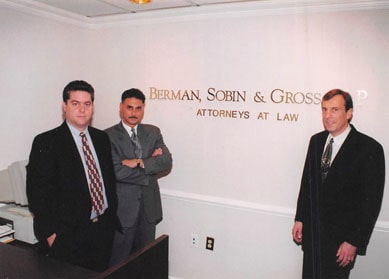
Warehouse work in and around Parkville runs on tight schedules, heavy loads, and equipment that moves fast. When something goes wrong, the injuries are rarely minor. Forklift collisions, falls from loading docks, crush injuries from racking systems, repetitive strain from years of manual handling, these are the kinds of events that pull workers out of their jobs for weeks or months, sometimes permanently. If you were hurt while working in a Parkville warehouse, understanding your rights under Maryland’s workers’ compensation system is the first thing that needs to happen, and it matters more than most injured workers realize. The attorneys at Berman | Sobin | Gross LLP, Maryland’s largest workers’ compensation firm representing injured workers, have spent 35 years helping people like you recover the full benefits they are owed after a work injury.
Why Warehouse Injuries in Parkville Create Complicated Claims
Parkville sits in Baltimore County, and its commercial corridors along Harford Road and the surrounding industrial zones host a significant concentration of distribution centers, freight operations, and warehouse facilities. Workers in these environments deal with risks that are present every single day, not just in rare accidents. That regularity can actually work against injured workers when it comes time to file a claim.
Employers and their insurers sometimes argue that a repetitive strain injury developed outside of work, or that a worker’s prior condition, not the job itself, caused the current disability. These arguments come up constantly in warehouse injury cases, and they are designed to reduce or eliminate the benefits owed. A forklift operator who develops a serious lumbar condition after years of vibration exposure may find the insurer attributing everything to age or a pre-existing issue. A dock worker whose shoulder finally gives out after a heavy lift may hear that the injury was gradual and therefore not compensable.
Maryland law does cover both sudden traumatic injuries and conditions that develop over time from occupational exposure, but these cases require careful documentation and, often, credible medical evidence presented the right way. That is not the kind of claim that resolves easily on its own.
What Warehouse Workers Are Actually Entitled to After a Job Injury
Maryland workers’ compensation provides several categories of benefits, and which ones apply depends entirely on the nature and severity of your injury. This is worth knowing before you accept anything from an insurer.
Temporary total disability benefits replace a portion of lost wages while you are completely unable to work due to the injury. Temporary partial disability covers the gap if you can return in a limited capacity but are earning less. If your injury results in a permanent condition, you may be entitled to permanent partial disability or, in the most serious cases, permanent total disability benefits. Medical treatment that is causally connected to the work injury is also covered, including surgery, physical therapy, and ongoing care.
For warehouse workers, the permanent disability question is particularly significant. Repetitive motion injuries to the back, shoulder, and knee can leave workers with lasting functional limitations. A warehouse worker who can no longer lift more than twenty pounds has a very different employment future than before the injury, and benefits calculations should reflect that reality. Vocational rehabilitation is another avenue Maryland law provides, allowing workers to receive assistance transitioning to work they can actually perform given their restrictions.
Employers and insurers do not volunteer maximum benefits. They calculate what they believe they can offer, and they count on claimants not knowing the difference. The difference can be substantial.
When the Injury Involves Equipment, a Third Party, or Unsafe Conditions
Warehouse environments often involve equipment from external vendors, temporary staffing agencies supplying workers to the facility, or property owned by someone other than the direct employer. These situations can open the door to claims beyond the workers’ compensation system, specifically personal injury claims against a third party whose negligence contributed to the injury.
A defective pallet jack manufactured negligently, a contractor who left a spill unmarked on a warehouse floor, a property owner who failed to maintain adequate lighting in a loading area, these scenarios can create liability outside of the workers’ comp framework entirely. Workers’ compensation in Maryland is generally an exclusive remedy against the direct employer, meaning you cannot sue your employer in civil court for a workplace injury. But that exclusivity does not protect third parties who share responsibility for what happened.
Identifying whether a third-party claim exists requires a careful look at the facts, the contracts between parties on site, and the specific nature of how the injury occurred. Berman | Sobin | Gross LLP handles both workers’ compensation and personal injury matters, which means clients whose cases touch both areas are not forced to work with separate firms who may not communicate well with each other.
Questions Parkville Warehouse Workers Ask After Getting Hurt on the Job
Do I have to prove my employer was negligent to receive workers’ compensation benefits?
No. Maryland’s workers’ compensation system is a no-fault system. You do not need to show that your employer did anything wrong. You need to show that your injury arose out of and in the course of your employment. The trade-off is that workers’ comp limits what you can recover from your employer directly, though it does not limit claims against third parties.
My employer is pressuring me to return to work before my doctor says I’m ready. What should I do?
Return-to-work decisions in a workers’ compensation case should be driven by medical clearance, not employer pressure. If your treating physician has not released you for full duty, you have the right to continue receiving temporary disability benefits while you recover. An attorney can help you document the situation and push back if your employer is attempting to manipulate the process.
The insurer sent me to an independent medical examination. Should I be concerned?
Yes, in the sense that you should take it seriously and be prepared. An IME conducted at the insurer’s request is rarely neutral. The doctor performing it is paid by the insurer and frequently issues opinions that minimize injury severity or dispute the connection to your job. Having an attorney who understands how these examinations are used and how to challenge their conclusions through Maryland Workers’ Compensation Commission proceedings makes a real difference.
I was a temporary worker placed by a staffing agency. Can I still file a workers’ compensation claim?
Generally yes. Temporary workers placed by staffing agencies are typically covered under the staffing agency’s workers’ compensation insurance, and in some cases the host employer’s policy may also be implicated. The employment relationship in these situations is often disputed, which is exactly the kind of complicated factual and legal question that benefits from experienced legal guidance.
My injury happened gradually over time, not in one single accident. Does that affect my claim?
It can complicate the claim, but it does not disqualify you. Maryland law recognizes occupational diseases and cumulative trauma injuries. The key is establishing the connection between your job duties and the condition you developed. Medical records, job descriptions, and expert testimony all play a role in building that connection for the Commission.
How long do I have to file a workers’ compensation claim in Maryland?
For most traumatic injuries, you have 60 days to provide notice of the injury to your employer and two years from the date of the accident to file your claim. For occupational diseases, the timeframe is calculated differently. Missing these deadlines can seriously affect your ability to recover benefits, so acting promptly after an injury matters.
What happens if my workers’ compensation claim is denied?
A denial is not the end of the process. Claims denied by an insurer can be contested before the Maryland Workers’ Compensation Commission, and decisions of the Commission can be appealed further, including into the circuit courts. Berman | Sobin | Gross LLP has handled hundreds of workers’ compensation jury trials and appeals before Maryland’s highest courts, and the firm does not decline to pursue cases simply because they require going beyond an initial hearing.
Berman | Sobin | Gross LLP Handles the Cases Others Turn Away
One of the firm’s founders literally wrote a two-volume treatise on Maryland workers’ compensation that continues to serve as the leading reference on the subject in this state. That is not a marketing line. It reflects the depth of engagement this firm has with every corner of Maryland workers’ comp law, including the disputed claims, the complex permanent disability questions, and the contested medical evidence that other firms prefer to avoid.
Berman | Sobin | Gross LLP grew from three attorneys in a single office to a firm with more than 20 attorneys and offices throughout Maryland, including locations in Baltimore, Lutherville, Gaithersburg, and Frederick. Warehouse workers injured in Parkville and throughout Baltimore County have access to attorneys who know the Commission, know how insurers approach these cases, and have the resources to pursue a claim all the way through trial and appeal if that is what it takes.
The firm also has Spanish-speaking attorneys and staff, recognizing that Maryland’s warehouse workforce is linguistically diverse and that language should never be a barrier to getting proper legal representation.
Talk to a Parkville Warehouse Injury Lawyer About Your Claim
Warehouse injuries rarely resolve cleanly on their own. The injuries are often serious, the medical questions are often contested, and the gap between what an insurer offers and what a worker is actually owed can be significant. If you were hurt while working in a Parkville warehouse, the attorneys at Berman | Sobin | Gross LLP are ready to evaluate your claim honestly and give you a clear picture of what you may be entitled to recover. Reach out to a Parkville warehouse worker injury attorney at Berman | Sobin | Gross LLP through any of the firm’s offices for a confidential case analysis at no cost to you.