

Parkville Manufacturing Worker Injury Attorney
Manufacturing work in Parkville and the surrounding Baltimore County corridor carries real physical risk every shift. Press operators, assembly line workers, forklift operators, maintenance crews, and warehouse personnel face hazards that office-based claims adjusters rarely understand in full. When an injury happens on a production floor, the decisions made in the first days and weeks shape what benefits a worker can actually recover. A Parkville manufacturing worker injury attorney who knows Maryland’s workers’ compensation system can be the difference between a claim that delivers full wage replacement and medical coverage and one that gets minimized or denied on a technicality.
What Makes Manufacturing Injuries Different from Other Workplace Claims
Manufacturing environments generate a specific category of injuries that workers’ compensation systems are designed to cover, but that employers and their insurers routinely contest. Crush injuries from presses and rollers, repetitive stress conditions like carpal tunnel syndrome from sustained assembly work, hearing loss from sustained industrial noise, chemical exposure from solvents and cleaning agents, and back injuries from material handling are all common in Parkville’s manufacturing sector. Each of these injury types presents its own evidentiary and medical challenges.
Repetitive use conditions are particularly contested. An insurer may argue that a worker’s carpal tunnel predated employment, or that the condition is not sufficiently tied to specific job duties. Occupational hearing loss claims often require audiological records stretching back years, and the method for calculating the compensation owed is governed by statute in ways that insurers frequently exploit when workers are unrepresented. Chemical exposure injuries can take months or years to manifest, which complicates establishing the connection to a specific workplace.
Acute traumatic injuries, a hand caught in machinery or a back fracture from a falling load, are easier to document but create different problems. The extent of permanent impairment, the adequacy of the medical panel assigned by the employer, and whether restrictions prevent a return to full-duty manufacturing work all become points of dispute that determine how much a worker ultimately recovers.
How the Maryland Workers’ Compensation Commission Handles Manufacturing Claims
All Maryland workers’ compensation claims move through the Workers’ Compensation Commission regardless of where the injury occurred. For Parkville workers, that typically means hearings in the Baltimore area. The Commission’s process is administrative rather than a traditional court proceeding, but it is adversarial, and employers and their insurers appear with experienced counsel prepared to challenge the nature, extent, and cause of the claimed injury.
Manufacturing employers in Maryland are required to carry workers’ compensation insurance, but that coverage is managed and defended by adjusters and attorneys whose interest runs in the opposite direction from the injured worker. Early recorded statements, requests to attend employer-selected medical examinations, and disputes over whether an injury arose out of and in the course of employment are standard tactics used to reduce or eliminate liability. Workers who navigate this process without representation frequently settle for less than their claims are worth, or lose benefits they were legally entitled to receive.
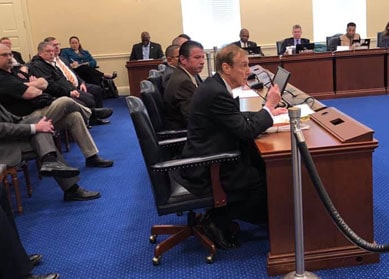
When a claim is denied or when an insurer disputes the extent of a worker’s permanent impairment, the matter proceeds to a hearing before a Commissioner. If the outcome there is unsatisfactory, appeals go to the Circuit Court and potentially to Maryland’s appellate courts. Berman Sobin Gross has handled hundreds of workers’ compensation jury trials and has argued appeals before both of Maryland’s highest courts, which matters when a manufacturing claim involves contested medical evidence or complex legal questions about how benefits are calculated.
Permanent Impairment, Lost Earning Capacity, and What Manufacturing Workers Often Miss
Maryland workers’ compensation provides several categories of benefits: medical treatment, temporary total or partial disability payments while a worker is unable to perform their job, and permanent partial or total disability payments once a worker has reached maximum medical improvement. For manufacturing workers, the permanent disability calculation is often where the most significant money is at stake, and it is also where claims most frequently go wrong without proper representation.
Permanent partial disability awards are based on a percentage of impairment to a specific body part or to “the body as a whole” for certain conditions. The rating an employer’s chosen physician assigns at the end of treatment often understates the actual functional loss a worker has experienced. Workers have the right to present their own medical evidence, and the difference between a 10 percent impairment rating and a 25 percent rating can represent tens of thousands of dollars in compensation over the life of a claim.
Workers who cannot return to manufacturing work because of physical restrictions face an additional question: whether their injury has reduced their earning capacity in the broader labor market. Maryland law provides a pathway to recover for that lost capacity, but it requires presenting vocational evidence and medical documentation in a format the Commission will accept. This is particularly significant for workers who have spent careers in physical manufacturing roles and face genuine difficulty transitioning to other work at comparable wages.
Questions Parkville Manufacturing Workers Ask About Injury Claims
My employer said the injury was my fault. Does that mean I cannot collect workers’ compensation?
Maryland’s workers’ compensation system is a no-fault system for most purposes. Contributory negligence on the part of the employee does not bar a claim, with narrow exceptions for intentional self-injury or intoxication that caused the accident. An employer’s characterization of how an accident happened is not determinative of whether a worker is entitled to benefits.
I have worked with repetitive vibration and noise for years. Can I file a claim for hearing loss or a cumulative injury without a single incident?
Yes. Maryland workers’ compensation covers occupational diseases and repetitive stress injuries, not only discrete traumatic accidents. The filing rules differ from traumatic injury claims, and there are specific provisions governing occupational hearing loss that include a formula for calculating the benefit owed. These claims require careful medical and employment documentation.
The employer’s insurance company sent me to a doctor. Do I have to accept that doctor’s findings?
Workers in Maryland are generally required to treat with employer-authorized medical providers during the initial period of a claim, but they retain the right to present independent medical evidence, including their own physician’s opinion on the nature and extent of the injury. When the employer’s physician’s findings conflict with a worker’s treating physician or with an independent evaluation, the Commission weighs the competing medical evidence. Having a physician whose opinion is well-documented and credible to the Commission is often decisive.
I was injured at a manufacturing facility but I work for a staffing agency, not the manufacturer directly. Who is responsible for my workers’ compensation?
Staffing arrangements and contractor relationships complicate coverage questions. In Maryland, the analysis of who qualifies as the employer for workers’ compensation purposes focuses on the actual employment relationship, including who controls the work, who pays wages, and who directs daily activities. In many staffing situations, the staffing agency carries the workers’ compensation obligation, but this is fact-specific and worth examining carefully.
What if my injury was partly caused by a defective piece of machinery made by a third party?
Workers’ compensation is typically the exclusive remedy against an employer, but it does not bar a separate civil lawsuit against a third party whose negligence or product defect contributed to the injury. A manufacturing worker injured by defective equipment may have both a workers’ compensation claim and a products liability or negligence claim against the equipment manufacturer or another party. These are distinct legal proceedings that can run concurrently, and recovery in one affects certain rights in the other.
How long do I have to file a workers’ compensation claim in Maryland?
For traumatic injuries, the statute of limitations is generally two years from the date of the accident or from the last payment of benefits, whichever is later. For occupational diseases, the period runs from when the worker knew or should have known that the disease is compensable and is related to employment. Missing the filing deadline can extinguish a claim entirely, which is one reason early attention to the paperwork and procedural requirements is important.
Will I lose my job if I file a workers’ compensation claim?
Maryland law prohibits employers from retaliating against workers for filing workers’ compensation claims. Termination, demotion, or other adverse employment actions taken because a worker asserted compensation rights are unlawful. If a worker experiences retaliation, that creates a separate legal claim independent of the workers’ compensation proceedings.
What Berman Sobin Gross Brings to Manufacturing Injury Cases in Baltimore County
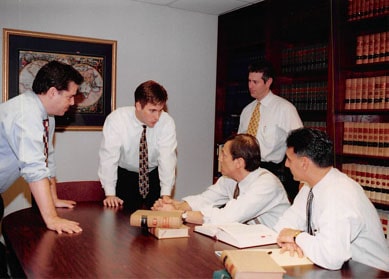
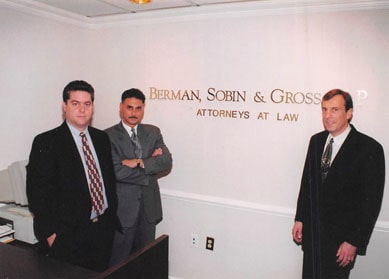
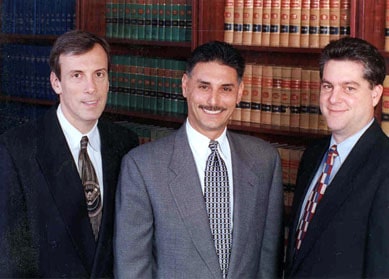
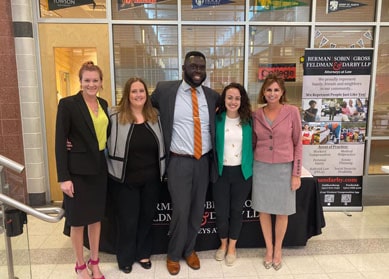
Berman Sobin Gross has spent 35 years representing injured workers across Maryland, growing to more than 20 attorneys with offices in Lutherville, Baltimore, Gaithersburg, and Frederick. The firm represents workers in the full range of industries that generate serious workers’ compensation claims, including manufacturing, and takes on the contested, complex cases that require more than a straightforward administrative proceeding. One of the firm’s founders authored the definitive two-volume treatise on Maryland workers’ compensation law, a resource used by attorneys and practitioners throughout the state. That depth of knowledge translates directly into how manufacturing claims are built and argued, from the initial filing through potential jury trial and appellate review.
For Spanish-speaking workers in the Parkville and Baltimore County manufacturing sector, the firm has attorneys and staff fluent in Spanish, which matters when communicating about medical conditions, employment history, and legal rights without the distortion that language barriers create at critical moments in a claim.
Speak with an Attorney About Your Baltimore County Manufacturing Injury
If you suffered a serious injury at a Parkville area manufacturing facility, the choices you make now about medical evidence, employer communications, and claim filings will shape what you can recover. Berman Sobin Gross represents injured manufacturing workers throughout Baltimore County and across Maryland, from initial Commission filings through appeals, and takes on cases that other firms have declined. Contact the firm to discuss your claim with a Baltimore County manufacturing injury attorney who will remain your point of contact throughout the process.