
Parkville Factory Worker Injury Attorney
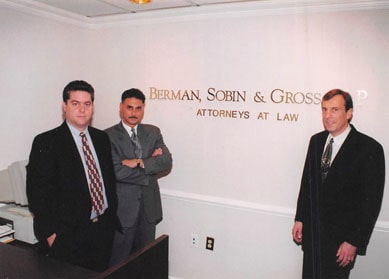
Factory and manufacturing work in Parkville and the broader Baltimore County corridor puts workers in environments that most people never see up close. Assembly lines, industrial presses, forklifts, chemical exposure, heavy machinery with moving parts that do not forgive mistakes. The injuries that come out of these facilities are often serious, often permanent, and almost always contested by employers or their insurers who have every incentive to minimize what they pay. Berman | Sobin | Gross LLP has spent 35 years representing the workers Maryland depends on, including the men and women who keep its factories and industrial operations running. If you have been hurt on the floor of a Parkville manufacturing facility, you need someone who has handled cases like yours at every level, from commission hearings to jury trials to the state’s highest courts.
What Factory Injuries in Parkville Actually Look Like
The manufacturing and industrial sector running through Baltimore County and into Parkville produces a distinct pattern of worker injuries. Understanding that pattern matters, because the nature of the injury shapes the entire claim.
Crush injuries from presses and rollers are among the most severe. A moment of inattention, a mechanical failure, or inadequate machine guarding can result in the loss of fingers, hands, or more significant limb damage. These injuries frequently involve multiple surgeries, extended rehabilitation, and permanent functional loss that prevents a return to the same type of work.
Repetitive motion injuries are less dramatic but equally disabling. Years of the same motion, day after shift after year, can destroy tendons, joints, and nerve function. These claims draw more resistance from employers because there is no single moment of injury to point to, no one day when everything changed. Building these cases requires medical documentation, employment records, and sometimes expert testimony about ergonomic conditions at specific workstations.
Chemical and toxic exposure is a serious concern in facilities that use solvents, adhesives, lubricants, or industrial cleaning agents. Respiratory disease, skin conditions, and neurological effects from long-term exposure can be just as devastating as an acute injury, and these claims are among the most aggressively disputed in Maryland workers’ compensation proceedings.
Falls from elevated surfaces, equipment rollovers, being struck by falling materials, and electrical incidents round out the landscape. The bottom line is that factory floors are high-consequence environments, and when something goes wrong, workers often pay a significant physical price.
Why Factory Injury Claims Face Harder Resistance Than Most
Workers’ compensation claims are not automatically paid. Employers and their insurance carriers investigate every claim, looking for reasons to deny, delay, or reduce what they owe. In industrial and manufacturing contexts, several patterns come up repeatedly.
Causation disputes are common. The employer may argue that a repetitive stress injury pre-dated your employment, or that a back injury is degenerative rather than work-related. Insurers often schedule injured workers with their own medical examiners, whose opinions tend to align with the insurer’s financial interests rather than the reality of the worker’s condition. Knowing how to challenge those opinions, through cross-examination, through independent medical evidence, through expert witnesses, is where legal representation makes a concrete difference.
Average weekly wage calculations matter enormously in factory settings where workers often have overtime, shift differentials, or multiple pay rates. An incorrect wage calculation compounds over the entire period of disability and can cost an injured worker thousands of dollars. These numbers deserve scrutiny.
Permanent disability ratings are another flashpoint. Maryland workers’ compensation law provides benefits for permanent partial disability based on how much function a worker has lost. The difference between a rating that accurately reflects your limitations and one that undervalues them can be substantial. Employers and insurers know this, which is why they invest in their own evaluations.
Berman | Sobin | Gross LLP takes the challenging claims, not just the straightforward ones. One of the firm’s founders literally wrote the treatise that Maryland practitioners use as the definitive reference on workers’ compensation law in this state. When a case requires going past the Workers’ Compensation Commission and into circuit court, or further on appeal, the firm has done it, hundreds of times.
Third-Party Claims When Employer Coverage Is Not the Full Picture
Workers’ compensation exists as a no-fault system, which means an injured worker generally cannot sue their employer in civil court. But the factory floor often involves parties other than the direct employer. Equipment manufacturers, contractors, maintenance companies, property owners, and product suppliers may bear legal responsibility for an injury that goes well beyond what workers’ comp provides.
A machine that lacked proper guarding, a piece of equipment with a design defect, a contractor who created an unsafe condition on the floor, a product that failed to carry adequate warnings about chemical hazards. Each of these may give rise to a separate civil claim where damages are not capped the way workers’ compensation benefits are. Lost wages beyond what comp covers, full pain and suffering, future medical costs, loss of earning capacity across an entire career, these are available in a third-party negligence claim in ways that the workers’ comp system simply does not provide.
Identifying whether a third-party claim exists requires a thorough review of how the injury happened, who manufactured the equipment involved, and who was responsible for maintaining safe conditions. Not every injury generates one. But in factory settings, where complex machinery and multiple contractors are the norm, third-party liability comes up with real frequency.
Questions Parkville Factory Workers Ask About Their Injury Claims
Do I have to report my injury immediately to have a valid claim?
Maryland law requires injured workers to notify their employer within 10 days of a workplace injury. Missing that window can create problems, though there are exceptions for occupational diseases and latent injuries that are not immediately apparent. The sooner you report, the stronger your claim. Do not let concerns about how your employer will react keep you from reporting a legitimate injury.
My employer says I can come back on light duty, but the work they are offering is not something I can physically do. What happens?
Returning to modified duty is an area where disputes arise constantly. An employer cannot simply invent a light duty assignment that exceeds your documented restrictions and use it to cut off your benefits. Whether the offered position is genuinely within your medical limitations is a factual question, and one that attorneys in this area handle regularly at the Commission.
I have been told my injury is pre-existing and not covered. Is that the end of my claim?
Not necessarily. Maryland workers’ compensation covers injuries that are aggravated, accelerated, or worsened by work, even when there was an underlying condition beforehand. The legal standard does not require that you were in perfect health before the injury. A pre-existing condition argument is a standard tactic by insurers, not an automatic bar to recovery.
How long do benefits continue after a factory injury?
It depends on the nature and extent of the disability. Temporary total disability benefits run while a worker cannot return to any employment and is expected to recover. When maximum medical improvement is reached, the focus shifts to whether there is a permanent partial or total disability. The structure and duration of benefits varies significantly based on the injury and the specific body part affected.
Can my employer fire me for filing a workers’ compensation claim?
Maryland law prohibits retaliation against an employee for filing a workers’ compensation claim. If you believe you were terminated or otherwise penalized because you pursued a claim, that is a separate legal issue worth discussing with an attorney.
What if my factory injury involves exposure to chemicals over many years rather than a single incident?
Occupational disease claims follow different rules than traumatic injury claims, including different filing deadlines that run from when you knew or reasonably should have known the condition was work-related. These cases require specific medical evidence linking your diagnosis to your workplace exposure. They are harder to build but far from impossible when the exposure history is well documented.
Does it matter that my factory is in Parkville specifically, or does location not affect my claim?
Maryland’s workers’ compensation system is administered at the state level, but where you work and which county circuit court has jurisdiction can matter if a claim moves into litigation. Baltimore County courts handle appeals from Commission decisions involving employers in Parkville. Familiarity with those courts and how they handle industrial injury cases is genuinely useful, not a marketing point.
Talking to a Baltimore County Industrial Injury Lawyer
Berman | Sobin | Gross LLP has offices in Lutherville, Baltimore, Gaithersburg, and Frederick, with attorneys who handle claims throughout Maryland including Baltimore County. The firm represents workers across many industries, including firefighters, law enforcement, teachers, truck drivers, and factory and manufacturing employees who form the backbone of the region’s working population. Cases are handled by attorneys who stay with their clients from beginning to end, not handed off between staff members as the claim progresses. For workers hurt in Parkville’s manufacturing and industrial facilities, that consistency matters when the case gets complicated, and in this practice area, the complicated cases are the ones that most need experienced hands.
A Parkville factory worker injury attorney at Berman | Sobin | Gross LLP can evaluate your claim, identify whether third-party liability applies, and help you understand the full scope of what you may be entitled to recover under Maryland law. Contact the firm to schedule a confidential case analysis.