

Oxon Hill Worker Injury Attorney
Work injuries in Oxon Hill come from real places: the warehouses and distribution centers near the Capital Beltway, the retail and food service corridors along Livingston Road, the construction sites spreading across southern Prince George’s County, and the county government and school support positions that keep the community running. When one of those injuries puts a worker out of commission, the workers’ compensation system is supposed to step in. The reality is that claims get denied, disputed, and underpaid far more often than most injured workers expect. An Oxon Hill worker injury attorney from Berman Sobin Gross LLP can help you understand exactly what you are entitled to and how to actually get it.
What Work Injuries in the Oxon Hill Area Actually Look Like
Southern Prince George’s County has a working population that spans a wide range of industries, and the injury patterns reflect that. Warehouse and logistics workers along the Beltway corridor deal with repetitive lifting injuries, forklift accidents, and falls from loading docks. Construction workers on residential and commercial builds across Oxon Hill and National Harbor face falls from elevation, equipment accidents, and electrical hazards. School employees and county workers deal with slip-and-fall injuries, overexertion from physical demands, and assaults that occur while on duty. Transportation workers, including those driving routes through Prince George’s County, are exposed to vehicle accident injuries, some of which are serious enough to end a career.
One factor that matters a great deal in Prince George’s County claims is whether the employer is a private company or a government entity. Public sector workers, including county employees, school support personnel, and anyone working for a state agency, have their claims handled through different administrative channels and may be subject to different benefit rules than private sector employees. Getting that distinction right from the beginning affects how a claim is filed, who it is filed against, and what benefits can be recovered. Missing those procedural requirements can compromise an otherwise valid claim before it gets off the ground.
Why Claims Get Denied and What That Actually Means for You
A denial letter from an insurance carrier is not the end of a workers’ compensation claim, though it is often treated that way. Maryland’s workers’ compensation system includes a full administrative process before the Workers’ Compensation Commission, and from there, appeals can proceed into the circuit courts and beyond. What a denial really means is that a dispute exists, and disputes are something the attorneys at Berman Sobin Gross LLP have been handling for over 35 years.
Claims in Maryland get disputed on several common grounds. Carriers frequently argue that an injury did not arise out of or in the course of employment, particularly when an accident happens during a commute, on a break, or while an employee was engaged in an activity the employer says falls outside job duties. Soft tissue injuries, particularly those involving the back, neck, or shoulder, are challenged aggressively because they rely heavily on subjective symptom reporting. Occupational diseases, including hearing loss from years of exposure to industrial noise, respiratory conditions from chemical exposure, and repetitive stress injuries that develop over time rather than from a single incident, face a high rate of initial denial because causation is harder to document.
Berman Sobin Gross LLP does not avoid the cases that require real litigation. The firm has handled hundreds of workers’ compensation jury trials and has argued appeals before both of Maryland’s highest courts. That depth of appellate and trial experience matters in disputed claims because the cases that go furthest are often the cases where the most is at stake. An attorney who is only comfortable at the administrative hearing level is not equipped to fight for the full value of a seriously contested claim.
Benefits That Maryland Workers Are Often Not Told About
Most injured workers know that workers’ compensation covers medical treatment and some portion of lost wages. Fewer understand the full scope of what Maryland law provides, and that gap works to the advantage of insurance carriers who are under no obligation to explain your options.
Temporary total disability covers lost wages while a worker is completely unable to work. Temporary partial disability applies when a worker returns on light duty at reduced earnings. Permanent partial disability, one of the most commonly litigated benefit categories, compensates workers for lasting physical impairment after maximum medical improvement is reached. The rating assigned to a permanent injury has a direct effect on the benefit amount, and the employer’s doctor and your own doctor will often reach very different ratings. Having legal representation for permanent disability evaluations is not a formality.
Vocational rehabilitation is another benefit that frequently goes unclaimed. Under Maryland law, a worker receiving service-connected disability retirement may also be entitled to vocational rehabilitation services, a result that came directly from appellate work done by this firm in Fikar v. Montgomery County. For workers who cannot return to their prior occupation, rehabilitation benefits can be the bridge to a different career and a stable income. The path to those benefits is not automatic, and a workers’ comp attorney familiar with Prince George’s County employers and the Commission’s handling of rehabilitation claims can make a meaningful difference in the outcome.
For public safety employees in the Oxon Hill area, including firefighters, EMTs, law enforcement officers, and corrections officers, additional benefit protections apply. Certain diseases, including heart disease, hypertension, and lung disease, carry a presumption of job-relatedness that shifts the burden of proof from the employee to the employer. The scope of those presumptions, including when they apply and how employers can try to rebut them, has been shaped in part by appellate victories this firm secured on behalf of public safety workers across Maryland.
Questions Injured Workers in Oxon Hill Ask Before Calling an Attorney
Does it matter which hospital or doctor I go to after a work injury?
Maryland workers’ compensation law gives employers and carriers some control over initial medical treatment, but workers also have rights in how care is managed over time. Going outside an authorized provider without proper process can create complications with reimbursement, but you also have avenues to challenge medical decisions you disagree with. Getting advice early helps you avoid missteps that affect both your health and your claim.
What if my injury developed over time and there was no single accident?
Occupational diseases and repetitive strain injuries are fully compensable under Maryland law. The filing and causation requirements are different from traumatic injury claims, and the timing of when the statute of limitations begins to run is calculated differently as well. These claims require more documentation, but they are far from unwinnable with the right representation.
My employer is saying I cannot file a claim because the injury was my fault. Is that correct?
Maryland workers’ compensation is a no-fault system. With narrow exceptions, the question of who caused the injury does not determine whether benefits are available. An employer disputing fault as a grounds for denial is either misinformed or attempting to discourage the claim.
Can I also sue a third party if someone other than my employer caused my injury?
Yes. When a third party, such as a contractor, equipment manufacturer, or driver of another vehicle, contributed to your injury, you may be able to pursue a separate civil claim in addition to your workers’ compensation benefits. These situations arise in construction accidents and transportation-related injuries fairly often in Prince George’s County. The two claims follow parallel tracks with different rules, and handling both properly matters for maximizing the total recovery.
Will I lose my job if I file a workers’ compensation claim?
Maryland law prohibits employers from retaliating against workers for filing a workers’ compensation claim. If termination, demotion, or adverse treatment follows the filing of a claim, that conduct may give rise to a separate legal claim. Concerns about job security should not stop a worker from pursuing benefits they are legally entitled to receive.
How long does a workers’ compensation case in Maryland typically take?
Straightforward claims with clear liability and a full recovery may resolve within months. Disputed claims involving permanent disability, vocational issues, or appeals can take considerably longer, sometimes years. The length of a case is not always within a claimant’s control, but having an attorney who is prepared to litigate every stage, rather than pressure you to settle quickly, tends to produce better outcomes over that timeline.
What does it cost to hire a workers’ compensation attorney?
Workers’ compensation attorneys in Maryland work on a contingency basis, meaning attorney fees are taken as a percentage of benefits awarded and are subject to approval by the Workers’ Compensation Commission. There is no upfront cost to hire a lawyer, and you do not owe fees unless benefits are recovered on your behalf.
Reaching Berman Sobin Gross LLP After a Work Injury in the Oxon Hill Area
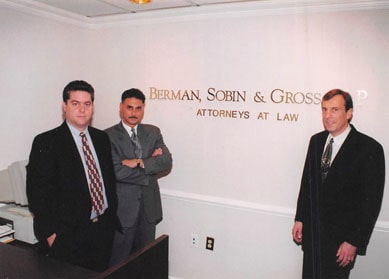
Berman Sobin Gross LLP has grown over 35 years into the largest workers’ compensation firm in Maryland representing injured workers, with offices and attorneys serving Prince George’s County and communities throughout the state. Clients who work with the firm are assigned an attorney who stays with them from the beginning to the resolution of the case. That continuity matters when a claim becomes complicated or contested, because the attorney handling your case will know its history, your medical record, and the specifics that make your situation different from anyone else’s. For an injured worker in Oxon Hill navigating Prince George’s County employers, insurance carriers, and the Maryland Workers’ Compensation Commission, that kind of consistent, knowledgeable representation can determine the outcome. Contact Berman Sobin Gross LLP to speak with a worker injury lawyer serving the Oxon Hill area about your claim.