

Oxon Hill Transit Worker Injury Attorney
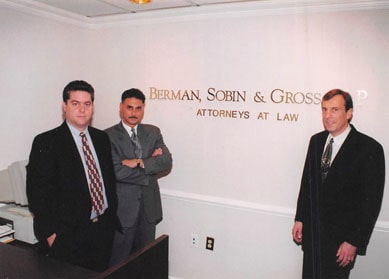
Transit work in Oxon Hill puts people in the path of real danger every single shift. Bus operators on routes running through the Oxon Hill corridor, Metro maintenance workers servicing the Green Line infrastructure, and contract shuttle drivers serving the National Harbor complex all face injury risks that most office workers never think about. When something goes wrong, a worker in that position needs to understand not just whether they have a claim, but what kind of claim, because the answer shapes everything that follows. Oxon Hill transit worker injury attorneys at Berman | Sobin | Gross LLP have spent 35 years helping Maryland’s working people sort through exactly that question.
Why the Employment Structure Behind a Transit Job Changes Everything
Before anything else can be determined, the question of who actually employs a transit worker has to be answered clearly. This matters more for transit workers than almost any other category of injured worker, because the answer determines which compensation system applies, what benefits are available, and sometimes whether federal law takes over from state law entirely.
A driver employed directly by Prince George’s County’s transit operations, for instance, would be a public employee covered by Maryland workers’ compensation rules, with certain additional protections that apply to public safety classifications depending on the nature of their duties. A driver working for a private shuttle company under contract to a developer in National Harbor is in a different legal position entirely. A Metro worker whose duties involve track maintenance or rail operations may be covered under the Federal Employers’ Liability Act rather than the Maryland workers’ compensation system, which changes the legal standards that govern their claim completely.
This is not a technicality to sort out later. Getting the employment classification right from the start determines which agency receives the claim, what deadlines apply, and what benefits can actually be recovered. Workers who file under the wrong framework can lose rights they did not know they had.
The Injuries That Transit Work in This Area Actually Produces
The Maryland 8 corridor, Indian Head Highway, and the surface streets feeding into the National Harbor complex see high volumes of commercial traffic. Bus operators working those routes face vehicle collision risks that are qualitatively different from passenger car accidents. A rear-end collision into a stopped bus transfers enormous force, and drivers who absorb that impact while secured in a seat designed for vehicle control rather than crash protection often sustain serious spinal injuries, traumatic brain injuries, and shoulder damage that requires surgical intervention.
Repetitive strain is the slower injury, and transit workers rarely see it coming. Years of gripping a steering wheel through road vibration, twisting to collect fares or interact with passengers, and operating vehicles with poor ergonomic design accumulates into degenerative joint conditions and nerve damage that eventually becomes disabling. These claims are harder to bring because employers and insurers often argue that the condition is not work-related, pointing to age or lifestyle as the real cause. Maryland workers’ compensation law does cover occupational disease and cumulative injury claims, but they require documentation and medical evidence that is built over time.
Maintenance and support workers face their own injury pattern entirely. Track workers, mechanics servicing fleet vehicles, and fueling station employees deal with exposure to diesel exhaust, chemical solvents, and repetitive heavy lifting. Some of the occupational disease claims arising from this kind of long-term chemical exposure in transit maintenance yards are among the most medically complex cases in workers’ compensation.
Public Employee Protections for Transit Workers in Prince George’s County
Maryland extends specific protections to public safety employees that go beyond standard workers’ compensation benefits, and whether a particular transit worker qualifies for those enhanced protections is not always obvious from the job title alone. The firm’s appellate victories have helped establish and clarify exactly who qualifies under this framework. The court’s ruling in Downer v. Baltimore County, which Berman | Sobin | Gross LLP litigated, confirmed that emergency medical technicians are public safety employees entitled to enhanced benefits, and the logic of that classification affects how other first-responder adjacent roles get analyzed.
For transit workers classified as public employees, certain occupational disease presumptions may apply, particularly for cardiovascular conditions. A bus operator who develops hypertension or suffers a cardiac event after years of the documented stressors associated with transit work in a dense urban corridor has a different legal position than a private sector worker with the same diagnosis. The presumption shifts the burden, meaning the employer must affirmatively prove the condition is not work-related rather than requiring the worker to prove that it is.
These presumptions have procedural requirements and deadlines attached to them. Missing them can eliminate a benefit that the law was designed to provide.
Answers to Questions Oxon Hill Transit Workers Are Actually Asking
What should I do immediately after getting hurt on the job as a transit worker?
Report the injury to your supervisor in writing as soon as you are physically able to do so, and get medical attention. Maryland workers’ compensation has strict reporting deadlines, and delays in reporting are one of the most common reasons claims get challenged. Do not assume your employer will file anything on your behalf.
Can I choose my own doctor, or does my employer control my medical care?
Maryland workers’ compensation law gives injured workers some ability to select treating physicians, but the rules around employer-directed medical evaluations and how to handle disagreements with those evaluations are procedural and matter significantly. The opinions of physicians selected by the employer carry real weight in proceedings, and how those opinions are challenged requires preparation.
My employer says I was an independent contractor. Does that end my claim?
Not necessarily. Maryland courts and the Workers’ Compensation Commission look at the actual working relationship, not just what the contract says. If the employer controlled your schedule, required you to use their equipment, and directed your day-to-day work, you may be a covered employee regardless of what the contract called you. This is worth examining carefully before accepting that a claim is unavailable.
I was hurt by another driver, not because of anything my employer did. Do I still have a workers’ comp claim?
Yes. A third-party motor vehicle collision that happens during the course of your work duties is both a workers’ compensation claim against your employer’s carrier and potentially a personal injury claim against the at-fault driver. The two claims can run simultaneously, though there are rules about coordination of benefits. Handling both correctly matters for the total recovery.
What if my injury developed over years, not from a single accident?
Maryland workers’ compensation covers occupational disease and cumulative injury claims. The filing deadline runs from when you knew or reasonably should have known that your condition was related to your work, not necessarily from when symptoms first appeared. These claims require medical evidence linking the condition to workplace exposures or repetitive activities, which is why building a documented record over time is important.
My employer’s doctor says I am fine and can return to work, but my own doctor disagrees. What happens?
Conflicting medical opinions are resolved through the Maryland Workers’ Compensation Commission in a formal hearing process. The Commission weighs the evidence, including the credentials and reasoning of each physician. Having an attorney who understands how to present and challenge medical testimony at that stage makes a concrete difference in how those disputes come out.
What benefits can I actually receive if my claim is approved?
Maryland workers’ compensation covers medical treatment, temporary total or partial disability payments while you are unable to work, permanent partial or total disability awards for lasting impairment, and vocational rehabilitation if you cannot return to your previous job. Public employees may have access to additional benefit categories depending on their classification.
Transit Workers in the Oxon Hill Area Can Reach Berman | Sobin | Gross LLP
Berman | Sobin | Gross LLP maintains offices throughout Maryland and has spent 35 years representing the workers who keep this state moving, including bus operators, maintenance workers, and transit employees throughout Prince George’s County and the surrounding region. The firm’s attorneys have handled hundreds of workers’ compensation trials, argued before Maryland’s highest courts, and have fought for changes to the law that directly benefit workers in the situations described on this page. Workers who have already been turned away by other attorneys or told their cases are too complicated are exactly the clients this firm takes on. An injured transit worker in the Oxon Hill area who wants a direct conversation about their situation and what a claim might actually be worth can reach the firm through our contact page to schedule a confidential case analysis.