

Oxon Hill Government Employee Injury Attorney
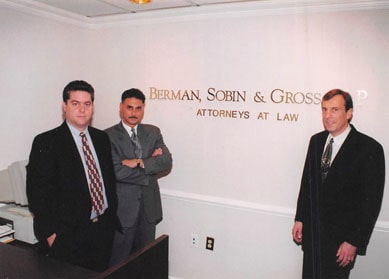
Government workers in Oxon Hill put in long hours at jobs that carry real physical risk. Whether you work for Prince George’s County, a state agency, the federal government, or a municipality with offices near the National Harbor corridor, an injury on the job can upend your finances and your career in ways that ordinary workers’ compensation claims only begin to address. Oxon Hill government employee injury attorneys at Berman | Sobin | Gross LLP have spent 35 years representing public employees across Maryland, including the public safety workers, corrections officers, teachers, and support staff who keep this part of the state running.
Why Government Employment Changes the Injury Claim Picture in Prince George’s County
A government job is not like private employment when it comes to injury claims. Public employees in Maryland often have access to benefit structures that go beyond standard workers’ compensation, but they also face procedural requirements and employer-side resources that private workers do not. Prince George’s County, which covers Oxon Hill, operates its own risk management and legal apparatus. State employees working at agencies along Indian Head Highway or near the Beltway deal with a separate tier of the system entirely.
Public safety employees, including law enforcement officers, firefighters, paramedics, and EMTs, are entitled to enhanced compensation under Maryland law. These workers carry a presumption that certain conditions, heart disease, hypertension, and occupational lung disease among them, are job-related. That presumption matters enormously when a claim is disputed. Berman | Sobin | Gross LLP secured the appellate decision in Downer v. Baltimore County that confirmed EMTs are public safety employees entitled to those same enhanced benefits. That is not a detail in a brochure. It is law that directly affects what Oxon Hill government workers can recover.
Teachers, school support staff, and county administrative employees occupy a different category but face their own challenges. Repetitive motion injuries, slip and falls in government buildings, and exposure incidents all generate claims that employers dispute at a higher rate than most injured workers expect. Having an attorney who understands the interplay between the Workers’ Compensation Commission process and the specific rules governing public employers in Prince George’s County makes a concrete difference from the first filing.
The Occupational Disease Problem That Hits Public Workers Hard
A broken wrist from a fall is a clear injury on a clear date. Occupational disease claims are harder. Hearing loss from years of exposure on a job site. Cardiac conditions that develop over a career in public safety. Respiratory disease from chemical or environmental exposure. These claims get denied more often, fought harder, and require a deeper understanding of both medicine and the law to pursue effectively.
Maryland law has specific provisions for public safety workers dealing with occupational disease, and the courts have been active in shaping what those provisions mean. In City of Frederick v. Shankle, Berman | Sobin | Gross LLP established that employer medical experts who challenge the scientific basis of the occupational disease presumption cannot simply offer that opinion at a hearing without scrutiny. In Montgomery County v. Cochran and Bowen, the firm clarified how hearing loss deductions are calculated for firefighters and other workers, a ruling that directly improved outcomes for injured workers statewide.
These are not abstract legal victories. For an Oxon Hill corrections officer or paramedic dealing with a chronic condition tied to years of service, cases like these determine what compensation is actually available. The firm that litigated those precedents is the same firm you would be calling for your claim.
Light Duty, Overtime, and the Benefits Government Workers Actually Lose
One of the most common disputes in government employee injury cases involves what happens when a worker is assigned to light duty while recovering. Many public employers in Prince George’s County and across Maryland pay injured workers their base salary during light duty assignments, then argue that no wage loss exists. The firm challenged that position in Montgomery County v. Deibler, establishing that public safety workers who regularly earned overtime prior to injury can still recover compensation for that lost overtime income even when the employer is paying their base rate.
This matters practically for Oxon Hill government workers in roles where overtime is a standard part of take-home pay. A deputy sheriff, a correctional officer, a county maintenance worker who regularly logs overtime hours is not made whole by a salary check that leaves out what they would have earned in a normal week. Getting that income properly documented and argued requires an attorney who has litigated exactly this issue before, not one who is encountering it for the first time in your case.
Vocational rehabilitation is another benefit that government employees often do not pursue because they are not told it is available to them. Under Maryland law, injured workers who are receiving service-connected disability retirement are still eligible for vocational rehabilitation services. Berman | Sobin | Gross LLP argued and won that point in Fikar v. Montgomery County. If you are dealing with a permanent limitation that affects your ability to continue in your role, rehabilitation services may be part of what you are owed.
Questions Oxon Hill Public Employees Ask About Injury Claims
Do I need to report my injury to my supervisor before filing a workers’ compensation claim?
Yes. Maryland law requires that injured workers report a work-related injury to their employer within 10 days of the injury, though certain occupational disease claims have different timeframes. For government employees, the reporting chain within your agency may also have its own requirements. Missing an internal reporting deadline can create complications even if the legal deadline has not passed. Report the injury to your supervisor as soon as you are able to do so.
I was told my condition is not covered because it developed gradually. Is that accurate?
Not necessarily. Maryland workers’ compensation law covers occupational diseases as well as acute injuries. For public safety employees, specific diseases are presumed to be work-related under state law. Even for non-presumption workers, a gradually developing condition caused by job duties can qualify as a compensable occupational disease. The fact that an employer or its insurer says otherwise is not the final word.
My employer is offering a settlement. Should I accept it?
Settlements in Maryland workers’ compensation cases are typically final. Accepting one closes out your right to future benefits related to that injury, including ongoing medical treatment in many circumstances. Whether a settlement offer is reasonable depends on your medical prognosis, your earning capacity, and what future expenses are likely. This is a decision that benefits from legal review before you sign anything.
Can my government employer retaliate against me for filing a workers’ compensation claim?
Maryland law prohibits retaliation against employees for filing workers’ compensation claims. That said, retaliation in government employment often looks different than a direct termination. Changes in assignment, denial of advancement, or pressure to return before you are medically cleared can all reflect improper conduct. Document what happens after you file your claim and discuss any adverse actions with your attorney.
I was injured while off duty but believe my condition is connected to my job. Is there any coverage?
For public safety employees, Maryland law extends the occupational disease presumption beyond on-duty hours in certain circumstances. The appellate decision in Montgomery County v. Pirrone confirmed that the presumption for heart, lung, and hypertension conditions applies to public safety workers even when they are off duty or after retirement. Whether that rule applies to your specific situation depends on the nature of the condition and your employment history.
What if other attorneys have told me my case is too difficult or unlikely to succeed?
Berman | Sobin | Gross LLP specifically handles the challenging cases that other firms decline. The firm has handled hundreds of workers’ compensation jury trials and has argued before both of Maryland’s highest courts. If another attorney has turned down your claim or declined to take it beyond an administrative hearing, that is not a definitive statement about the merits of your case.
Does the firm handle cases in Prince George’s County?
Yes. The firm serves clients throughout Maryland, including the Prince George’s County area and surrounding communities. Attorneys at Berman | Sobin | Gross LLP handle proceedings before the Maryland Workers’ Compensation Commission regardless of where in the state the worker is based.
Reach Out to Berman | Sobin | Gross LLP About Your Oxon Hill Public Sector Injury Claim
If you are a government worker in Oxon Hill dealing with the aftermath of a job-related injury or occupational disease, the attorneys at Berman | Sobin | Gross LLP are prepared to evaluate your claim. The firm has represented public safety employees, county workers, state employees, teachers, and many others for 35 years across Maryland. That includes handling the appellate decisions that shaped the rights those workers now hold. One of the firm’s founders authored the definitive legal treatise on workers’ compensation in Maryland, and the attorneys have represented clients in tens of thousands of Commission hearings and hundreds of trials. If you need legal representation from an Oxon Hill government employee injury lawyer, contact the firm today for a confidential case analysis.