

Owings Mills Restaurant Worker Injury Attorney
Restaurant work in Owings Mills is physically demanding in ways that rarely make it into a job description. Line cooks work inches from open flames and boiling oil. Servers carry heavy trays across slick floors for hours at a stretch. Delivery drivers navigate busy parking lots and unpredictable conditions. Dishwashers stand in wet environments handling sharp objects and heavy equipment. When something goes wrong in one of these environments, the injury tends to be immediate and serious, and the path to workers’ compensation benefits is rarely straightforward. A Owings Mills restaurant worker injury attorney at Berman | Sobin | Gross LLP understands the pressures workers in this industry face and the specific obstacles they encounter when they try to file a claim after getting hurt on the job.
The Injuries That Actually Happen in Owings Mills Restaurant Kitchens and Dining Rooms
The restaurant industry consistently produces some of the highest rates of workplace injuries across all employment sectors. In a commercial kitchen, burns are among the most common, ranging from contact with hot equipment surfaces to splatter injuries from deep fryers. These are not minor inconveniences. Significant burns often require medical treatment over an extended period and can result in permanent scarring or reduced function in the affected area.
Slip and fall injuries are just as prevalent, and in restaurant settings, the conditions that cause them are often chronic. Grease accumulates on kitchen floors throughout a shift. Spills go unaddressed during busy service periods. Floor mats shift or buckle. Ice spills near beverage stations. These are foreseeable, recurring conditions, not random accidents, and Maryland workers’ compensation law covers the injuries they cause regardless of whether a manager failed to address them.
Repetitive motion injuries are frequently overlooked in this industry because they develop gradually rather than from a single incident. Carpal tunnel syndrome from repetitive prep work, shoulder injuries from reaching and lifting, and back problems from standing for long shifts on hard floors can all qualify as compensable workers’ compensation injuries under Maryland law. The challenge is that these claims require stronger documentation, because employers and insurers often push back on the argument that repetitive daily tasks caused a medical condition. This is precisely where having legal representation from the outset makes a material difference.
What Maryland’s Workers’ Compensation System Means for Food Service Employees
Maryland requires most employers to carry workers’ compensation insurance, and restaurant workers are covered under this system. That coverage applies regardless of whether the worker is full-time or part-time, regardless of how long they have been employed, and regardless of whether the employer characterizes them as tipped, seasonal, or hourly. Coverage does not depend on proving that anyone was at fault for the injury. A cook who burns their arm on an oven rack is entitled to benefits even if their own misstep contributed to the contact. The no-fault structure of Maryland’s workers’ compensation system is one of its foundational features.
When a worker is injured, the system is designed to provide medical treatment paid for by the employer’s insurer and wage replacement benefits if the injury prevents them from working or limits their earning capacity. In cases involving permanent impairment, there may be additional compensation available. However, the process of getting these benefits paid in full, and on time, is not always as automatic as the law envisions. Insurers evaluate claims with their own financial interests in mind. Medical opinions get disputed. Wage calculations get challenged. Claims get denied outright in circumstances where the employer or insurer believes they can avoid liability.
Restaurant workers often face additional complications that workers in other industries do not. Tip income is frequently underreported, which means the wage replacement calculations can shortchange a claimant if not properly documented and argued. Workers who are undocumented still have rights under Maryland workers’ compensation law, but navigating that claim involves particular sensitivity. Workers who were injured shortly after starting a new position may face skepticism about whether the injury truly occurred on the job. These are not abstract concerns. They arise in real claims filed by real workers, and they require attorneys who know how to address them.
Decisions That Shape the Outcome of a Restaurant Worker’s Claim
The decisions a worker makes in the hours and days after a workplace injury have more influence on the outcome of their claim than most people realize at the time. Reporting the injury to a supervisor is the necessary starting point, and Maryland law sets deadlines for this that workers cannot afford to miss. Getting prompt medical treatment matters both for recovery and for documentation. The records generated in that initial treatment establish the link between the workplace event and the injury, and gaps in treatment or delays in seeking care can be used by an insurer to argue that the injury was not as serious as claimed, or that it did not actually happen at work.
The choice of treating physician also affects the claim. Maryland’s workers’ compensation system gives employers the right to direct initial medical care, which means the first doctor a worker sees may be selected by the employer’s insurer. That doctor’s evaluation will carry significant weight in how the claim is evaluated. Workers have rights in this process, including the right to seek an independent medical examination, and understanding when and how to exercise those rights requires legal guidance specific to Maryland practice.
Filing for workers’ compensation without legal representation is legally permissible, but in cases involving disputes, denied claims, or serious injuries, it puts the worker at a significant disadvantage. The attorneys at Berman | Sobin | Gross LLP have handled tens of thousands of workers’ compensation hearings throughout Maryland and have argued cases before Maryland’s highest courts. When a claim involves a dispute about causation, a disputed wage rate, or a denial based on a questionable medical opinion, that depth of experience is directly relevant to what the worker ultimately recovers.
Questions Restaurant Workers in Owings Mills Ask About Injury Claims
Can my employer fire me for filing a workers’ compensation claim after a restaurant injury?
Maryland law prohibits employers from retaliating against workers for filing a workers’ compensation claim. This protection exists whether you work at a large restaurant chain or a small family-owned establishment. If you experience adverse employment action after reporting an injury or filing a claim, that conduct may give rise to additional legal claims separate from the workers’ compensation case itself.
My injury was partly my own fault. Does that prevent me from collecting benefits?
No. Maryland workers’ compensation is a no-fault system. Your own contribution to the circumstances of the injury does not disqualify you from benefits. The relevant question is whether the injury arose out of and in the course of your employment, not whether anyone was to blame for the conditions that caused it.
I was working as a tipped server. How are my lost wages calculated?
Tip income presents real complications in wage replacement calculations. Maryland law looks at average weekly wages, and tips that were reported to the IRS or documented through employer records should factor into that calculation. If your tip income was underreported, you may receive less in wage replacement than you are actually losing. An attorney can work to establish your actual earnings through multiple sources of documentation.
The workers’ compensation insurer is saying my back injury is pre-existing and not covered. What can I do?
Pre-existing condition arguments are among the most common grounds insurers use to limit or deny claims. Maryland law still provides compensation when a workplace injury aggravates, accelerates, or combines with a pre-existing condition to cause a disability. Getting an independent medical evaluation is often a critical step in countering the insurer’s position.
I was injured while making a delivery for the restaurant. Does workers’ compensation cover that?
Injuries that occur while you are performing a work task away from the physical restaurant location, including deliveries, are generally covered by workers’ compensation. In some delivery situations, there may also be a third-party personal injury claim available, depending on the circumstances of how the injury occurred. Both avenues are worth evaluating.
How long do I have to file a workers’ compensation claim in Maryland?
Maryland law generally requires that a workers’ compensation claim be filed within two years of the date of injury, but certain notice requirements apply much sooner. Waiting to act can jeopardize the claim, and some injuries involving gradual onset have different triggering dates for the filing clock. Getting an attorney involved early avoids the risk of missing any of these deadlines.
What if the workers’ compensation benefits do not cover everything I am losing?
Workers’ compensation is designed to be the exclusive remedy against an employer for a work injury in most cases. However, if a third party contributed to your injury, such as a vendor, a contractor working at the restaurant, or the manufacturer of defective kitchen equipment, a separate personal injury claim may be available. Berman | Sobin | Gross LLP handles both workers’ compensation and personal injury cases, which means the firm can evaluate whether both types of claims apply to your situation.
Talk to a Workers’ Compensation Attorney Serving Injured Food Service Workers in Owings Mills
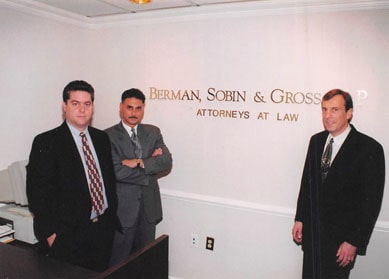
Berman | Sobin | Gross LLP has spent 35 years representing Maryland workers through exactly these kinds of disputes, growing from three attorneys in one office to more than twenty attorneys serving clients across the state. The firm is the largest workers’ compensation law firm in Maryland representing injured workers, and one of its founders literally wrote the treatise on Maryland workers’ compensation law that attorneys across the state rely on. For a restaurant worker in Owings Mills dealing with a burn, a fall, a repetitive injury, or a denied claim, that depth of knowledge and resources is directly relevant to the outcome. Reach out to the firm’s offices in Lutherville, Baltimore, Gaithersburg, or Frederick to speak with a workers’ compensation attorney about your situation and what your claim may be worth.