
Owings Mills Mechanic Injury Attorney
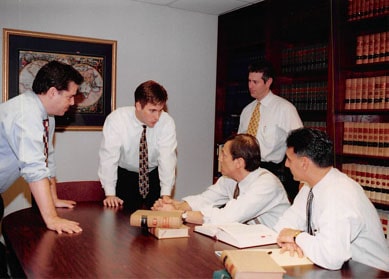
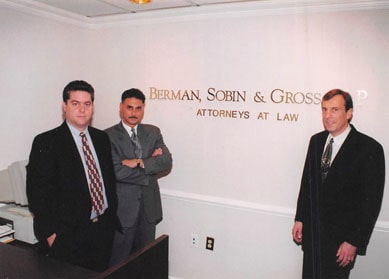
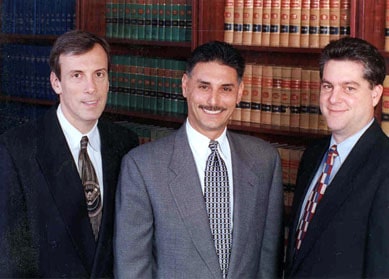
Auto mechanics and diesel technicians in Owings Mills work in environments that most people never think twice about, but the physical demands are real and constant. Lifts that fail, heavy components that slip, chemical exposures that accumulate over years, and repetitive stress that quietly destroys joints are all part of the job. When a mechanic gets hurt badly enough to miss work or require surgery, the workers’ compensation system is supposed to step in. What actually happens, though, often looks very different from what the law promises. Berman | Sobin | Gross LLP has spent 35 years representing Maryland workers in exactly these situations, and the firm’s Owings Mills mechanic injury attorneys understand how these claims develop, where they break down, and what it takes to push them through.
The Injuries That Mechanics Actually Suffer, and Why They’re Harder to Handle Than They Look
A mechanic’s body absorbs punishment from every direction. Lumbar spine damage is almost epidemic in the trade, the result of years spent crouching under vehicles, lifting transmissions, and twisting into spaces that weren’t designed with human anatomy in mind. Shoulder tears, rotator cuff injuries, and wrist problems follow closely behind. Then there are the acute traumas: a jack fails and a vehicle comes down, a pneumatic tool kicks back, a component falls from a rack. These incidents can cause fractures, crush injuries, and traumatic brain injuries in a moment.
What makes mechanic injury claims genuinely difficult is the overlap between acute injuries and wear-and-tear. An employer’s insurance carrier will almost always argue that a spine injury wasn’t caused by a single incident but by years of prior degeneration, making the current job only incidentally related. That argument, if left unchallenged, can cost a worker a substantial portion of benefits. Maryland’s workers’ compensation system does recognize aggravation of pre-existing conditions as compensable, but documenting the relationship between work activities and a specific injury requires the kind of medical and legal groundwork that insurance companies count on injured workers not having in place.
Chemical exposure adds another layer. Mechanics routinely handle brake fluid, transmission fluid, solvents, and asbestos-containing friction materials in older vehicles. Occupational disease claims arising from these exposures carry their own filing deadlines and evidentiary requirements that differ from standard injury claims, and they are frequently disputed in ways that a straightforward fall claim might not be.
How Owings Mills Mechanics Navigate the Workers’ Comp Filing Process
Maryland workers’ compensation begins with reporting the injury to your employer and filing a claim with the Workers’ Compensation Commission. The deadlines matter. Most occupational injuries must be reported to the employer within ten days, and a claim petition must generally be filed within two years. For occupational diseases, the clock can run from the date of disability or the date the worker knew or should have known the condition was work-related, which creates its own complications. Missing a deadline doesn’t automatically end a claim, but it creates obstacles that are genuinely difficult to overcome after the fact.
For mechanics working in Owings Mills, employer insurance carriers are typically large commercial insurers who handle high volumes of claims and have adjusters and doctors prepared to evaluate them in ways that minimize liability. An independent medical examination arranged by the insurer may reach conclusions that are at odds with what a treating physician has documented. Understanding what those IME reports actually do and don’t establish, and how to respond to them through the Commission process, is where legal representation changes outcomes.
The Commission holds hearings at which both sides present evidence. Testimony from the injured worker, medical records, treating physician opinions, and vocational evidence all play roles. Commission decisions can be appealed to the Circuit Court, and Berman | Sobin | Gross LLP has handled jury trials and appellate proceedings before Maryland’s highest courts on workers’ compensation matters. The firm’s founding members have authored authoritative legal treatises on Maryland workers’ compensation that continue to serve as reference resources throughout the state.
Benefits Available to Injured Auto Mechanics in Maryland
Workers’ compensation in Maryland provides several categories of benefits for workers who are injured on the job. Medical benefits cover treatment that is causally related to the work injury, including surgeries, physical therapy, medications, and specialist evaluations. Temporary total disability benefits replace a portion of wages while a worker is unable to return to work, and temporary partial disability benefits apply when a worker can return in a limited capacity at reduced wages. Permanent partial disability awards compensate for the lasting functional impairment that remains after maximum medical improvement is reached. In the most severe cases, permanent total disability benefits may apply.
Vocational rehabilitation is also available in Maryland for workers who cannot return to their previous trade. A mechanic who suffers a spinal injury serious enough to prevent return to that work may be entitled to retraining and job placement assistance. The firm has handled cases establishing that injured workers receiving service-connected disability retirement may still access vocational rehabilitation services, which reflects the kind of precedent-level advocacy that has defined Berman | Sobin | Gross LLP’s practice over decades.
Death benefits are available to surviving dependents when a workplace injury or occupational disease results in death. These claims are among the most consequential and often the most contested, and the firm handles them as part of its core practice.
Questions Mechanics and Their Families Ask About Injury Claims
My employer says my injury is from years of wear and tear, not a specific incident. Does that mean I have no claim?
Not necessarily. Maryland workers’ compensation law covers both acute injuries and occupational diseases that develop over time through repeated exposure. The key is establishing the causal connection between your work duties and your condition. Cumulative trauma and wear-and-tear injuries can be compensable when properly documented with medical evidence tying the impairment to the specific demands of the job.
The insurance company scheduled an independent medical exam. What should I know going in?
An IME arranged by the employer’s insurer is not truly independent. The physician is selected and paid by the carrier and is evaluating you specifically to provide an opinion in the context of a disputed claim. You should attend, but you should also understand that the report will likely be used to challenge your treating doctor’s findings. Your attorney can help you prepare and, when necessary, counter the IME through the Commission process with opinions from physicians who have actually treated you.
I was hurt at a dealership in Owings Mills that’s part of a large national chain. Who is the employer for workers’ comp purposes?
Generally, the immediate employer whose payroll you are on is the covered employer for workers’ compensation purposes. If there are questions about subcontracting, leased employees, or corporate structures, those need to be analyzed based on the specific employment arrangement, which is something to address with an attorney early in the process.
Can I also pursue a personal injury lawsuit alongside my workers’ comp claim?
If a third party, meaning someone other than your employer, contributed to your injury, a separate civil claim may be possible. For example, if defective shop equipment caused your injury, the manufacturer or distributor may be liable outside of the workers’ comp system. Workers’ comp and third-party claims are separate legal tracks, but they can run concurrently, and the recovery in one can affect the other through subrogation rules.
What happens if my claim is denied after the initial filing?
A denial is not the end of the road. Claims are denied for various reasons, including disputes about whether the injury was work-related, whether it was reported on time, or whether the medical documentation supports the claimed condition. Denied claims can be contested through the Workers’ Compensation Commission hearing process, and from there, appealed into the Circuit Court system. Berman | Sobin | Gross LLP has specifically built its practice around taking on contested and denied claims that require full advocacy through hearings, trials, and appeals.
How long will my claim take?
That depends heavily on the complexity of the medical issues, whether liability is disputed, and whether the case requires a Commission hearing. Straightforward claims where the injury, causation, and treatment are not contested can move relatively quickly. Claims involving permanent disability ratings, disputed medical causation, or complex occupational disease issues take longer. What matters more than timeline is that the claim is positioned correctly from the beginning, because early missteps create problems that are difficult to correct later.
My employer is telling me I can come back to light duty, but I can’t physically do the modified work. Do I have to accept it?
Light duty offers have real consequences for your benefits if you refuse them without good reason. However, if the modified work exceeds your actual physical restrictions as documented by your treating physician, or if no genuine modified position exists, there are grounds to challenge the offer. This is a situation where getting legal guidance before you respond to the employer makes a significant difference.
Injured Mechanics in the Owings Mills Area Deserve Real Representation
Berman | Sobin | Gross LLP is the largest workers’ compensation law firm in Maryland representing injured workers, with attorneys and offices serving clients across the state including the Baltimore County and Baltimore City areas where Owings Mills mechanics work and live. The firm has handled tens of thousands of Commission hearings, hundreds of jury trials, and landmark appellate decisions that have reshaped Maryland workers’ compensation law. The attorneys here do not sort cases by ease. They take on the disputed claims, the denied claims, and the complex occupational disease matters that require persistent, knowledgeable representation. If you have been hurt working as a mechanic and your employer’s insurance carrier is already pushing back, an Owings Mills mechanic injury lawyer at Berman | Sobin | Gross LLP is ready to evaluate your claim honestly and tell you where things stand.