

Owings Mills Landscaping Worker Injury Attorney
Landscaping work is physically demanding, seasonally relentless, and statistically dangerous. Workers handling heavy equipment, climbing grades, applying pesticides, and operating under Maryland’s summer heat face real injury risks every shift. When something goes wrong on a job site in Owings Mills, the path to workers’ compensation benefits is rarely as straightforward as it should be. Owings Mills landscaping worker injury attorneys at Berman | Sobin | Gross LLP have spent 35 years representing the workers who keep Maryland’s properties maintained, from residential lawns to commercial grounds and everything in between.
What Gets Landscaping Workers Hurt in Owings Mills
The Owings Mills area has grown substantially over recent decades. Corporate campuses, retail centers, sprawling residential developments, and the Foundry Row commercial corridor all require ongoing grounds maintenance. That growth means more landscaping crews, more equipment, and more opportunities for serious injury.
Riding mowers and zero-turn equipment cause rollover accidents, blade contact injuries, and crush injuries at a rate that would alarm most people outside the industry. Workers operating string trimmers and blowers face projectile debris and hearing damage from prolonged noise exposure. Chainsaw work for tree removal or storm cleanup carries obvious laceration and amputation risks that can end a career in seconds.
Heat is its own category of hazard. Landscapers often work eight to ten hours under direct sun during Maryland’s humid summers, and heat exhaustion and heat stroke are legitimate work injuries. So is the damage done by long-term pesticide and herbicide exposure, which can manifest as respiratory illness, skin conditions, or more serious systemic effects over time.
Slip and fall incidents happen constantly on wet grass, uneven terrain, and mulched slopes. Workers often have to work on inclines that would be considered hazardous in almost any other context. Back injuries, knee damage, and shoulder tears from repetitive lifting and awkward positions are routine. The physical demands are cumulative, and the injuries are real whether they happen in a single moment or develop over a season of hard work.
How the Workers’ Compensation System Treats Landscaping Claims
Maryland requires most employers to carry workers’ compensation insurance, and that coverage extends to landscaping employees. But getting benefits is not automatic. Employers and their insurers routinely dispute whether an injury happened on the job, whether it is as serious as the worker claims, and whether treatment is medically necessary.
Landscaping work creates some specific problems in the claims process. Employers often classify workers as independent contractors to avoid coverage obligations. That classification deserves scrutiny. Maryland law looks at the actual nature of the working relationship, not just what the paperwork says. Workers who are directed by a supervisor, use company equipment, and work set schedules may have employee status regardless of how the employer has labeled them.
Seasonal and day-labor arrangements create additional complications. If you were injured early in a season, before formal paperwork was completed, or while working for a crew that uses informal hiring practices, documentation gaps can make the claims process harder. These are not reasons to give up on a claim. They are reasons to have someone who knows how to build a case from limited records.
Repetitive strain and cumulative trauma injuries, which are common in landscaping, face higher scrutiny than acute injuries. Insurers often argue that chronic knee or back problems predated employment. Navigating that argument requires medical evidence, employment history, and often testimony from treating physicians who understand the physical demands of outdoor labor.
Third-Party Claims When a Contractor or Property Owner Bears Responsibility
Workers’ compensation covers medical treatment and a portion of lost wages, but it does not compensate for pain and suffering or full income replacement. In some landscaping injury situations, there is a third-party civil claim available alongside the workers’ comp case, and that distinction matters significantly for the worker’s total recovery.
If a property owner created a hazardous condition that contributed to a worker’s injury, a personal injury claim against that property owner may be viable. If faulty equipment caused the injury, the manufacturer or distributor of that equipment may face product liability exposure. If another contractor on a shared job site created the dangerous condition, that contractor may be a proper defendant.
These cases require separate legal analysis from the workers’ compensation claim, but the two can run concurrently. A worker should not have to choose between one avenue of recovery and another. At Berman | Sobin | Gross LLP, our attorneys evaluate both pathways when the facts support it.
What Landscaping Injury Workers in Owings Mills Need to Know Before Filing
What should I do immediately after a landscaping injury on the job?
Report the injury to your supervisor or employer as soon as possible. Maryland law has strict notice requirements, and delays can complicate a claim. Seek medical attention and make sure the treating provider understands that your injury is work-related. Document everything you can, including photographs of the scene, the equipment involved, and your injuries.
Does workers’ compensation cover injuries from heat-related illness?
Yes. Heat exhaustion and heat stroke that arise from working conditions are compensable under Maryland workers’ compensation law. The key is establishing that the condition arose out of and in the course of employment, which is generally straightforward when a landscaper collapses on a job site during a hot workday.
What if my employer says I am an independent contractor and not covered?
Employer classification is not the final word. Maryland applies a legal test to determine actual employee status, and many workers labeled as independent contractors qualify as employees under that test. This is worth a direct legal evaluation because the answer affects your entire claim.
My injury developed over time from repetitive work. Can I still file?
Yes. Cumulative trauma and occupational disease claims are recognized under Maryland workers’ compensation law. The timeline for filing these claims can be different from acute injury claims, so speaking with an attorney promptly is important once you understand the nature of your condition.
What benefits can I receive if my workers’ compensation claim is approved?
Approved claims generally cover necessary medical treatment, temporary partial or total disability payments while you cannot work or are on light duty, and permanent disability benefits if the injury results in lasting impairment. Vocational rehabilitation may also be available if you cannot return to landscaping work.
The insurance company offered me a settlement. Should I accept it?
Not without having the offer reviewed first. Settlement agreements in workers’ compensation cases typically require Commission approval and may close out your rights to future medical treatment or additional benefits. Whether a settlement is fair depends on your specific injury, prognosis, and earning capacity, and an attorney can help you evaluate whether the offer reflects your actual losses.
Can I be fired for filing a workers’ compensation claim in Maryland?
Maryland law prohibits retaliation against employees for filing workers’ compensation claims. If you are terminated, demoted, or otherwise penalized after filing, that conduct may give rise to a separate legal claim. Keep records of any communications or actions your employer takes after your claim is filed.
Injured Landscaping Workers in Owings Mills: What Berman | Sobin | Gross Brings to Your Case
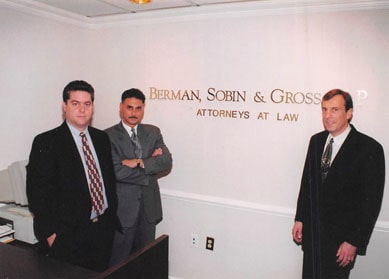
Berman | Sobin | Gross LLP is the largest workers’ compensation law firm in Maryland representing injured workers. The firm has handled tens of thousands of hearings and hundreds of jury trials, and its attorneys have argued cases before both of Maryland’s highest courts. One of the firm’s founders literally wrote the treatise on Maryland workers’ compensation law that practitioners across the state still consult today.
The firm represents workers across a wide range of occupations, including those in physically demanding outdoor roles where injuries can be severe. When you work with an attorney here, that attorney stays with you throughout your case. There is no shuffling between staff members or having to re-explain your situation from one phone call to the next.
For workers who speak Spanish, the firm has attorneys and staff members who can work with you directly without any language barrier affecting your claim. That matters in an industry where language access can determine whether workers understand their rights at all.
The firm takes on difficult cases, including those where other attorneys have passed. If an insurer has denied your claim, if your employer disputes your status, or if a prior attorney said your case was too complicated to pursue, a review of your claim here is worth having.
Talk to an Owings Mills Landscape Injury Lawyer
Landscaping injuries can be sudden and catastrophic, or they can develop quietly over years of demanding physical work. Either way, Maryland workers’ compensation law exists to cover you, and an employer’s reluctance or an insurer’s denial does not change what you may be legally entitled to receive. Berman | Sobin | Gross LLP serves workers throughout the Owings Mills area and across Maryland from offices in Lutherville, Baltimore, Gaithersburg, and Frederick. Reach out to a landscaping worker injury attorney in Owings Mills to have your claim evaluated by lawyers who handle these cases every day and know how to see them through.