
Owings Mills Home Health Aide Injury Attorney
Home health aides in Owings Mills and the surrounding Baltimore County communities take on some of the most physically demanding work in any industry. Lifting and repositioning patients, working in private residences with uneven flooring or poor lighting, dealing with unpredictable client behavior, and logging long hours without adequate support all create conditions where serious injury is not a rare event. When that injury happens, workers’ compensation is supposed to be there. But for home health aides, claiming those benefits can be more complicated than it sounds. The Owings Mills home health aide injury attorney team at Berman | Sobin | Gross LLP has spent 35 years representing the Maryland workers who power our healthcare system at the ground level, and we understand how these cases actually work.
Why Home Health Aide Injuries in Owings Mills Are Different from Other Workers’ Comp Claims
Most workers’ compensation cases begin in a fixed workplace where the conditions are consistent and the employer controls the environment. Home health aides work in a different reality. Every client’s home is a different setting. Some are safe and well-maintained. Others have narrow hallways, cluttered floors, pets underfoot, or no proper equipment for patient transfers. The agency that employs the aide typically has no direct control over any of those conditions, which creates ambiguity about liability and about whether the employer even knew the conditions existed.
That ambiguity can be used against an injured aide when she or he files a claim. The employer may argue that the hazard was not foreseeable, that the aide failed to follow safety protocols, or that the injury did not occur in the course of employment. These defenses are especially common in claims involving falls, patient-handling injuries, and incidents that happened in a client’s home without witnesses. Baltimore County has a large and growing home care sector, and aides often work through staffing agencies whose employment classifications can add another layer of complexity to determining who is legally responsible when an injury occurs.
Slip and fall injuries, back and shoulder strains from patient transfers, needle-stick injuries, and assaults by patients with cognitive or behavioral conditions are among the most common injury types in this field. Each category has its own evidentiary demands. A back injury from a transfer requires medical documentation linking the mechanism of injury to the diagnosis. An assault requires documentation of the client’s known behavioral history and whether the employer had a duty to warn. Getting these claims right from the beginning matters more than most aides realize when they first file.
What Workers’ Compensation Actually Covers for Injured Home Health Aides in Maryland
Maryland’s workers’ compensation system provides several categories of benefits, and understanding which ones apply to a specific injury is not always straightforward. Temporary total disability benefits are available when an injury prevents the aide from working during the recovery period. These benefits replace a portion of the worker’s average weekly wage and continue through the period of documented medical incapacity. For aides working variable hours across multiple clients, calculating the correct average weekly wage requires careful attention to payroll records across the relevant period, not just the most recent paycheck.
Permanent partial disability benefits become relevant when an injury results in lasting impairment, even if the worker eventually returns to some form of employment. A shoulder injury that requires surgery and leaves the aide with reduced range of motion, or a back injury that results in chronic pain limiting activity, may qualify for permanent disability compensation rated according to Maryland’s schedule. The rating process involves medical evaluation and, frequently, a dispute between the treating physician and a physician retained by the employer or insurer. Those disputes go before the Maryland Workers’ Compensation Commission, and being prepared for that hearing can significantly affect the outcome.
Medical benefits under Maryland workers’ comp cover treatment for the work-related injury, including surgery, physical therapy, and prescription medications. One issue that arises frequently in home health aide cases is the authorization of treatment. Employers and insurers are permitted to direct care, which means an aide may be required to see a specific physician rather than her or his own doctor. Understanding how to navigate authorization disputes, how to request an independent medical evaluation, and when to push back on a denial of treatment is part of what an attorney does in these cases, not something an injured worker should have to figure out alone.
Employment Classification and Third-Party Claims: Issues That Arise in the Home Care Industry
A significant number of home health aides in the Owings Mills area are employed through staffing agencies that place them with home care companies or directly with individual families. The staffing agency may be the nominal employer of record, but the home care company or client family may control the work conditions, the schedule, and the specific duties involved. When an injury occurs, this structure can lead to disputes over which entity is responsible for workers’ compensation coverage, and in some cases, it may give rise to claims against a third party rather than, or in addition to, the employer.
If a home health aide is injured due to a hazardous condition in a client’s home that the homeowner knew about and failed to correct, there may be a negligence claim against the homeowner separate from the workers’ compensation claim. If a defective piece of equipment, such as a mechanical lift or a wheelchair, caused the injury, the manufacturer may bear responsibility. These third-party claims proceed through the civil courts rather than the Commission and can result in compensation for damages that workers’ comp does not cover, including pain and suffering and full lost earning capacity. The attorneys at Berman | Sobin | Gross LLP handle both workers’ compensation and personal injury claims, which means we can evaluate the full picture of a client’s situation without referring them elsewhere.
Questions Home Health Aides in Owings Mills Ask About Their Injury Claims
Do I qualify for workers’ compensation if I work for a staffing agency?
In most cases, yes. Staffing agencies are generally required to carry workers’ compensation coverage for their placed employees in Maryland. The key is identifying who the statutory employer is under your specific arrangement. This can require reviewing the contract between the agency and the home care company, but it does not disqualify you from coverage simply because your employment structure is indirect.
What happens if the injury happened at a client’s home and there are no witnesses?
The absence of witnesses does not defeat a claim. Maryland workers’ compensation does not require eyewitness corroboration. Medical records documenting the injury and the reported mechanism, prompt reporting to the employer, and consistent statements from the worker all serve as evidence. Delays in reporting or seeking medical care can complicate a claim, so the earlier an injury is documented and reported, the better.
My employer says my back pain is a pre-existing condition, not a work injury. What can I do?
Maryland workers’ compensation covers aggravations of pre-existing conditions when work duties contributed to the worsening. A worker does not need to prove the injury arose on a clean slate. What matters is whether the employment activity was a contributing cause of the current condition. Medical evidence that addresses this causation question directly is central to overcoming this defense.
Can I be fired for filing a workers’ compensation claim?
Maryland law prohibits employers from retaliating against workers for filing a workers’ compensation claim. If a termination or adverse employment action follows shortly after a claim is filed, the timing may be relevant to a retaliation claim. This is a separate matter from the compensation claim itself and can be pursued alongside it.
What if the insurer denies my claim or stops my benefits before I have recovered?
Denials and benefit terminations can be contested before the Maryland Workers’ Compensation Commission. Filing for a hearing triggers a process where both sides present evidence and the Commission issues a decision. Many denials are successfully challenged when the claimant is prepared with the right medical documentation and legal representation.
How long do I have to file a workers’ compensation claim in Maryland?
The general statute of limitations for a workers’ compensation claim in Maryland is two years from the date of the accidental injury, or two years from when the covered employee knew or should have known of a compensable condition. There are exceptions and nuances depending on the type of injury, and waiting too long can create problems even within that window. Filing promptly after an injury is always the better approach.
Can I see my own doctor for a work injury?
Maryland allows employers and insurers to direct initial medical care. However, there are procedures for requesting authorization to treat with a specific provider, and disputes over medical treatment can be brought before the Commission. An attorney can help you navigate the authorization process and push back when a denial of treatment is not medically justified.
Berman | Sobin | Gross LLP Represents Owings Mills Home Health Aides
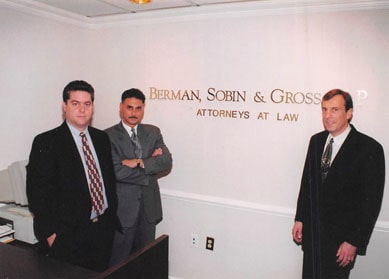
Berman | Sobin | Gross LLP is the largest workers’ compensation law firm in Maryland representing injured workers, with offices serving clients throughout Baltimore County and across the state. The firm has handled tens of thousands of workers’ compensation hearings and hundreds of jury trials and appeals before Maryland’s highest courts. One of the firm’s founders authored a two-volume treatise on Maryland workers’ compensation law that remains a standard reference in the field. For home health aides in Owings Mills who need someone to take their case seriously and see it through, regardless of how complex the employment or liability questions become, these are the attorneys who have the resources and the record to do that. Representation is available in English and Spanish, and there is no fee unless we recover benefits for you. Contact Berman | Sobin | Gross LLP today to discuss your situation with an Owings Mills home health aide workers’ compensation attorney who will stay with you as your point of contact from start to finish.