
Owings Mills Firefighters, Paramedics & EMTs Injury Attorney
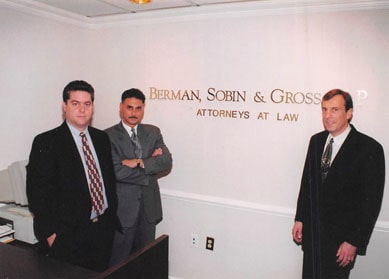
Firefighters, paramedics, and EMTs in Owings Mills and the surrounding Baltimore County communities carry risks on every single shift that most workers never face. A structure fire, a violent patient encounter, a vehicle collision responding to a call, cumulative exposure to smoke and carcinogens over years of service: these are not abstract possibilities. They are the documented, recurring realities of emergency response work in Maryland. When those risks turn into injuries, the workers’ compensation system that covers you operates under a different and more protective set of rules than the ones that apply to the general workforce. Understanding where those protections actually kick in, and where gaps still exist, matters enormously for what you are able to recover. Berman | Sobin | Gross LLP has represented Maryland’s Owings Mills firefighters, paramedics, and EMTs in workers’ compensation claims for 35 years, and this work has been central to what our firm does, not a side offering.
The Occupational Disease Presumption and What It Actually Covers
Maryland law creates a legal presumption for certain conditions that are closely tied to the work of firefighters and public safety employees. Heart disease, hypertension, and certain lung conditions are presumed to be job-related for covered public safety workers, which flips the normal burden of proof. Rather than requiring you to prove that your condition came from your work, the employer and insurer are required to rebut the presumption if they want to deny the claim.
That presumption has limits, and employers regularly try to push those limits. They will hire medical experts to argue that the science does not support connecting a specific condition to fire exposure or occupational stress. Our firm has litigated this issue directly before Maryland’s highest courts. In City of Frederick v. Shankle, Berman | Sobin | Gross LLP established that employer medical experts cannot simply offer opinions that the public safety occupational disease presumption lacks scientific support as a basis for dismissing claims. That ruling has practical consequences for firefighters and paramedics throughout the state, including those working out of Baltimore County stations that serve communities like Owings Mills, Reisterstown, and Pikesville.
The presumption also extends beyond active service in certain circumstances. Montgomery County v. Pirrone, another appellate victory our firm secured, confirmed that the heart, lung, and hypertension presumption applies to public safety workers even after retirement or while off duty. For long-serving members of a fire company or EMS unit who develop conditions years into their career or after leaving service, this ruling is directly relevant to whether a claim can move forward.
When Emergency Medical Technicians Are Treated Differently Than They Should Be
There is a persistent point of confusion in Maryland workers’ compensation cases involving EMTs and paramedics. Some carriers and some employers have historically tried to treat EMTs as standard employees rather than as public safety workers, which has significant consequences for the enhanced benefits and presumptions that apply. The appellate case Downer v. Baltimore County resolved this directly. Berman | Sobin | Gross LLP represented the claimant in that case and secured a ruling that emergency medical technicians are public safety employees and are entitled to the same enhanced compensation benefits that apply to other public safety workers.
This matters for EMTs in Owings Mills and throughout Baltimore County who may not know that their classification carries weight in the workers’ compensation system. If you have been told that a particular benefit or presumption does not apply to your claim because of how your position is classified, that conclusion deserves to be challenged by someone familiar with the case law in this specific area.
Injuries That Are Not Always Recognized as Compensable
Acute injuries get attention. A firefighter who breaks an ankle at a scene, or a paramedic struck by a vehicle during a call, will typically have no difficulty establishing that the injury happened at work. The harder cases involve conditions that develop gradually or that employers attribute to factors outside of work.
Occupational hearing loss is one of the most contested areas for emergency responders. Repeated exposure to sirens, power tools, structural noise during fire suppression, and the equipment used in EMS all contribute to hearing damage over a career. Maryland’s occupational deafness statute has its own rules about how hearing loss is calculated, and the date from which the age deduction is applied matters significantly in determining the value of a claim. In Montgomery County v. Cochran and Bowen, our firm successfully argued that the deduction must be calculated from the last date of injurious exposure, not the date of an audiogram. For firefighters and other emergency responders who continued working after their hearing began to decline, that distinction can be the difference between a full award and a significantly reduced one.
Psychological injuries are another category that carries real stigma in the emergency response community. Post-traumatic stress, cumulative trauma from repeated exposure to mass casualty events, and the psychological toll of years in first-responder work are genuine occupational conditions. Maryland law has continued to evolve in this area, and the analysis of whether a psychological condition qualifies for workers’ compensation coverage requires careful handling of both the legal standards and the medical documentation supporting the claim.
Compensation and Benefits Questions That Come Up in These Claims
If I am on light duty and still receiving my full salary, do I have any workers’ compensation claim?
Yes. The fact that your employer is paying your full salary while you perform modified duties does not eliminate your claim for lost wages. Montgomery County v. Deibler established that public safety workers receiving full salary on light duty can still receive compensation for wages they had been earning through overtime before their injury. If overtime was a regular part of your compensation, that loss is recoverable even if your base pay has continued.
My injury happened while I was off duty. Does workers’ compensation still cover me?
It depends on the nature of the injury and your employment status. For certain occupational conditions covered by the public safety presumptions, including heart and lung conditions, the presumption applies even after retirement or during off-duty hours, as confirmed in the Montgomery County v. Pirrone ruling. Acute traumatic injuries occurring off duty are a separate analysis and depend on whether the injury can be connected to your employment.
Can I receive vocational rehabilitation benefits while I am already receiving a disability retirement?
Yes. In Fikar v. Montgomery County, Berman | Sobin | Gross LLP established that injured workers who are receiving service-connected disability retirement are not barred from also receiving vocational rehabilitation services through the workers’ compensation system. These two benefits are not mutually exclusive.
What happens to my family’s benefits if I die from a work-related condition?
Under the ruling in Collins v. Montgomery County, widows and dependents of deceased injured workers are not barred from pursuing benefits even in circumstances where prior cases had suggested limitations. Our firm has litigated this area specifically, and the law is more protective of surviving dependents than some carriers will acknowledge in the initial handling of a claim.
Does it matter if other attorneys have already reviewed my case and declined to take it?
No. Berman | Sobin | Gross LLP regularly takes cases that other firms have declined or that other attorneys chose not to pursue past an administrative hearing. We handle workers’ compensation jury trials and appellate proceedings before both of Maryland’s highest courts. If a prior evaluation led to a dead end, our firm can assess whether there is a viable path forward.
How do I document a claim for a condition that developed slowly over years of service?
Occupational disease claims require medical evidence linking the condition to the work environment, combined with an employment history establishing the nature and duration of exposure. The evidentiary standards are manageable, but the documentation process needs to start as early as possible. Gaps in medical history and delayed reporting can complicate a claim that would otherwise be straightforward.
Are there language support options at the firm for non-English speaking family members involved in a claim?
Yes. Berman | Sobin | Gross LLP has attorneys and staff members who are fluent in Spanish and can work with clients and their families without concerns over language barriers.
Representing Owings Mills Emergency Responders Throughout Baltimore County
Owings Mills sits in the northwest portion of Baltimore County, where a growing commercial and residential presence means increasing demand on fire and EMS services in the area. The Baltimore County Fire Department stations serving this region handle responses ranging from routine medical calls to complex structural incidents along the commercial corridors near the Metro Centre and throughout the residential communities extending toward Reisterstown Road and the Painters Mill area. These are busy stations with real occupational risk, and the workers’ compensation issues that arise for their personnel are handled through the Maryland Workers’ Compensation Commission, the same body where Berman | Sobin | Gross LLP has represented clients in tens of thousands of hearings. When cases move beyond the Commission level into the courts, our firm has handled hundreds of workers’ compensation jury trials and argued appeals before both of Maryland’s appellate courts.
Our firm’s offices in Baltimore, Lutherville, Gaithersburg, and Frederick are all accessible to emergency responders working in Baltimore County, and your attorney will stay with you as your point of contact from the beginning of your claim through its resolution.
Speak with a Baltimore County Emergency Responder Workers’ Compensation Attorney
Workers’ compensation for firefighters, paramedics, and EMTs operates under rules that give these workers meaningful protections, but those protections do not enforce themselves. Carriers contest presumptions, classify workers incorrectly, and dispute conditions that have everything to do with the work. Berman | Sobin | Gross LLP has spent 35 years building the case law that protects Maryland’s emergency responders, and that history is directly relevant to what we can do for an Owings Mills firefighter or EMT bringing a claim today. Contact our firm to speak with one of our workers’ compensation attorneys about your situation and what your claim may involve.